 PES
PES
 PHA
PHA
 SAV
SAV
 ROU
ROU
 REN
REN
 NAB
NAB
 COM
COM
 COL
COL
D1 Finals: Heart of the Lions

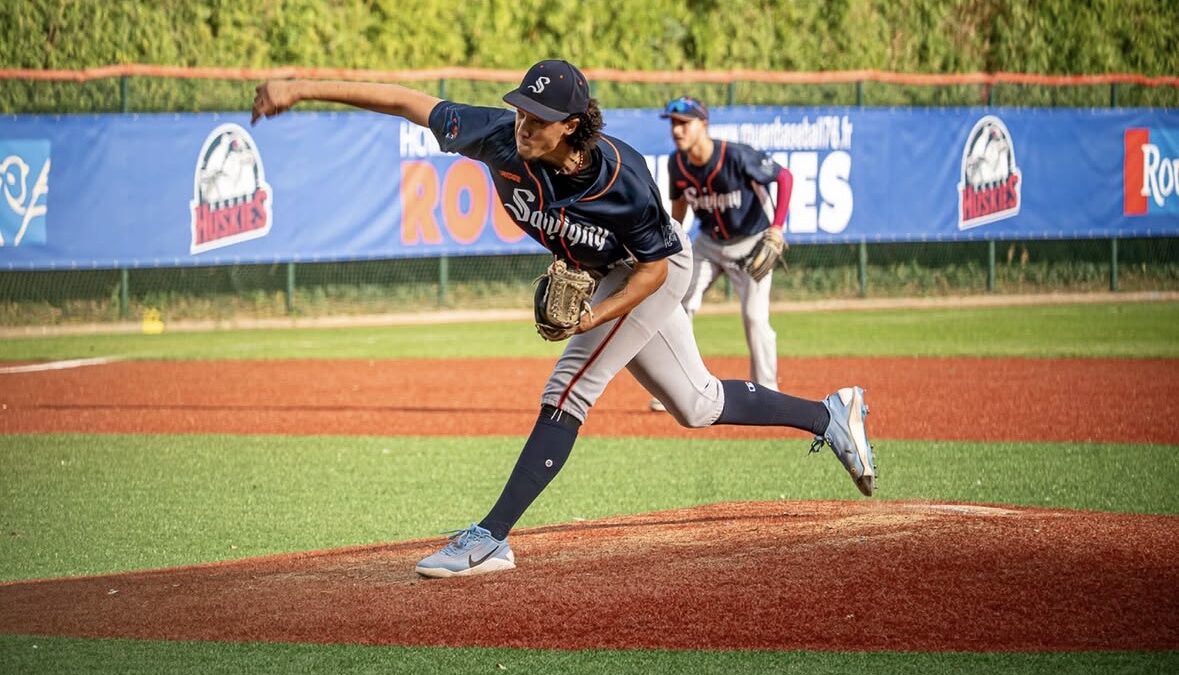
The first two games of the finals are crystal clear to analyze. Savigny scored all its runs on home runs, every pitcher dominated, but the move made by coach Becquey in the 8th inning of Game 2 changed everything—the Huskies were unable to execute, be effective, or build their at-bats, the Lions’ defense nearly blew it but held strong in the end. And here’s how the undefeated Rouen side (19 finals, 19 titles) now faces an unprecedented challenge: win three straight on the road to claim that 20th title they’ve longed for so deeply. They could call up the old Lions from 2004, the ones beaten twice at home before turning the tables in Montpellier, and ask how they did it. But few would likely answer that call today.
Let’s break down each key element that shaped these first two games.
Savigny scored all its runs on home runs. There’s no need to overcomplicate it—it’s straightforward—but no one expected Hugo Desir to hit his first career home run in the 3rd inning of Game 1, or Axel Amoros, who had already hit his first circuit of the regular season, to double the lead in such a pivotal moment as the 8th inning of Game 2, when the score was tied. That Acuna hit two was less surprising. Still, he was coming off a modest .01875 (3 in 16) in the playoffs. But that’s what great players do—they step up when it matters most. In the playoffs, as the saying goes, the best must be the best. Acuna delivered exactly that. And it’s always a joy to see a champion carry his team to victory. If we focus on the home runs, it’s also because the Lions didn’t do much else offensively. They went 0 for 6 with runners in scoring position, went 7 for 18 in innings where they failed to put anyone on base, and struck out 25 times. But when it counted, they hit hard and true. That’s what you call being efficient.
Second point: the pitching. Ito must be wondering how he lost Game 1, because he threw a simply dominant performance: a complete game, 15 strikeouts, five weak hits allowed, and just one walk. For advanced stats fans, his dominance is clear in his CSW%—the rate at which he induced strikeouts (called or swinging): he finished at 52%, which is phenomenal. More than half the time, Savigny’s hitters didn’t even touch his pitches. It took just one swing… Pena was at the same level: five hits allowed, 13 strikeouts, sure five walks, but he tightened things up when needed. The best example was the 4th inning, when Savigny had taken the lead. Vissac was on third with one out. In six pitches and two strikeouts, Pena shut him down. He’s now on a streak of 18 playoff innings without giving up a run. And another stat to show his dominance: Montpellier and Rouen hitters combined went 0 for 27 against him when he had two strikes. There’s little to criticize in Thibault Mercadier’s performance—solid, as always, maybe too many hits allowed, but 10 strikeouts. Coste, for his part, delivered his best game of the season exactly when it mattered. He wasn’t the pitcher who gave up nine runs in the first two innings to the Barracudas. He fought hard, keeping Rouen’s hitters off balance for nearly seven innings. And if you exclude the two Japanese pitchers, Megumi and Nishikawa, the rest of Rouen’s lineup went 1 for 19 against him. Orozco did what Orozco does—his closer role was executed perfectly, and he never faced real danger. We mustn’t forget the out Chevet made. He only threw two pitches, but at a critical moment. Savigny’s coaching staff made the right call, pulling Coste after six and a third innings to avoid facing a Megumi who had two doubles off him. Chevet stepped up, under maximum pressure. Well done. And then there’s the decision that’s bound to spark debate. Pulling Mercadier to avoid facing the Lions’ top hitters a third time makes sense. But why not turn to their best reliever? A Taido who is 7-1 with a 1.58 ERA, 47 strikeouts over 51.1 innings, and a .189 batting average against him? Yes, he had runners on base in the 8th inning against La Rochelle in the semifinals. But logic dictates going with your best arm when a game—or a season—hangs in the balance. Prioul didn’t pitch in the semifinals and had only been called up for four innings since July 27th. He wasn’t exactly in the rhythm of a dominant, in-form pitcher. That’s the hardest call: knowing when to change pitchers and which one to bring in. On Sunday, in that 8th inning, Rouen got it wrong.

Third point: the inefficiency. We’ve said it all season—Rouen struggles to capitalize on opportunities. What had eased up late in the year has now exploded right in front of their hitters. Seventeen runners left on base, 1 for 14 with runners in scoring position—there’s no need to say more. That’s what the Huskies can cling to. They could argue that with a few more hits, they’d lead 2-0, meaning everything is still possible. But you have to take advantage of those chances. They presented themselves in the first inning of both games: runners on first and third with two outs against Pena, but nothing came of it. One error and two doubles against Coste, but only two runs scored. There was a lot of nervousness in Rouen’s at-bats, which seemed poorly constructed. Just look at the 9th inning of Game 2. All three outs came on the first pitch. Sure, Orozco throws a lot of strikes and invites hitters to swing. But in those situations, taking a little time to build counts, letting the pitcher make a mistake, is rarely a bad strategy. The nerves weren’t just at the plate. On the bases, too. For one play, one out. The elimination of Joris Bert, caught off guard by a powerful and precise throw from Nunez. Moments later, Nishikawa hit the ball out of the park. That lost run could haunt the Huskies.
Finally, Savigny’s defense. Old news. It was shaky, even sloppy, all season. It wasn’t pretty last weekend, either. Six errors in total. Those who claim—and we’re among them—that defense wins championships are now carefully filing that belief away. But before locking it away for good, we should remember that defensive mistakes can be costly if they repeat next weekend. True, the Lions are a bit more comfortable at Gellainville (28 errors at home, 37 on the road in the regular season), but they must absolutely avoid leaving the door open for the Huskies. They risk walking right through it.
For now, it’s the Lions leading the charge. They need just one more win to claim their sixth title and become the third-most decorated team in French baseball history. For a team that, for so long, has never truly played at home, this would be a beautiful story and a magnificent reward for years of effort and dedication.
F. Colombier
Photo Credits: RS Club



React to this article
Community rules
Loading rules…