 ROU
ROU
 SAV
SAV
 PES
PES
 PHA
PHA
 REN
REN
 NAB
NAB
 COM
COM
 COL
COL
European Softball Championship 15U: France’s 15U team flexes their soft power

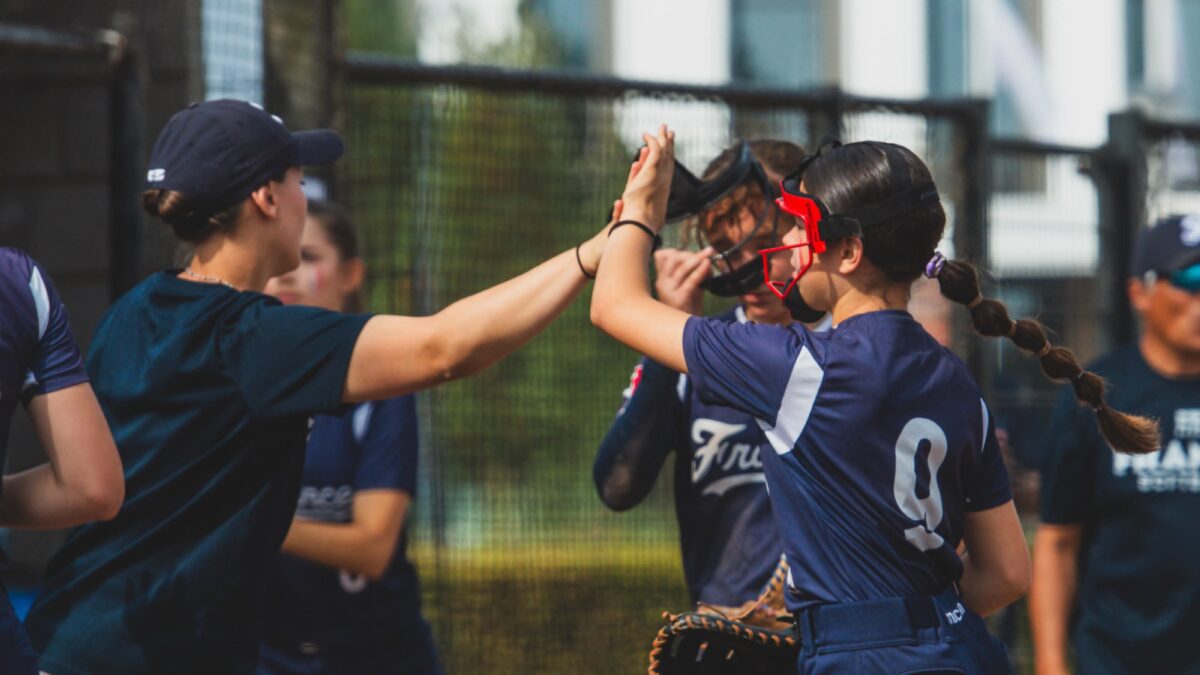
European Championship: France’s 15U side steps up to the plate against Europe’s elite
After the 22U team’s strong showing, it was the turn of the French 15U squad to test themselves against Europe’s softball heavyweights at the European Championship in Rosmalen, Netherlands. The tournament ran from July 27 to August 1, and while the results weren’t pretty—2 wins, 4 losses, 28 runs scored, 60 allowed, and a 13th-place finish among 14 nations—the competition was unforgiving. Italy claimed the title over the Czech Republic, with Spain rounding out the podium by beating the hosts.
But let’s not dwell on the scoreboard. There’s plenty to be encouraged about in this young team’s journey. A new squad is taking shape, and they’ve already shown clear signs of progress. Here’s why.
A talent pool searching for its identity
To understand this team’s progress, we need to look at the bigger picture of women’s baseball and softball in France. Up until age 15, most young female players compete in mixed-gender baseball. That’s no small detail: in the 2024 and 2025 Interligues 15U, thirty girls were identified out of 278 players—10.8% of the total. These are elite-level athletes: in those Interligues, they threw 34 of the 406 innings pitched, or 8.4% of the total. Yet in 2026, not a single woman appears in senior baseball’s D1 or D2 divisions. You have to drop down to D3 to find them: seven women out of 338 players, just 2% of the roster, and less than 1% of the combined D1-D3 talent pool.
With no structured pathway for women’s baseball, the top level often means switching to softball. But the transition isn’t straightforward. Some regions don’t even offer women’s softball, and many young women opt to stay in regional baseball, leading to a talent drain.
Rebuilding a pathway, relaunching a team
Against that backdrop, seeing a French 15U team take the field again after several missed opportunities is a strong signal. Since 2003, France has only competed in six of the twelve 15U European Championships. Yet this tournament is crucial: it gives young women their first taste of non-mixed competition and their first immersion in softball’s unique demands.
Of the fifteen players on the roster, seven had competed in the mixed Interligues over the past two years. These are high-level athletes who can hit, field, and run, with real potential to become top softballers. But one structural weakness stands out: pitching. In France, it’s extremely rare to see girls under 15 trained in softball pitching. Worse still, in a short-term mindset, clubs train girls in baseball pitching. Of the seven players on the team who had played in the Interligues, five were pitchers, logging seventeen innings and eighty plate appearances with solid performances. But those skills don’t translate: pitching from a mound bears no resemblance to the circular motion of softball!
Understanding before performing
That lack of experience showed early in the tournament. Against Great Britain, the French side allowed fourteen runs, victims of a flood of walks, wild pitches, and defensive errors. The box scores tell the story: eleven walks, seven earned runs, just three strikeouts, and a seven-run British big inning in the fourth. No surprise for players discovering a tighter strike zone and a ball that behaves differently. The Netherlands then handed them an 11-0 drubbing, including a disastrous third inning where France conceded ten runs on seven hits, two doubles, two errors, and three walks. Croatia followed with an 8-0 shutout, built on three tough opening frames: three runs in the first, three in the second, two in the third, with eight walks and five hits allowed.
The stats don’t lie: in those first three games, France allowed twenty-two walks, twenty-one earned runs, and struggled to stop the big innings. Yet in the chaos, something was brewing. The players put the ball in play, ran aggressively, stole bases, and showed relentless intensity. The errors didn’t break their spirit—they fueled their learning.
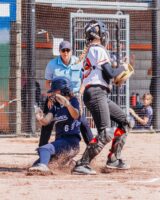
The Belgian breakthrough
For the first time in the tournament, the French team imposed an unstoppable offensive rhythm, built on a flurry of hits, aggressive baserunning, and smart decisions. The fourth inning ended with eight runs scored. Laporte drilled a two-bagger that cleared the bases, Savona added a line drive into center, Lemaire followed with a clutch hit, Bruneau reached base, Boutagra drove in another run, Mirand put the ball in play, and Leveque closed the frame.
The fifth inning was even more impressive. The French side plated eleven runs in a marathon sequence where more than ten batters stepped up without Belgium’s defense ever regaining control. Savona opened the frame with an RBI, Lemaire doubled to keep the pressure on, Bellet came through, Boutagra struck again, Mirand reached on an error, Laporte came up clutch, Bruneau stayed disciplined, Sibers-Quentin entered the fray, Buchaca drew an error, and the inning turned into a true offensive showcase. Boutagra delivered multiple hits in the game, always a threat. Laporte smashed two doubles, each in a key moment. Mirand scored repeatedly, using her speed and game sense. Bruneau remained remarkably disciplined at the plate, working counts, drawing walks, and keeping the pressure on Belgium’s defense.
This match also revealed a surge in French pitching. Soline Lazzarotto-Gallaire threw five complete innings, allowing four runs (just two earned), with three walks and eight strikeouts. Her line reflects clear progress—a growing ability to absorb pressure, regroup, and hold firm.
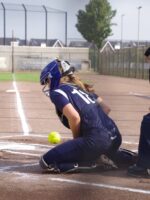
Austria as a stepping stone
The next match, against Austria, was tougher—a 15-2 loss—but the effort wasn’t wasted. Savona continued to rake, Laporte drove in a run on a sacrifice fly, and Bruneau put the ball in play in key spots with two hits and three walks. The infield started handling the hard stuff better, timings sharpened, and decisions came faster. Pitching remained uneven, with thirteen walks allowed, but the pitchers showed more endurance and control. Despite the score, this match set the stage for what was to come. The final game, a closer against Belgium, confirmed France’s dominance. Soline Lazzarotto-Gallaire delivered a masterclass: six complete innings, five hits allowed, four runs, four walks, and eleven strikeouts. A rare performance at this level, especially for a pitcher who had only recently discovered softball pitching’s nuances. Her overall tournament line was impressive: fourteen and two-thirds innings pitched (58% of her team’s total), called upon in five of six games, with a strikeout-per-inning ratio of 1.02.
The offense answered too. Lemaire went 4-for-5 with three RBIs, Sénécal added two more, and Rinaldi delivered four clutch hits. Laporte and Boutagra brought speed and savvy to the lineup. Despite an overall 26% strikeout rate, the players showed an ability to adjust, understand the zone, and adapt to experienced pitchers.
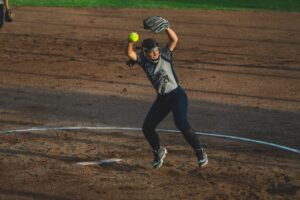
Encouraging progress
This wasn’t a fluke win. It was the result of real progress. Over six games, the players learned to read trajectories, react faster, communicate better in the field, manage bases-loaded situations, and stay calm under pressure. They discovered a new sport—but more importantly, they discovered they could excel in it. What worked for France was their attack. Players coming from baseball had a natural advantage: they know how to hit. The tournament proved it. France put the ball in play in every game, even against experienced pitchers, tallying twenty-two hits, including four doubles, one triple, and twelve RBIs. Speed on the bases was a weapon, with fourteen stolen bases. Pitching, despite a shaky start, showed notable improvement. Lazzarotto-Gallaire gained control, Mirand found stability, and Buchaca tightened her precision. Mental resilience was exemplary—no drop in intensity, even in the heaviest defeats. A rare trait at this age.
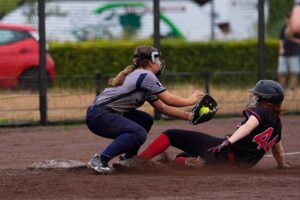
The future of women’s softball starts here
Of course, there’s work to do. Pitching control needs to improve—thirty-six walks allowed over six games. Defensive errors must decrease with repetition (fourteen in six matches). Managing big innings needs work—four frames of six runs or more conceded. Defensive communication can still flow more smoothly. But these aren’t weaknesses—they’re development milestones, normal steps in building a team discovering a new sport. This tournament wasn’t about losses. It was about progress. In six games, the French 15U team learned, corrected, adjusted, and finished by winning two matches—constructively, masterfully, and deservedly. That victory isn’t a footnote: it’s proof that potential exists, that a group has been forged, and that French softball can build on this generation to grow.
The future starts here, with them.
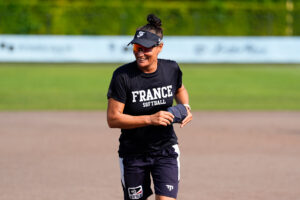
Céline Lassaigne reflects on the Bleuettes’ journey and their future
BTVF: Most of the 15U girls come from mixed baseball. Is that historic, or specific to this group given the lack of women’s baseball?
If we look back at youth softball history, France’s first 15U (then 16U) softball team was formed in 2002. Back then, all 15U teams were made up of baseball players because, with a few exceptions, most clubs—just like today—only offered baseball to girls. So yes, for years, the French 15U softball collective has existed and attracted young women who play baseball. A girl joins a club because she wants to play ball, and the club guides her toward the discipline. Today, this collective has also sparked a dynamic of collective scouting and discovery through prospect camps.
BTVF: How do you see this 15U generation fitting into the softball pathway?
As usual, the French softball staff held individual debriefs with the players after the tournament. These talks focused on their impressions of the week, their aspirations, and future ambitions. Every player expressed enthusiasm for the experience and eagerness to explore softball opportunities in their age group. It’s clear this generation is building a bright future in softball.
BTVF: How do you help players transition between the two disciplines?
Right now, the question of transitioning between baseball and softball is central. But by taking an exchange-based approach—explaining national and international realities on the ground and respecting the girls’ wishes—this shift can happen without the feeling of abandonment or obligation that’s often (though not necessarily by the girls themselves) associated with it.
The goal is for this ‘transition’ question to disappear in the future. When we can give our young women the chance to play against each other and offer training and games in their age group in softball, they’ll thrive and compete on equal footing with other girls—and later, young women. This ‘issue,’ which doesn’t even exist in any other European country, will no longer be a problem.
BTVF: Which skills transfer best between the two sports, and which struggle the most?
Like in previous 15U EDF campaigns, we’ve seen that pitching and hitting are the areas that suffer the most. While defense is the most transferable skill, most of these girls lack game experience. It’s crucial they play more often, together and in different positions. It’s worth noting that all European countries—especially those competing in youth European Championships—invest in training their young women in softball, with programs and/or youth softball championships. Some even introduce the discipline much earlier (9U/13U).
BTVF: If you had a blank check to improve the softball pathway over the next three years, what would you implement?
Developing the softball pathway—especially for young women—is a key focus for the DTN (National Technical Department), and projects are already underway. The DTN’s role is to drive a national project and support it through skill development, training offerings, and expertise sharing. But the real backbone for a solid, sustainable growth in women’s softball lies with the federation’s grassroots: our leagues, committees, and clubs.
Here’s what we’re working on (and some initiatives are already live):
– Develop a mapping of softball referents (in progress) to ensure information reaches leagues, clubs, and licensees effectively. Often, the message doesn’t get through to the right people, especially the players. Projects will be led by people already sold on youth softball and the project. Creating a National Technical Team (ETN) to multiply softball expertise nationwide.
– Offer training on softball specifics (pitching, hitting, game tactics) to clubs that want it but lack the skills or confidence to train young women in softball. The goal isn’t technical perfection—it’s sparking desire and playing opportunities for young women.
– Launch regional and departmental gatherings within leagues and clubs already leading in women’s softball, centered around events like the Super League Jeune. These will include training sessions on Saturdays and friendly games on Sundays in a fun, competitive format. These events will let young women meet, play together, and grow as athletes and individuals.
– Support leagues and clubs (based on their needs) by accompanying them or proposing structured projects to create a collective softball culture for young women at regional and national levels. The end goal? Eventually offering youth softball Interligues.
It’s important to highlight existing initiatives, including the FFBS’s women’s development plan, which supports these DTN-led efforts for girls in our disciplines. Competitive conditions for senior softball engagement have also been tied to youth development. On the sporting side, the Open de France Jeune Softball is a key event to mention.
Sébastien Dondé.
Photo credits: WBSC Europe RS and Glenn Gervot.
2 comments
-

Sébastien Dondé
MVP
-

Willy
MVP
See the 2 commentsBonjour Willy. Merci de votre retour. J’émettais justement le regret de ne pas voir se développer le baseball féminin, surtout quand on voit les résultats encourageants de l’EDF. Faisons au moins les choses bien avec le softball, des sections jeunes jusqu’à l’EDF
Bonjour je trouve l’article contrasté sur le fait que les filles n’évoluent pas dans les championnats régionaux de baseball seniors
Tout est une question de mentalité et de confiance à accorder aux joueuses tant que les mentalités évolueront pas effectivement les joueuses seront d’ officent relayées vers le softball féminin
Les autres fédérations tendent vers le baseball féminin pourquoi pas la nôtre 🥺
Community rules
Loading rules…