 PES
PES
 PHA
PHA
 SAV
SAV
 ROU
ROU
 REN
REN
 NAB
NAB
 COM
COM
 COL
COL
PARIS RANELAGH: Marketing and Communication Strategies
After introducing Paris Ranelagh, Baseball TV France explores the club’s strategies to establish itself in the capital and beyond.
Bertrand Maire, the club’s President, shares his insights on communication and marketing. Inspiring.
BTVF: Your mission was to found a baseball club in Paris in 2021, even though the sport wasn’t on the Olympic program, secure a field, recruit players, attract partners, and start a championship. You had just one year! Can you tell us a bit about the historic Ranelagh?
While researching at the BNF and reading the excellent work by Jean-Christophe Tiné on his blog: “Histoire oubliée d’un sport méconnu” : here
I discovered that the 16th arrondissement, where I’ve lived for nearly eight years, is the historic heart of French baseball. In 1913, Jacques Séraphin founded the first Franco-American baseball club at the end of World War I. They blended French and American players, creating an independent Franco-US league: the “Paris Baseball League.” The league’s championship was held in Boulogne, Colombes, Bagatelle, and also at the Stade Elisabeth in the 14th arrondissement of Paris. The league drew hundreds of spectators. The “Paris Baseball League” was celebrated in the international press, with the Times Paris of the era covering both the exploits of US pro leagues and those of the “Paris Baseball League.”
This history was very inspiring during the lockdown, and I shared it with my friend Thierry Godbert, former founder of the Ville d’Avray club and President of the Patriots de Paris, now the founding President of the Corsican League. Together in 2021, we first resumed training, then began gathering former players from western Paris and Americans in Paris.
BTVF: Why revive this club instead of creating a new one?
Our approach is sports-oriented, cultural, and historical. Baseball is barely covered in the French media for various reasons. For me, the sporting aspect isn’t the best angle to make baseball stand out in the media right now. Our contribution to the growth of our sport is to tell a different story, to deepen our approach. The Racing Club, American students in Paris, numerous US companies based in France, and even the Paris Police had their own baseball teams back then! It was the rising sport, and it symbolized Franco-American friendship at the end of World War I.
Aligning ourselves with these pioneers, these Frenchmen who understood the beauty and strength of the sport long before us, also meant paying homage to them by reviving the Ranelagh Paris baseball club… 110 years later, baseball is still evolving, so we’re all the closer to them: only a century separates us from playing together! The PUC, celebrating its 100th anniversary in the grand tradition of a century-old French sport, is also a beautiful story, and we, with the revival of Ranelagh, have immediately become legitimate, but also because we carry a real project for the 16th arrondissement that must serve the media development of our sport.
Finally, for the nod to history: the day I realized that near my home, at Porte Molitor just outside the Périph, stood the bust of journalist Frantz Reichel, founder in 1924 of the French Federation of Baseball and Rugby, there was no more debate: we had to bring Ranelagh back to life and have our arrondissement contribute to French baseball in one way or another.
BTVF: Did affiliating with the FFBS quickly become a priority?
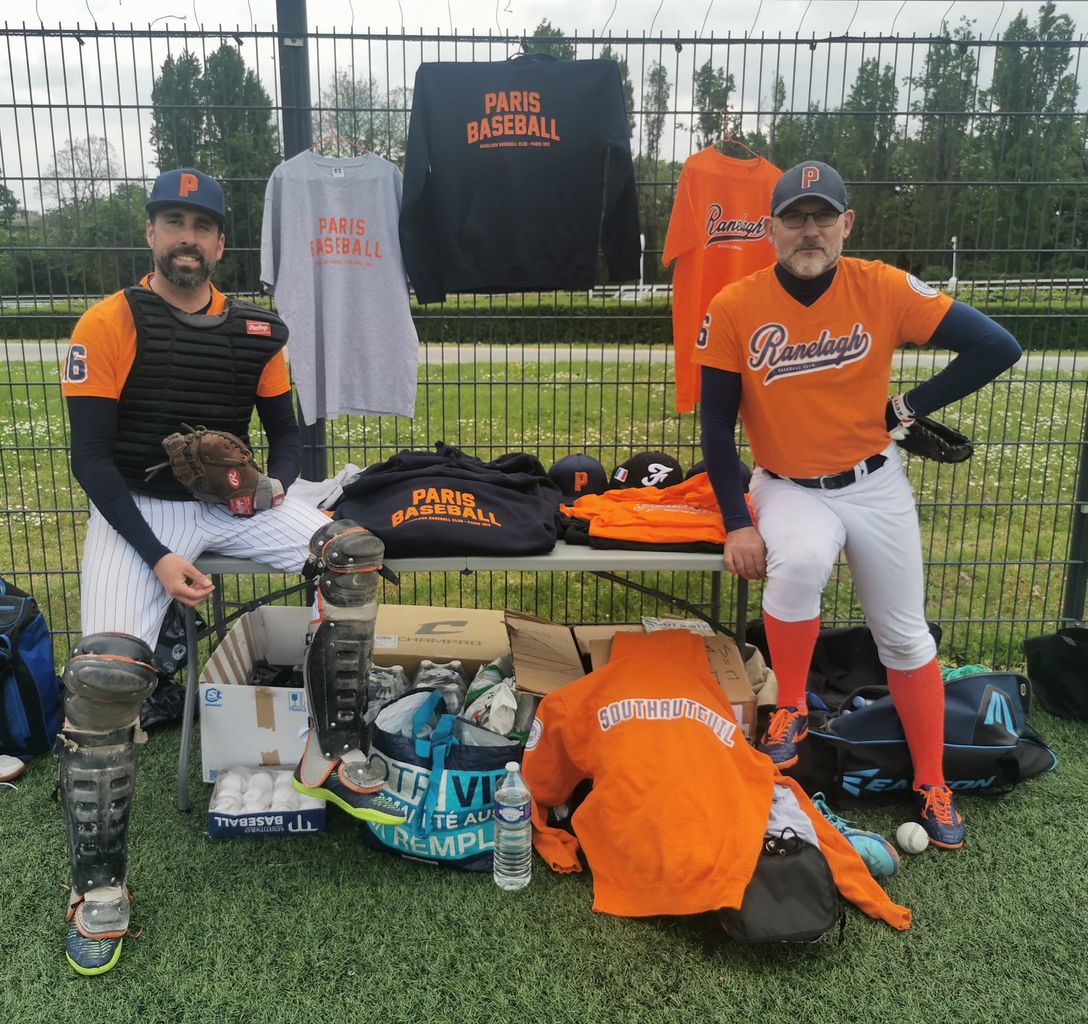
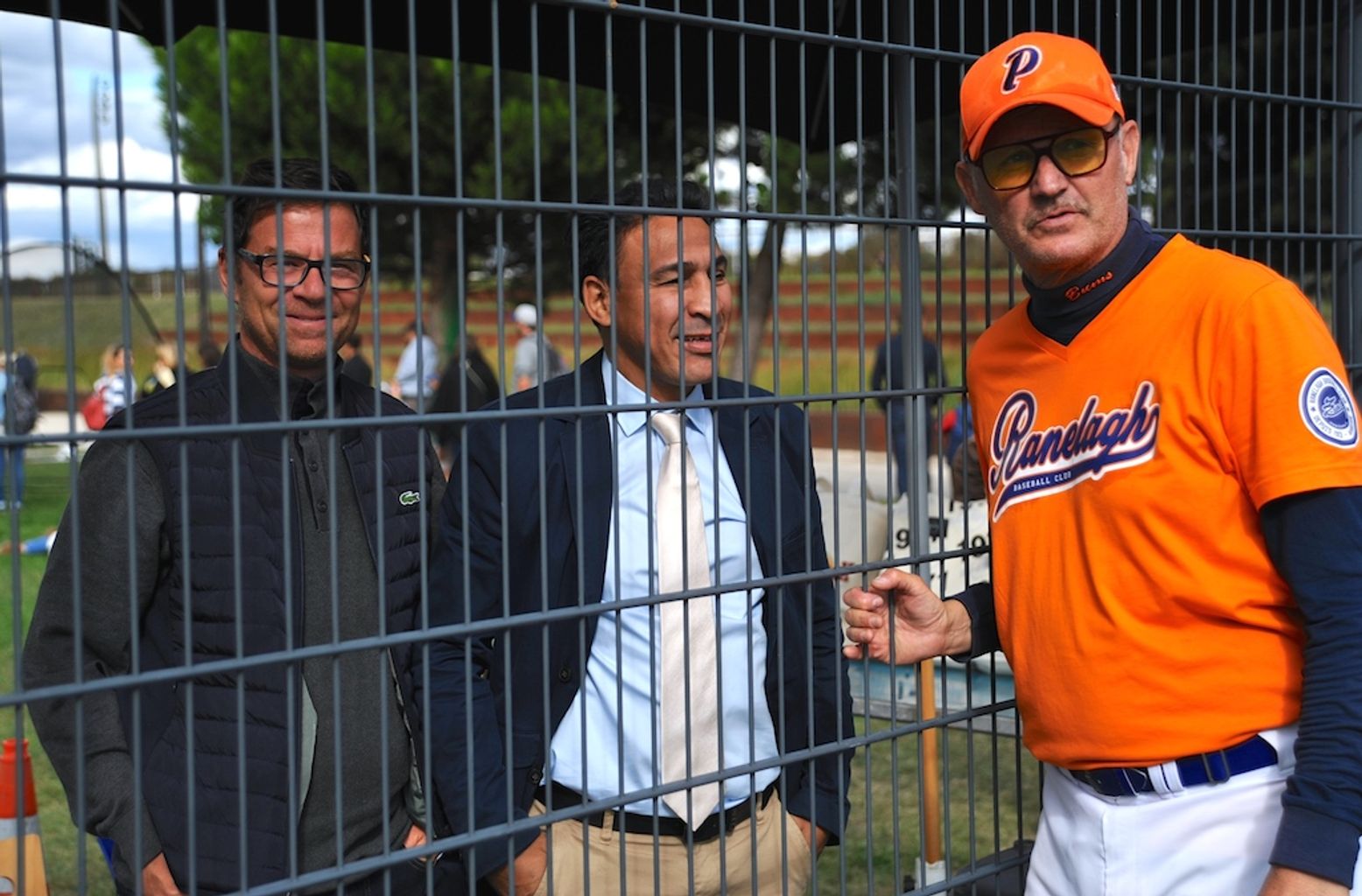
Initially, we thought we’d only organize tournaments and matches, set up open coaching sessions, etc. The 16th arrondissement city hall supported us and gave us access to the Stade Français rugby training field, located in the heart of the Auteuil Hippodrome. A nod to history: the Auteuil Hippodrome could have been a host site for baseball at the Paris 2024 Olympics. End of parenthesis. In any case, the link between baseball and rugby, beyond sharing the same “founder father,” is that the rugby field, with its surface, can accommodate baseball matches. We equipped it with removable gear. Little by little, as I wondered if I should join, I was encouraged by the city councilor in charge of sports, Ali Oubaali, himself an accomplished athlete and Thai boxing world champion. He pushed me to get back in the ring, so to speak, but with just one glove! We collectively decided to go all in, resume competition, affiliate, and promote baseball for everyone, without any particular sporting stakes, except that of being ambassadors for our sport.
Yes, we also need to play the associative game and support all those who work for our sport with often very few resources. Very honestly, we’ll try to manage the club by favoring a vision close to that of a company. It’s the only possible acceleration factor. I’m not saying we’ll succeed, it’s very complicated, we’re all volunteers, we have very little time, but we need to keep the parameters of a company if we want to grow quickly and well. And above all, we need a constantly evolving marketing strategy. I use the word deliberately. Association or not, we need to “market” our sport as a product to promote it. The sporting aspect will follow without issue if we know exactly where we’re going or want to go.
BTVF: What’s the profile of the players? (backgrounds, ages, social status, professions…)
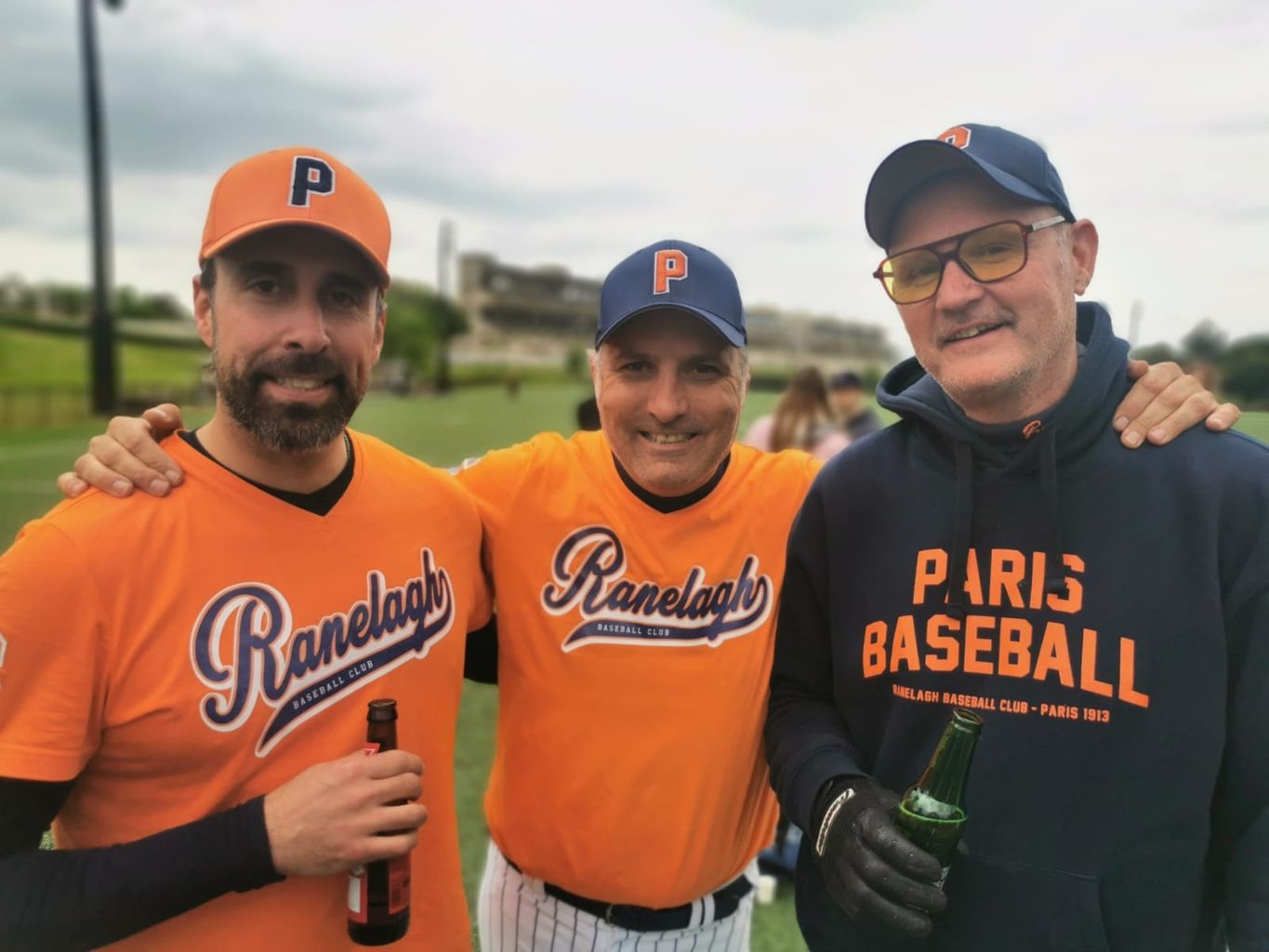
I reconnected with former western Paris players I knew who had played at a high level in the 1990s. The idea was to train in a flexible and agile way, often together, even during lunch breaks, skip a meal to meet at the field and start throwing the ball. We needed experienced players who share the same mindset, master the techniques and codes of baseball, and be immediately operational. I admit, at the beginning, I did this selfishly, to play with guys who had reached the top level and share an ideal. At over 40, if you still want to practice and win games, not be ridiculous, and honor our sport, you need to assemble a commando-like team and go for it immediately; we have no time to waste.
There are former internationals from the last century like Antonin Teyssier, a left-handed pitcher for BCF and the French team trained by legends Jacques and Eric Tuffreaud… Frenchmen who lived in New York, work in finance, and have all played in the “Wood Bat League” of Central Park like Christophe Leclercq or Damien Kasperski. Players from the Patriots I had coached a long time ago and who joined us, like Hugues Ahnes, Stephen Saint Guirons, or Jean Baptiste Precetti… Players I’ve been friends with for a long time like Francisco Arriagada, Mexican shortstop for PUC who trusted me… and other foreigners… 9 nationalities in baseball, working in companies, at the OECD, UNESCO, in bars… At the beginning, we were on the concept of Franco-American friendship, which doesn’t mean pro-American, but friends, which is much better: we can say everything to each other and move forward together! In reality, we have finally brought together all the nationalities that practice baseball.
Americans, Australians, Koreans, Japanese, Venezuelans, Dutch, and even Joline, a Taiwanese international player who occasionally joins us. We have a Sino-Korean team as a “sparing partner” that comes from time to time to put us back in our place on Saturday mornings! And I’m not giving up hope of playing against the Dominicans of Paris, who prefer their softball championship at Bagatelle, but are all very, very good baseball players!
Finally, what pleases me greatly is that Christian Blacher, who transmitted the most to me about baseball and for whom I was also the pitching coach for the French youth team, has joined us. He is our Honorary President and officiates as a third-base coach when he wishes. I’ll finish by citing Alain Belissa, our doyen: 83 years old, President of the 16th arrondissement war veterans, who started, like many, baseball in Tunisia, and who pitched for Fontainebleau and Saint Germain at the end of the 1960s. Incredible.
BTVF: Where do you train? What facilities do you have? Will this evolve?
I’ve already mentioned this a bit; we’re based in the Auteuil Hippodrome. Today, we’re starting from scratch like beginners. We’re playing at the lowest level in the departmental league; I had requested a waiver to go regional, but it wasn’t possible. In the end, it’s not a bad thing; we have time to structure ourselves, even if we’re currently dominating a bit sportingly. But the championship isn’t over yet.
I’m a bit surprised by all that’s demanded of a starting club; it never ends. All we wanted was to play baseball, and now we have as much work as if we were reviving the Paris Baseball League of 1920.
The issue is obviously the field. The east of Paris, Pershing, and Mortemart are very congested. We need a field in the west, and it’s all the more strategic if the MLB arrives in 2025 at the Stade de France. I spent a month in the MLB in 1994, a coach-player internship with the Atlanta Braves, and I very well understood that the MLB is a sporting war machine. It’s the ultimate baseball company, and everyone needs to understand that if the MLB arrives in Paris, at the Stade de France, it represents a colossal investment in temporary field arrangements as well as team expenses. If it happens, it will be broadcast, publicized, and the phones of the clubs will ring after the matches. We need to be ready behind. We are, for the MLB, one of the last countries in Europe to conquer. The MLB has been everywhere for a long time except in France. The Minor Leagues are full of future European players but very few or almost no Frenchmen. We need playing fields to progress. And our goal with the club’s executive committee, Christophe Leclercq, Antonin Teyssier, and Vincent Danna, is to work so that the Bagatelle plain, this green lung of western Paris which was the first playing field for Parisian baseball players over a hundred years ago, becomes a space dedicated to baseball. But not only!
We meet with all the elected officials of western Paris and soon the Paris city hall to move forward on a concept of a “Central Park” à la française, on the Bagatelle plain. With, as a spearhead, a first eco-responsible baseball field installed on this classified site but also by provoking a movement that can include our friends from rugby, other sports, but also culture, music, youth, etc… and allow this site to finally exist as it deserves.
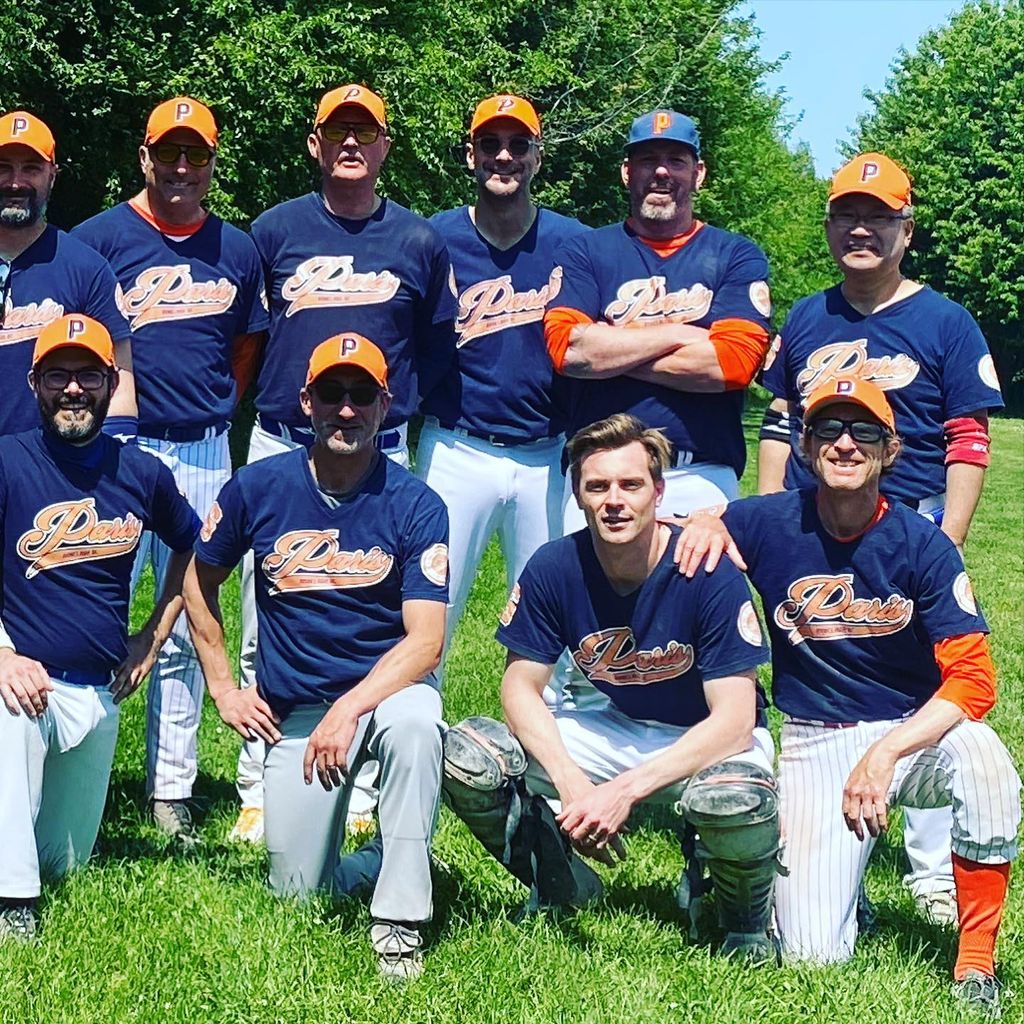
BTVF: The orange uniform quickly stood out in the small world of French baseball. Was it important to work on the club’s identity?
Yes, it’s essential. Fashion designer André Courrèges, a great sports fan, said that baseball and polo players are the most elegant. It’s an asset. Let’s use it without compromise.
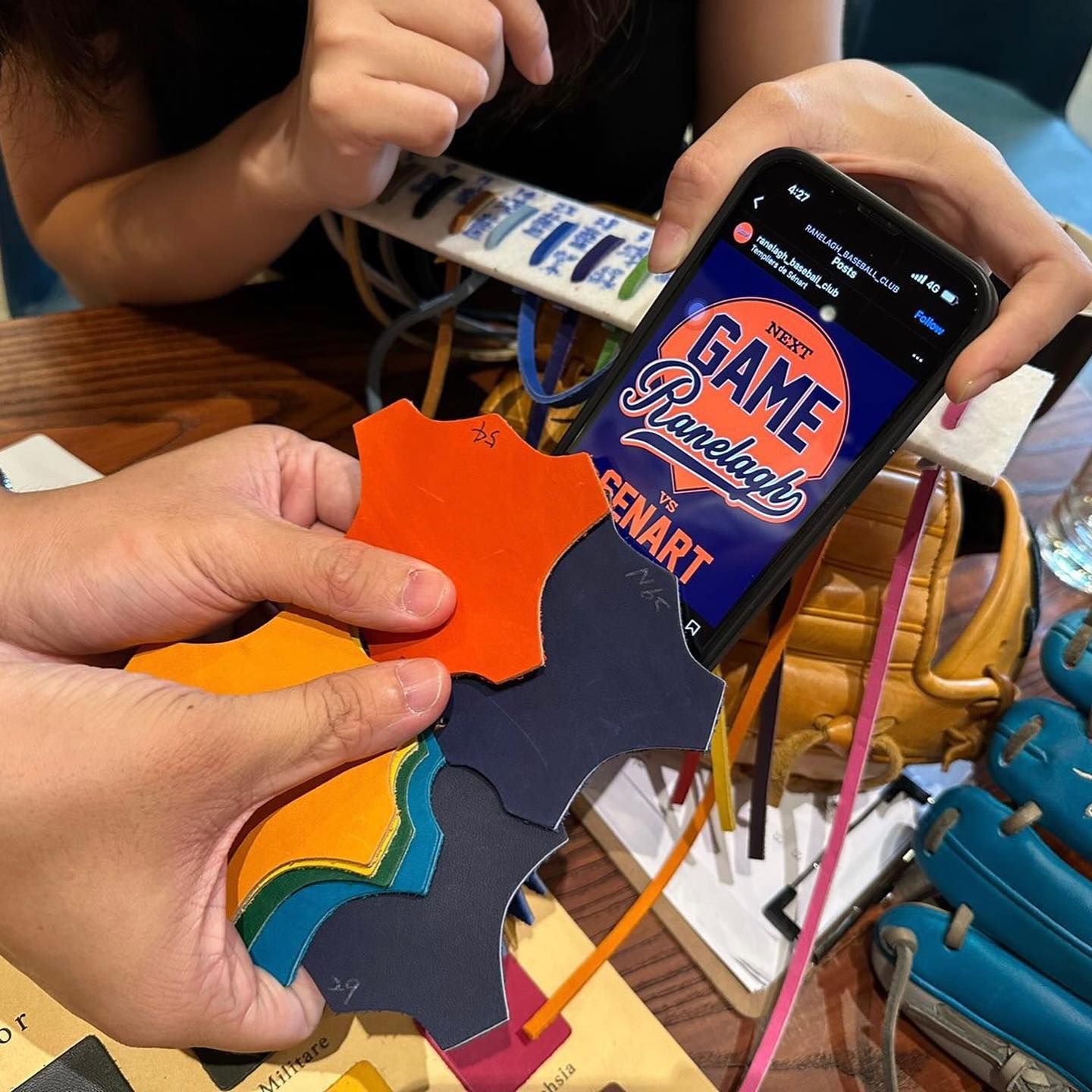
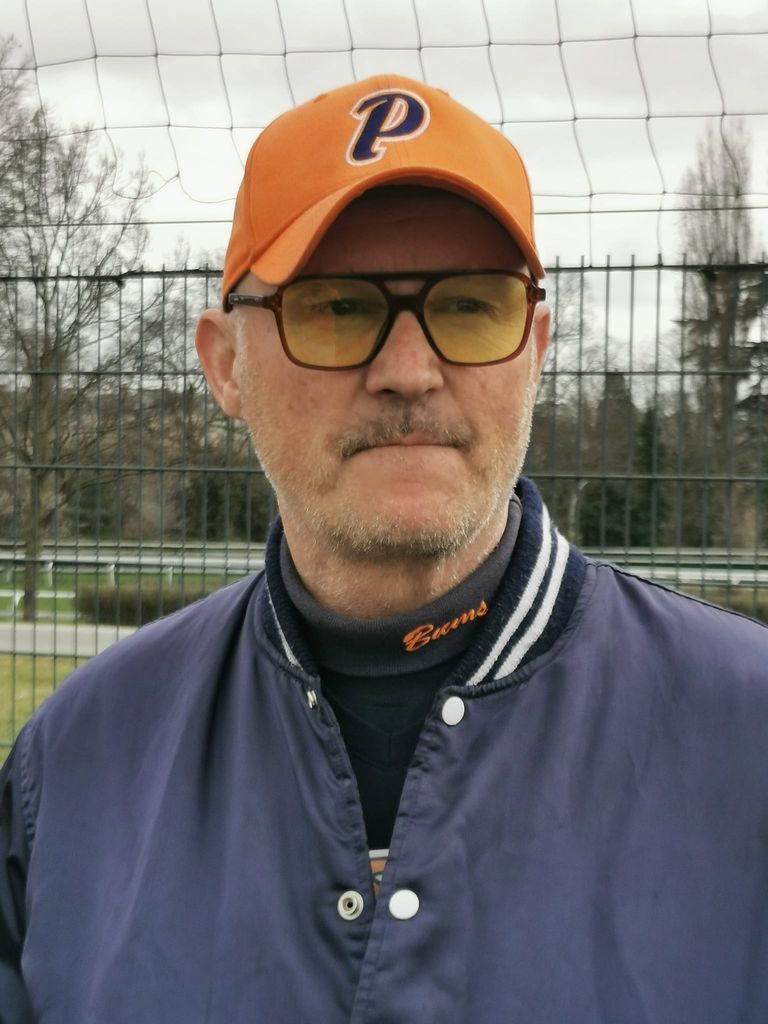
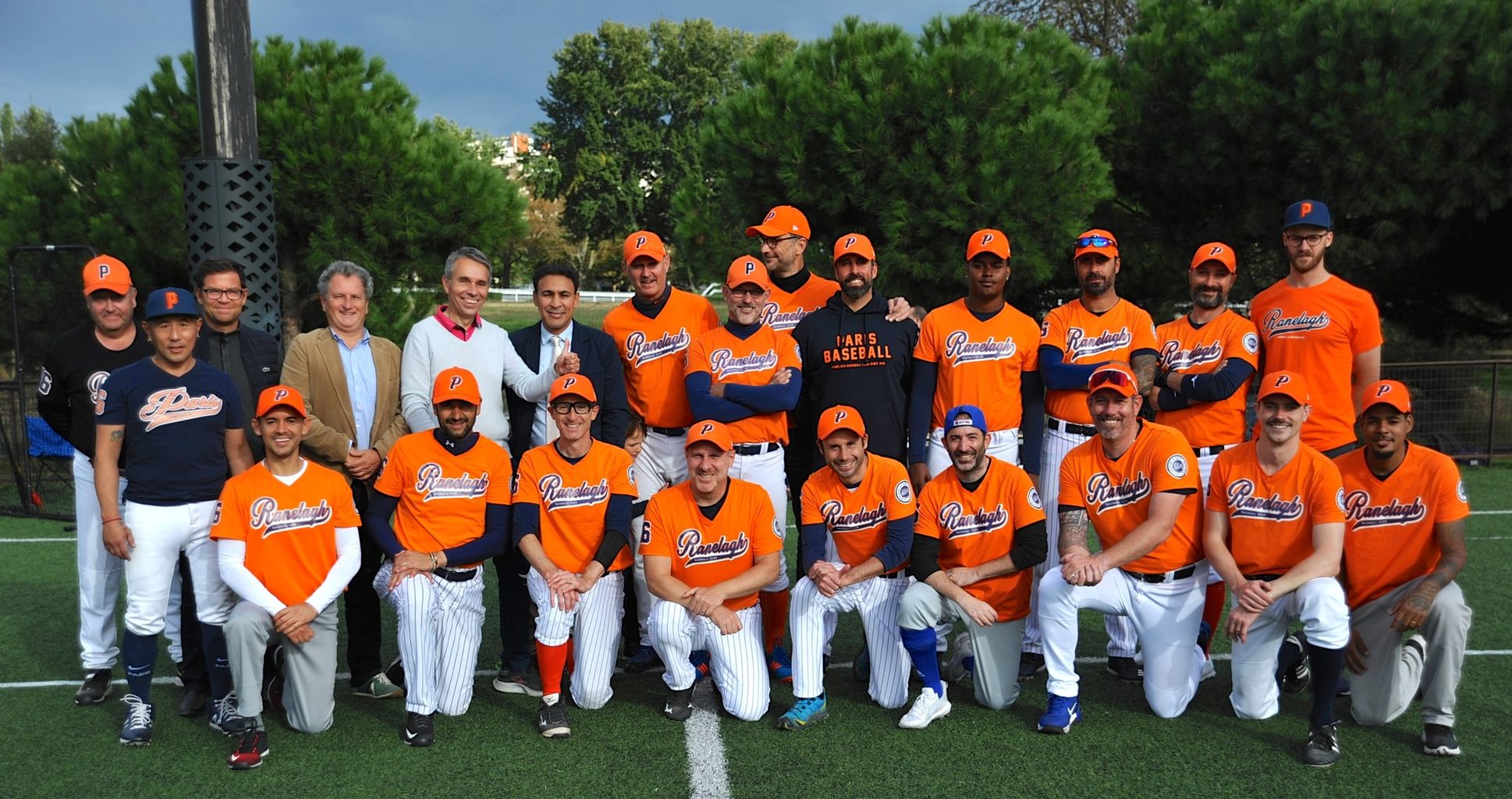
In front of us, there are many sports associations; the 16th arrondissement is a very sports-oriented district… PSG, Roland Garros, Stade Français, Racing Club… There’s been a lot for a long time, and color codes are well established, like navy blue for PSG or pink for Stade Français. So we went for a visible color, present in the codes of professional baseball and also differentiating from other Parisian baseball clubs. Orange and navy work well together; we can easily mix them and create all sorts of flashy or elegant combinations.
BTVF: How were the colors and the design of the club’s name decided?
We have former BCF members from that era with us, so orange was quickly chosen! Current BCF Paris also uses it in softball, and it’s very elegant.
The name is historical. Hugues Ahnes, our pitcher and catcher, who is an artist and exhibition curator in real life, redesigned a beautiful vintage logo for us, to which we added this Paris Baseball dimension that works well for the international image. When our American players return on vacation to their homes, they always bring back “Ranelagh Paris Baseball” t-shirts, and they’re a hit!
Is this identity (historical reference) a guarantee of credibility (especially with partners, elected officials…)?
It’s fundamental. The heritage of French baseball is a treasure trove of information that allows us to convince with arguments other than sports. There’s plenty in the BNF or INA archives about baseball. If we’re lucky enough to have François Mays, French commentator for BeIN Sports matches, in the team, we realize that apart from this media, who talks and broadcasts baseball? We didn’t even know that France TV broadcast the baseball matches of the Tokyo Olympics on the web… but without commentary! And I have the impression that no one knew in France, although we could have all gone to comment on matches and make our sport exist.
For complex reasons, French baseball has not yet managed to convince the media of the relevance of our sport. I’m more interested in hearing “Is there baseball in France?” Then surprising journalists by telling them something else about our sport, going back to the heritage, an anchor in a century-old history, a European culture of origin, etc… It helps us, it legitimizes us, and stabilizes us a bit. But it’s what you do with Didier Cannioux for the media coverage of stadiums and matches via your app, which is the only and unique thing to do: invest in us, take our destiny into our own hands, and assert ourselves as producers of our own content. It’s once again a corporate logic that thinks marketing and communication.
BTVF: Paris Ranelagh has invested in social networks and is very active. What’s the goal?
You don’t forget to thank the people who help you (local officials, for example).
Is it important to maintain networks?
Do you feel it’s difficult to be heard when you practice a niche sport, especially in the Paris region?
The idea is to test a new method for baseball, to do storytelling as they say in communications, to take the audience into a different story that can interest the largest number and above all reach people who aren’t immediately interested in baseball. There are quite a few clubs that launch cool stuff… Making ourselves known in the baseball world is secondary; it’s our microcosm. The urgency for baseball in general is to exist elsewhere. Baseball is connected to music and fashion in particular; we need to exploit this, go to these broader public terrains to return to the sport if we want to influence, reach non-practitioners, provoke something more, and implant our sport.
Did you know, for example, that Jimmy Alfonso, former junior international and known by the stage name “Naughty J,” is the historic DJ of NTM and is currently touring with Joey Star. That’s cool, it opens up to something else, it embodies our sport differently.
There are plenty of varied talents, visible or invisible, but who come from baseball.
BTVF: Do you need to be inventive to make your mark in the sports landscape?
Do you have resource people (volunteers, players…) who are more particularly in charge of the club’s image and communication?
Does the communication of Ranelagh aim to talk about the club or also to promote baseball in general?
On communications, it’s my original profession, and I use it, but I’m supported by Vincent Danna, who, in addition to all his numerous contributions to the club, is also, in quotes, an outstanding improvised press attaché. It’s time-consuming; you need to write a press release with what’s called a strong angle to interest journalists. We’ve chosen heritage and lifestyle… Little by little, volunteers within the team arrive, contribute their stone to the edifice, and that will do us good to move forward!
BTVF: You were the subject of a television report (France 3). Can you tell us about the behind-the-scenes of this project? Who contacted whom?
During the filming, were there messages you absolutely wanted to convey? Or on the contrary, subjects to avoid?
It was a stroke of luck to have France TV, but again, it’s because the moment was modestly historic: the return of Ranelagh to competition 110 years later! We wrote to a base of around 2000 journalists. Made follow-ups, etc… So this return was very encouraging. A report like this involves long takes; you shouldn’t hesitate to talk a lot; it’s largely cut.
BTVF: Ranelagh begins its second life in the departmental championship. What are your long-term ambitions?
The big project is to allow baseball to exist on the occasion of the Paris 2024 Olympics and “despite everything”!
The Olympic machine has no qualms, and it was perhaps written, as they say, that there would be no baseball in Paris, despite all the tenacity of our federal officials. Yes, at the beginning, we’re disappointed, but in the meantime, I realized that Ranelagh was the first club in the world to make the first baseball demo at the Olympics and on the occasion of Paris 1924 against an All Star US! Incredible!
What a stroke of luck for this sports heritage! So now, let’s tell this to the press all together and redo, under the aegis of the US Embassy, the original demonstration 100 years later!
You didn’t want baseball at the Olympics? Then we’ll be there differently! That’s what the historical and heritage approach is for: to restore a bit of balance when we can.
BTVF: Is getting known a prerequisite for seeking sporting results, or are the two independent?
The two are interdependent; you need to dream with sporting successes or a successful sporting story. Sporting performance counts. It’s our collective player objective, the engine of what we do with Ranelagh.
The fact of being former players who question ourselves or put ourselves in danger against young players, etc., counts. We make ourselves known this way, and it contributes to our growth.
BTVF: What’s your view on the communication of other baseball clubs, leagues, and the federation?
Collectively, we don’t have a global communication strategy; that’s the problem. It’s not what we, the clubs, do individually, that can carry a structuring message for all. We need to implement a progressive strategy and animate it with strong, regular messages, etc… But we obviously need resources, or at least a resource to do it, and that’s not easy for French institutions that are drowning in operational issues. Again, and without throwing you flowers, you have objectively become the French channel for information. One was absolutely needed.
BTVF: Do you plan to develop your communication with other tools? (e-commerce site, sale of articles/textiles in the club’s colors, advertising campaigns on certain occasions…)
We’re going to launch a merchandising store; it’s in progress. Baseball is also a lifestyle: caps, teddy bears, rap, rock, traditions, etc… It’s a bit like surfers or skaters; we’re a community with our sport-related codes. Finally, as we’re not going to win the D1 in the coming years 😉 we’re at the service of baseball and we also give back what it has given us. We do everything to make people talk about it! For the exhibition match last year against PUC at the end of September, we communicated on social networks and in the press, but above all, we went to the exit of the Auteuil metro and distributed flyers in uniform… Like politicians do: we talked to people, we infiltrated the life of the city! And result: we had 250 people at the match, which is not bad for a first!
Thomas Houlez


3 comments
-

Ben Morris
-

Thi Lou
-

Frédérick launay
See the 3 commentsFantastic baseball story
Bravo au Babe….the only one 👌🏼
Génial ! Bravo les Ranelagh et bravo Thomas 🙂
Community rules
Loading rules…