 ROU
ROU
 SAV
SAV
 PES
PES
 PHA
PHA
 REN
REN
 NAB
NAB
 COM
COM
 COL
COL
It is difficult to determine who hits better between a manager and a captain without further context or information.


Fifteen days before play ball in France, the smell of clay courts is starting to fill the air. The Division 1 and Division 2 baseball and softball championships are getting ready to resume. Meanwhile, elsewhere in the baseball world, the stars are warming up quietly: the World Baseball Classic is in full swing in its group stage, while the Japanese and American leagues are warming up in the gentle warmth of spring before the start of the Major League Baseball.
In short, world baseball is getting moving. And at Baseball TV France, before diving headfirst into the box scores and rankings, we decided to stop for a moment on a character who is sometimes discreet, sometimes ubiquitous, often misunderstood: the captain.
In the perfect world of baseball
In a perfectly organized universe – the one we imagine in sports management manuals – a baseball team functions like a small business.
At the top of the organizational chart is the president, who guarantees the administrative, financial and legal structure. Next to him is the manager, the boss of the field and the conductor of the game.
The president talks about budgets, licenses, infrastructures and strategy.
The manager, on the other hand, transforms all this into sporting decisions: line-ups, pitcher rotations, game strategy.
Under his orders are the specialized coaches: pitching coach, catcher coach, outfield coach… and of course the players.
And among them, a somewhat particular character: the captain.
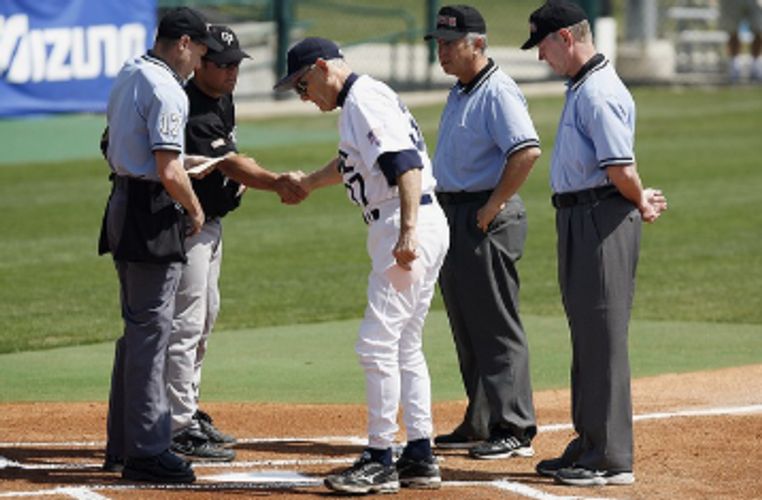
The captain, an eye in the heart of the game
The captain is a player like the others… but not quite.
He is appointed by the manager – sometimes elected by the players – and draws his legitimacy either from his experience, his charisma, or his ability to speak louder than anyone else in the dugout.
En pratique, il arrive qu’il se retrouve sur le terrain, les crampons aux pieds, pour faire le job de capitaine.
C’est le cas de Benoît, manager et capitaine du Baseball Club de Saint-Denis.
« J’ai commencé à jouer quand j’avais 12 ans, raconte-t-il.
Et j’ai continué jusqu’à mes 25 ans.
Quand j’ai arrêté, j’ai voulu continuer à faire partie de l’équipe.
Donc j’ai pris la place de capitaine.
Et puis, un jour, on m’a dit : « Benoît, on a besoin de toi, on ne sait pas faire, viens faire le manager. »
Et je me suis dit : « Pourquoi pas ? »
Et je me suis lancé.
Et ça fait 10 ans que je fais ça.
C’est un peu étrange, mais ça marche.
Je suis un peu le capitaine et le manager en même temps.
C’est un peu compliqué, mais ça marche.
Je sais que je ne suis pas le seul dans ce cas-là.
Il y a des managers qui jouent aussi.
C’est un peu étrange, mais ça marche.
C’est un peu comme ça que ça se passe dans le baseball amateur.
In practice… it happens that he pitches.
Out of necessity, due to a lack of personnel, or to respect certain rules such as JFL quotas.
We have seen Keino Perez, manager of Rouen Huskies, climb up to the mound to pitch a few innings. More recently, Patrice Briones has also returned to service.
Conclusion: even in Division 1, baseball sometimes remains a sport where the manager keeps his glove in his bag… just in case.
Incongruity #2: manager and captain… the same person
Here, we enter a particularly sporting configuration.
Imagine:
the manager has to analyze the game, manage substitutions, anticipate strategy… while playing on the field himself.
In other words: managing the team while trying to hit a ball at 140 km/h.
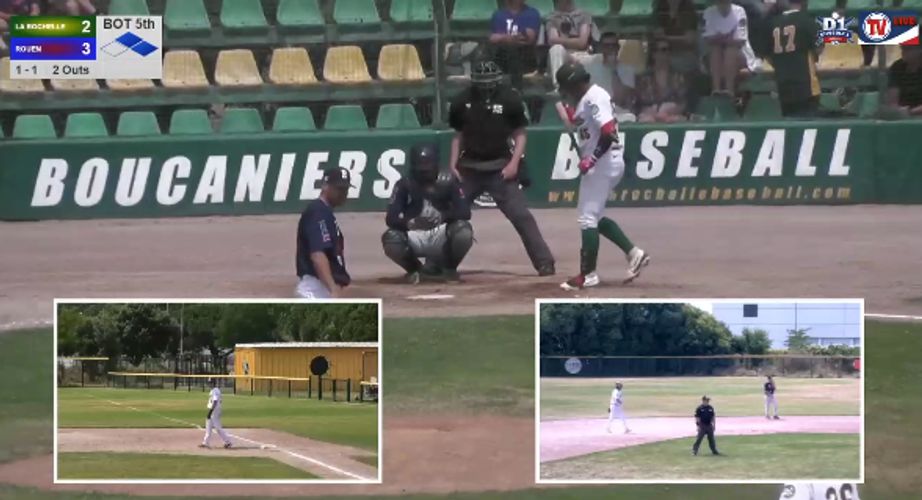
Some teams have tried the experiment – in Montpellier, La Rochelle, or Savigny in particular.
Result?
Let’s just say that over a full season, the formula often shows its limits.
Incongruity #3: When the Captain Becomes the Real Boss
Another classic scenario: the captain is so charismatic that they end up overshadowing the manager.
- the player contests a decision,
- the captain intervenes,
- the manager comes to talk to the referee…
…and it’s always the same person.
Frequent result: expulsion.
And a team that suddenly finds itself without a manager, without a captain… and often without its best player.
In regional or Division 3, it can be understood.
But we’ve also seen it at the highest level of French sport.
The real question: authority
In the end, all of this leads to a simple question: authority.
The manager draws his legitimacy from the president or the board of the club.
The captain draws his from the players.
Then, everyone must convince those who did not nominate him.
The captain must seduce the staff.
The manager must earn the respect of the locker room.
And in baseball, there is an unwritten rule:
a respected manager is often a former great player.
An almost universal dogma:
“A great manager has been a great player.”
This isn’t always true… but it’s often what the players think.
Et parfois… les clans
Autre phénomène bien connu : les clans dans le vestiaire.
Deux groupes se forment, chacun avec son leader.
Et soudain, l’équipe se retrouve avec deux capitaines officieux.
Si le manager penche ouvertement pour l’un des camps, la situation peut rapidement devenir explosive.
Une particularité du baseball
Contrairement au football ou au rugby, le baseball peut fonctionner sans capitaine.
Le manager et son staff peuvent théoriquement tout gérer.
Car au fond :
- le manager dirige et décide
- le capitaine inspire et fédère
Mais ces quatre fonctions peuvent parfois être concentrées dans un seul rôle : celui du manager.
Pourtant, la confusion persiste
Faute de moyens, certaines équipes continueront cette saison à fonctionner avec :
- pas de capitaine,
- un capitaine-manager,
- ou un capitaine omniprésent.
Et parfois… tout à la fois.
Moralité
Cet article n’a pas pour but de dresser un inventaire des catastrophes managériales du baseball français.
Mais simplement de rappeler une évidence :
Les équipes qui durent sont souvent celles où les rôles sont clairs et occupés par des personnes légitimes.
Supprimer un rôle ou nommer quelqu’un qui ne fait pas consensus peut fonctionner…
mais rarement très longtemps.
⚾ Et vous ?
Avez-vous déjà rencontré d’autres situations de management pour le moins… originales dans le baseball français ?


1 comment
-

Popy Grizzlys
See the 1 commentOui, l’auto gestion de l’équipe… Et ben en général cela ne donne pas les plus belles expériences.
Community rules
Loading rules…