 LVS
LVS
 DUN
DUN
 ROU
ROU
 TOU
TOU
 SAV
SAV
 MTP
MTP
 LAR
LAR
 MET
MET
 MON
MON
Semifinals Recap: Logic Holds as Rouen and Savigny Clash for Third Time in Five Years


This makes perfect sense. The two best teams from the regular season are now facing off in the final. And for the third time in five seasons, the ultimate showdown will pit the Lions de Savigny against the Huskies de Rouen. The Huskies have won the last two finals—and the four before that, too. Will logic carry them all the way to the end?
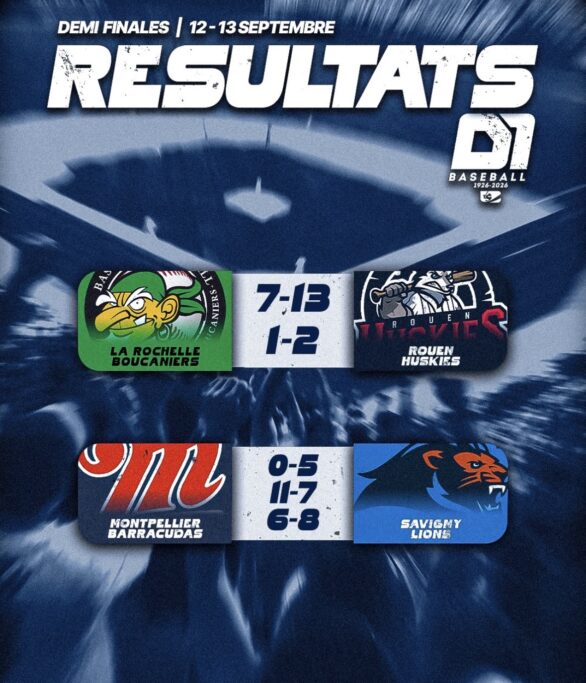
But let’s start with the two teams that fell short. The Boucaniers de La Rochelle have little to regret. They rattled the Huskies’ pitching staff with 18 hits, a strong effort considering they hadn’t played a game in a month—rusty bats be damned. They made jaw-dropping defensive plays, including a game-changing double play by Pena in the 8th inning of Game 2, snaring Megumi on a fly ball and firing a strike to the plate to cut down the speedy Rioux. They took the lead in both games but never closed the door. La Rochelle scored in five innings, only to see Rouen answer immediately on the defensive. Sure, the Huskies’ ability to rise to the occasion is legendary, but the truth is, La Rochelle never quite shook their confidence.
That became clear in Game 1, when the Boucaniers jumped ahead 2-0, only to surrender three runs, then tied it up before giving up two more. But the real turning point came in the 5th inning. This was the third time Krzykawiak faced Rouen’s heart of the lineup—and this time, it was too much. A four-run explosion sealed his fate. The young lefty has never found a rhythm against Rouen this season. In three matchups, his ERA against them is a staggering 15.19, compared to a solid 3.25 against the rest of D1.

Game 2 was less dramatic, but the Boucaniers still took the lead—only for Rouen to tie it. The deciding moment came in the 8th inning, when De La Rosa—who hadn’t pitched past the 7th all season—faced his toughest test. After a strikeout, a single, a walk, and another single, the damage was done, despite a late rally. La Rochelle will miss Briones and Camara, but they have no reason to be ashamed of their 2026 campaign. The Boucaniers are finally planting their flag in D1. Now, they just need to break through the mental barrier of winning a semifinal game (they’re 0-8 at this stage). They’ve got the firepower to do it.
Meanwhile, the Barracudas de Montpellier ran into the same struggles that plagued them all season: weak pitching and costly errors. Their five starters issued 17 walks—a 13.8% walk rate, down slightly from the regular season (17.25%), but still far too high. For comparison, Savigny sat at 8.7%. As for errors, none were made in their Game 2 win, but three marred their Game 3 loss, including a game-sealing blunder in the 8th inning that put Savigny ahead. Offensively, Brossier (2-for-10), Doat (2-for-12, but 4 RBI), Mendez (2-for-12), and Bouniol (1-for-10) didn’t live up to expectations—and that’s a lot to overcome. On the mound, Ramirez (7 walks, 2 balks) never quite found his groove, while Delgado fought hard but ran out of gas in the 8th after hitting 120 pitches. A shoutout to Quentin Lesfargues, though—he won his first postseason start, going six strong. Montpellier has fallen short in 8 of their last 12 semifinals. It’s not just a stat; it’s a pattern of failing to elevate their game when it matters most.
Now, to the winners. Savigny did Savigny. Their resilience is legendary, and this season—despite playing without a home field—has only sharpened their edge, especially after finding their footing in Chartres. They could’ve folded after surrendering 9 runs in the first two innings of Game 2, but they clawed back until panic set in late. They could’ve called it quits when Montpellier led 3-0, 5-4, and 6-4 in the 8th inning of Game 3. But they dug deeper and won.
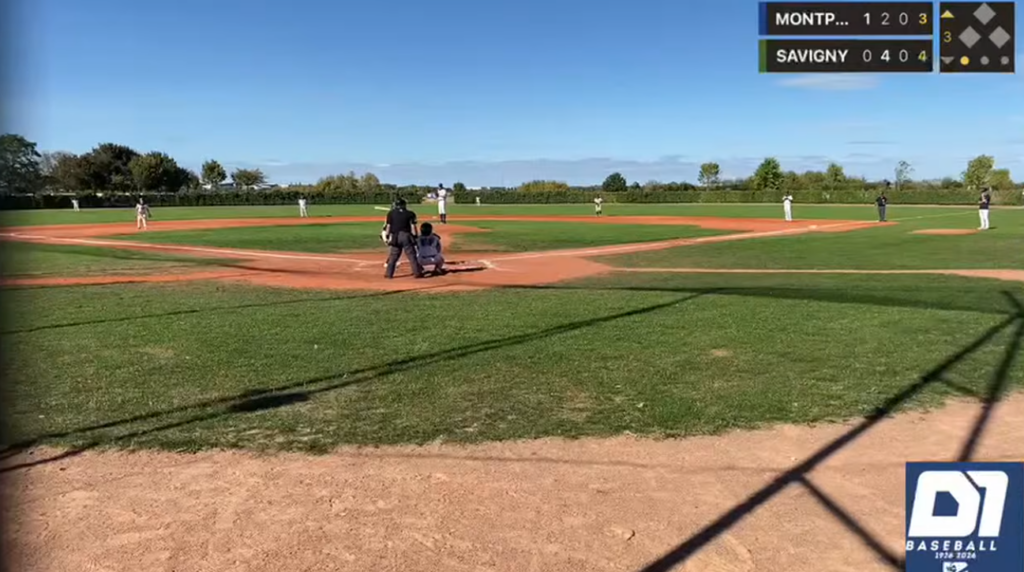
We know Savigny’s offensive firepower—Nunez, Acuna, the Amoros brothers—but in these semifinals, it was their bottom of the lineup that carried them. Their 1-3 hitters batted .226, their 4-6 hitters .187, and their 7-9 hitters .282. That’s a team with collective confidence, dangerous in every spot. Sure, their defense is still shaky (6 errors this weekend), and their bullpen has vulnerabilities—like Coste, who can dominate or get blown out—but Savigny is a locked-in, mission-focused team. They believe in their shot at a title that’s eluded them for 24 years. And they’ve got an ace on the mound: Pena, who struggled against Montpellier in the regular season but stepped up in the playoffs, closing out Game 3, and Orozco, who was untouchable in relief, shutting down Montpellier’s late rally.
The Huskies’ hitters are on notice—this won’t be easy. Some are more than ready, though. Megumi, who underwhelmed earlier in the year, stepped up with 3-for-9, 2 home runs, and 4 RBI, including the game-tying hit in the 5th inning of Game 2. His teammate Nishikawa was ice-cold (5-for-9), and Hugo Blondel has been unstoppable (5-for-10, 2 RBI). The Huskies also made clutch plays: Vissac’s two-run triple in Game 1, Lebouc’s game-winning RBI in Game 2… And let’s not forget Bert’s walk against De La Rosa in the 8th inning of Game 2. The veteran lefty had been dominated all series (1-for-20, 11 strikeouts), but he found a way, forcing Blondel to second on a walk, then Lebouc to break up the inning with a sharp single. Two pitches later, the Huskies were in the final. Chirurgical. Ruthless. That’s how the Huskies play in the playoffs.
Their pitching wasn’t as flashy. Ito was overpowered by La Rochelle’s bats, posting his worst outing of the season, and even Taido wobbled in the 8th before steadying against Hashimoto. But Rouen leaned on Thibault Mercadier, who wasn’t dominant (just 12 strikeouts) but battled through tough spots to keep his team in the game. He’ll be Rouen’s No. 1 weapon against Savigny’s hit-happy lineup.
The stage is set for Sunday in Rouen, where the Huskies dream of their 20th title on their 40th anniversary, and the Lions dream of finally knocking them off their throne. You couldn’t ask for a better final matchup.
F. Colombier



React to this article
Community rules
Loading rules…