 ROU
ROU
 SAV
SAV
 PES
PES
 PHA
PHA
 REN
REN
 NAB
NAB
 COM
COM
 COL
COL
How Rouen Reclaimed Their Crown


There were Huskies teams that were powerful and dominant. They had the firepower of a destroyer and home run bats. They rolled over their opponents with all the compassion of a steamroller. Others meandered along, barely interested in the anonymous Sunday morning battles, but still won because they had to. Confident in their strength, they waited for the crucial end-of-season moments to slam their fist on the table and sweep aside anyone who dared resist.
But the 2024 team doesn’t fit into either category. They’ve written their own story, forged their own identity, learning to spell resilience before victory. At first, they were like a newborn puppy, unsteady on its feet, hesitant in unfamiliar terrain. Then they grew, built themselves up, gained muscle and confidence. They no longer yapped—they bit. They no longer growled—they barked. As loudly as their predecessors.
They haven’t completed their transformation yet. The hardest part lies ahead—the ultimate challenge, the final mountain to climb. They have a legacy to defend, a torch to carry, a crown to claim. But they’re ready.
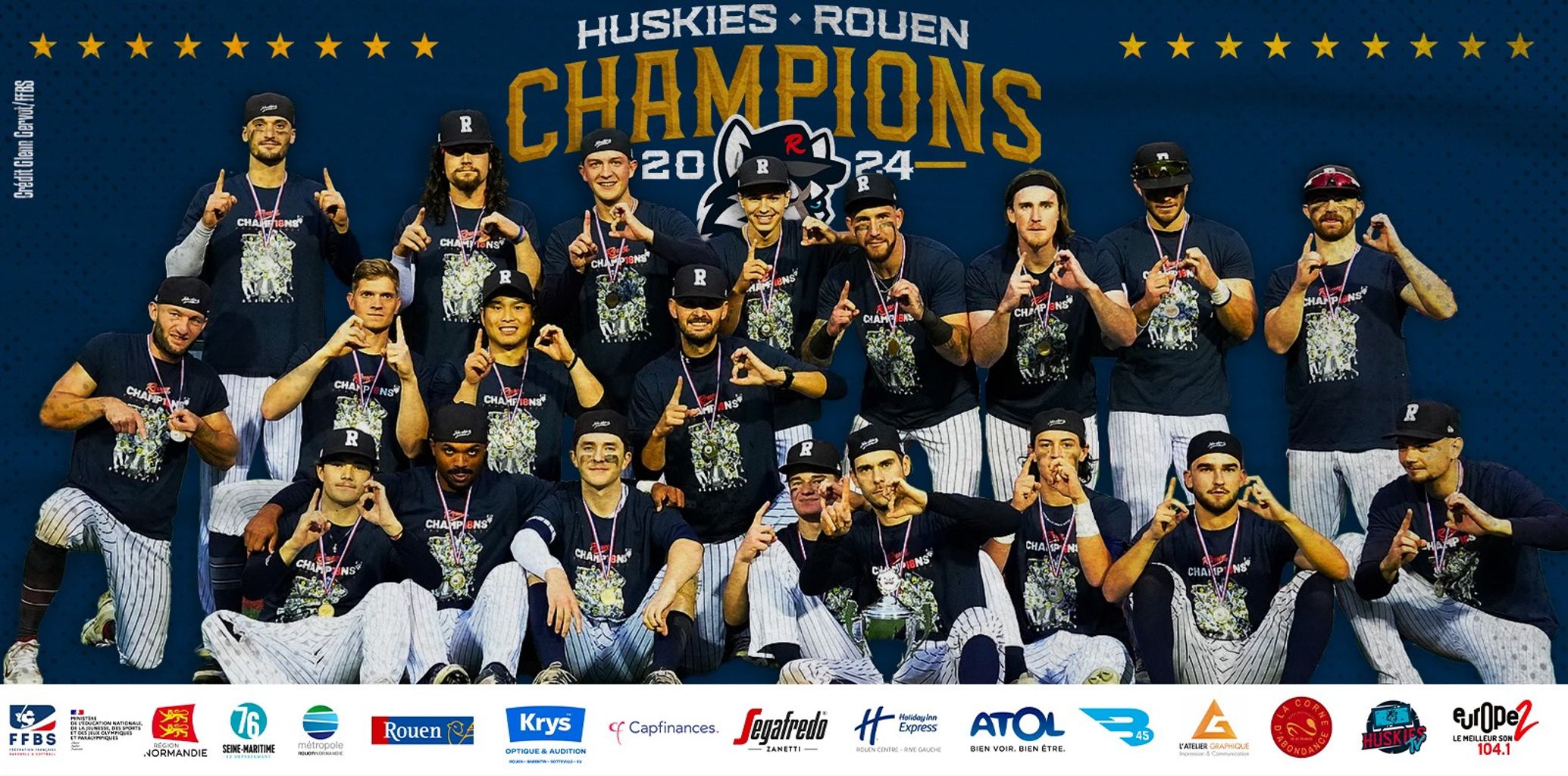
At the beginning, there was Quentin Becquey. A new musher to lead the pack. A new captain ready to take the seat once occupied by Christian Chénard, Sébastien Bougie, Robin Roy, and Keino Perez. It took courage—some might call it recklessness—to follow in the footsteps of these giants. The young man knew the challenge and prepared the way. He knew where he was going. Head held high, voice steady, eyes fixed on the golden line of victory, he wanted to impose his methods, overhaul a rusting machine, and give a team that doubted a new horizon. “I love when things get moving,” he declared in a preseason interview. He was about to get his wish.
The Chaos Turnaround
Change was now. Turning their back on South American recruitment that brought so much glory, Quentin Becquey went shopping in California, Indiana, and Quebec. Poutine replaced enchiladas, country music replaced salsa. The question remained: was the recipe right?
Things started calmly with a double victory, albeit unremarkable, against Sénart. Far from the epic battles against the Templiers that left everyone breathless and a few hairs whiter. But the essentials were secured—Rouen took two wins. All was well under the Rouen skies.
“I want to create chaos,” the Huskies coach repeated, describing his on-field strategy. What he didn’t know was that he’d be living it more than his opponents.
The trip to La Rochelle marked the start of trouble. A disastrous Sunday for Rouen—a lifeless offense, shaky defense, pitching lacking bite, two defeats that left observers perplexed and worried, too quickly forgetting that a season is long, very long.
Another trip the following weekend, down south to Toulouse. An easy first match, perhaps too easy. Then the same demons haunted the Huskies in the second game, with a multitude of errors showing serenity was far from their grasp. By the third matchday of the season, Rouen wasn’t exactly reassured after splitting with Montpellier and letting a game slip away in the 9th inning against the league’s weakest team, Montigny.
Shaking up the lineup, making bold but ineffective mid-game substitutions, taking tactical risks—the young Huskies coach was going through tough times. But there was no time to reflect and rebuild, as the Challenge de France was looming. At home.
The Time of Fatalism
There’s a tradition—or perhaps a curse—in French baseball. The team hosting the Challenge rarely wins it. They often exit early. There was Rouen in 2011, but exceptions confirm the rule. Because in 2006 and 2017, the Huskies left with their tails between their legs, watching two other teams play for the title on their own field.
But this time, failure wasn’t an option. Rouen had gone home empty-handed in 2022. Losing the Challenge meant three straight seasons without the Huskies’ name on the winners’ board—something that’s never happened.
True to his desire to shake things up, Quentin Becquey pulled a surprise for the first match, handing the ball to young Arthur Magnier against Sénart. Two outs and three runs later, he left the mound, and Rouen never recovered. The next day, a hard-fought victory against Montigny kept Rouen in the hunt. But something felt off. The well-oiled machine was still stuck. And indeed, Rouen couldn’t right the ship against La Rochelle, building a fearsome reputation as Huskies slayers. Rouen exited the competition through the back door, heads full of questions. In some glances, some words, some gestures, discouragement and fatalism began to show.
The answers wouldn’t come right away. At least, not positive ones. Rouen traveled to Savigny. The Lions’ first five batters, with four hits and a hit-by-pitch, took turns on the paths. 4-0 after two innings, and a failed comeback attempt. Rouen was out of the playoffs and could start eyeing the bottom of the standings with a negative 5-6 record.
The Captain Rises
In the next match, Rouen faced the Lions again. And Savigny took an early 2-0 lead in the first inning. No hits—just two errors, a wild pitch, and an open door. Few could have predicted that five months later, the two teams would meet in the finals.
It’s when things are at their worst that heroes rise. That’s when Dylan Gleeson stepped up. The captain took charge. After a dozen years in D1, over 1,300 at-bats, a collection of gold medals that would make Michael Phelps envious, he knows when to stand up. He knows how to make a difference. He knows what winning means. It’s the 4th inning, still 2-0 for Savigny. Two outs, two runners in scoring position. Gleeson swings at the first pitch. Why wait when you have a date with victory? It’s a double, two runs score, and Gleeson himself crosses the plate for the third run. Rouen takes the lead—and never looks back.
That hit was the difference-maker. The turning point. The winning culture the Huskies had claimed for seasons, seemingly forgotten in a dusty corner, was back in full force.
But things were still shaky in the Huskies’ house. A meeting that could almost be called a crisis between management, coaching staff, key players, and the coach laid everything out, asked some questions, raised some issues. To understand, but above all, to help. Managing a D1 team, especially in your first year, is a heavy and difficult task. A little help sometimes allows you to see the team and strategies differently. Not to completely overturn them, but to find the small adjustments that make big differences.
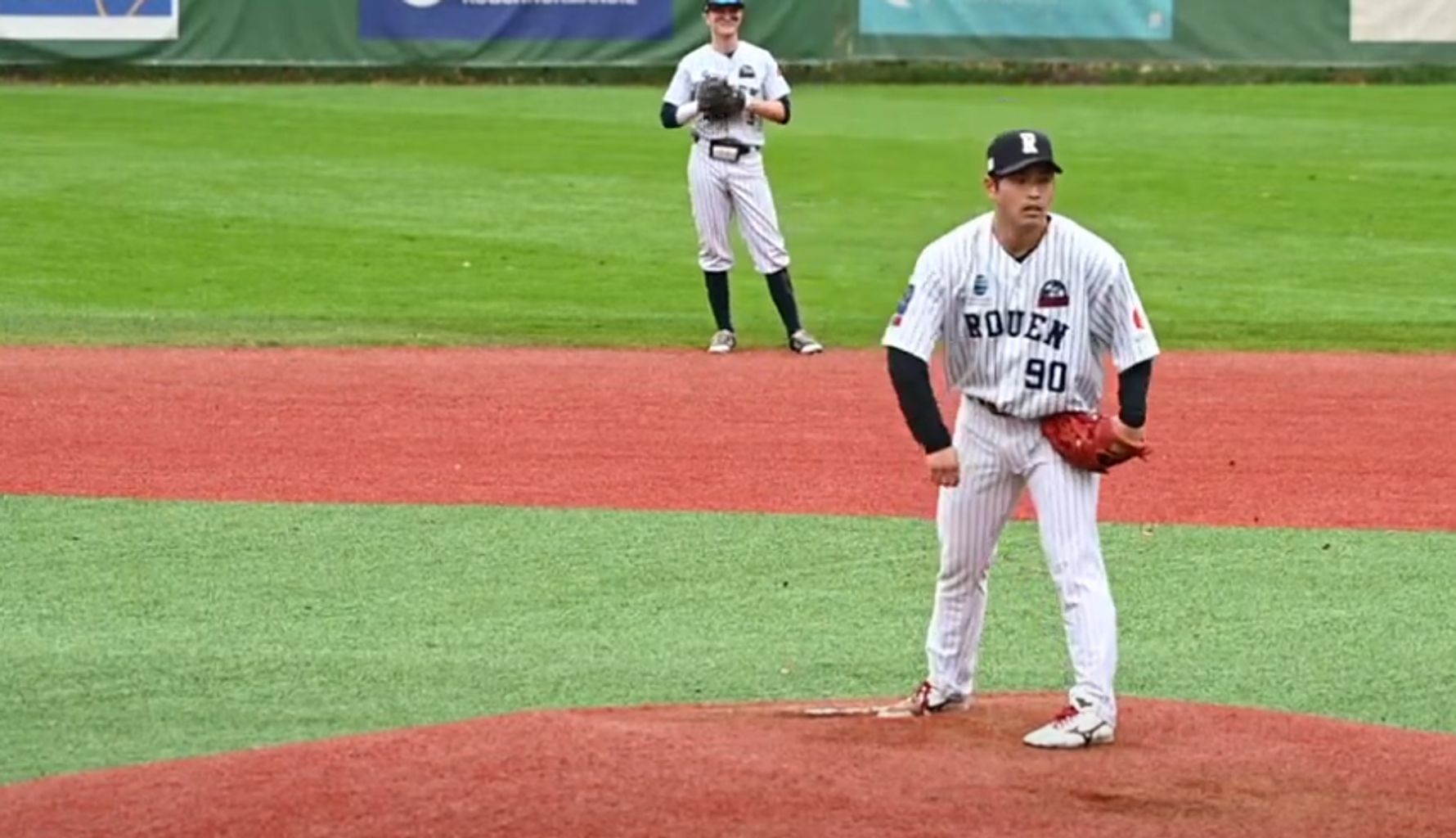
From there, Coach Becquey found his formula: he placed Defries, Masson, and Smith in the top three spots of the lineup, moved Smith to third base, and shifted Igami to the bullpen. And everything clicked. Obscure alchemy of sports, a constant balance between the fragility of doubt and the path to success, a succession of tiny details that magically become immense mountains.
Twelve straight wins. Rouen would one by one surpass their opponents, leave them in the dust, Pogacar-style. The conquering Huskies were back, watching their stunned pursuers in the rearview mirror.
The Little Details
Moments of grace sprinkled this winning streak. Mercadier’s stifling relief in Montpellier, bases loaded with no outs, sealing the Barracudas’ fate with three strikeouts. Defries’ hitting streak, Masson’s RBIs, an entire team reciting their game from the 1st to the 9th, including substitutes. Coach Becquey had found his rhythm—everything was running smoothly, hitting just as well, pitcher changes were effective, and errors were almost non-existent. But a loss to Metz, a bit of rust after the holidays, didn’t stop the Huskies’ march. No one could keep up with their pace—they finished first in the regular season, only the 10th time in their history they achieved this feat.
The time for the semifinals arrived. A match in Toulouse snatched in the dying moments, likely lost a few months earlier. That feeling that nothing can happen, that at some point the game will turn in your favor. This confrontation against the Toulousains wasn’t necessarily brilliant, but it was terribly effective. A semifinal is won, no matter the way. And as often, events turned in Rouen’s favor, with Rojas’ injury certainly hurting the Toulousains.
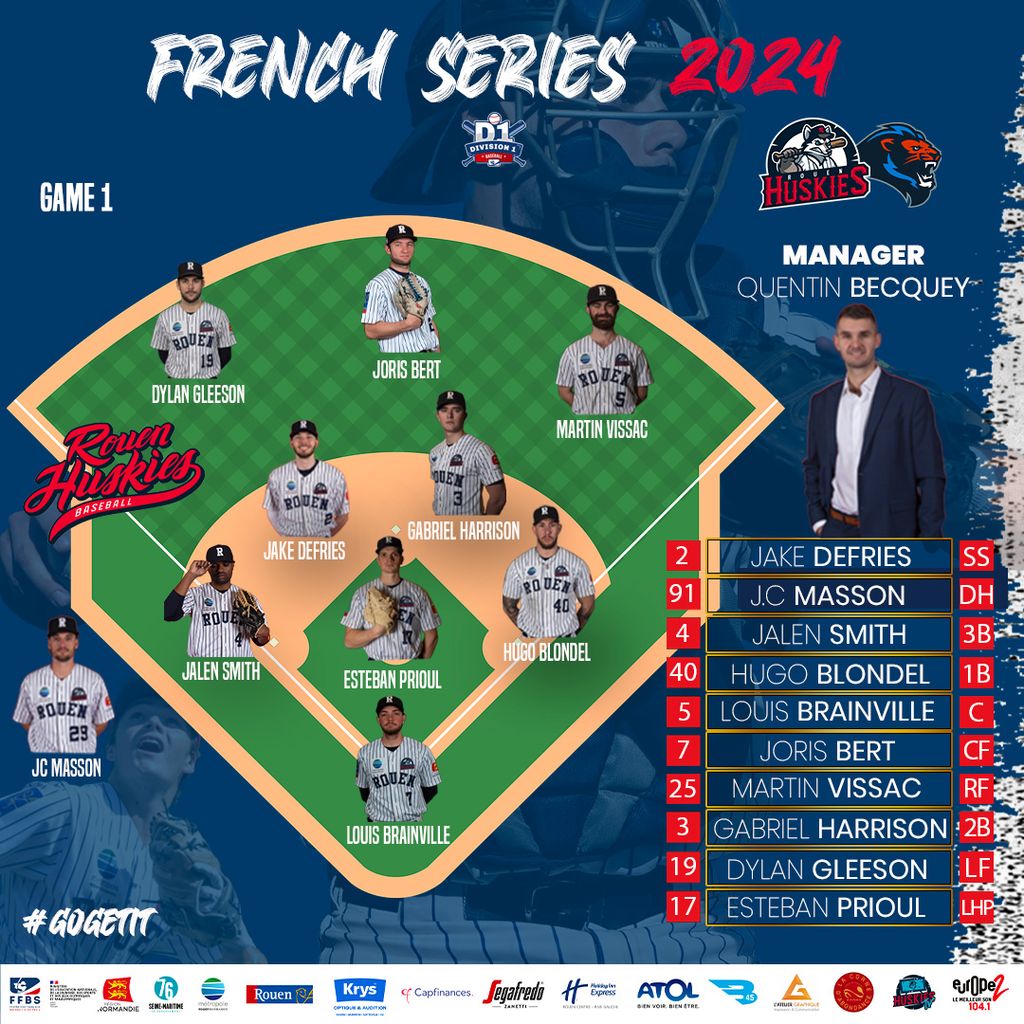
And Now, the Final Hour, Against the Lions.
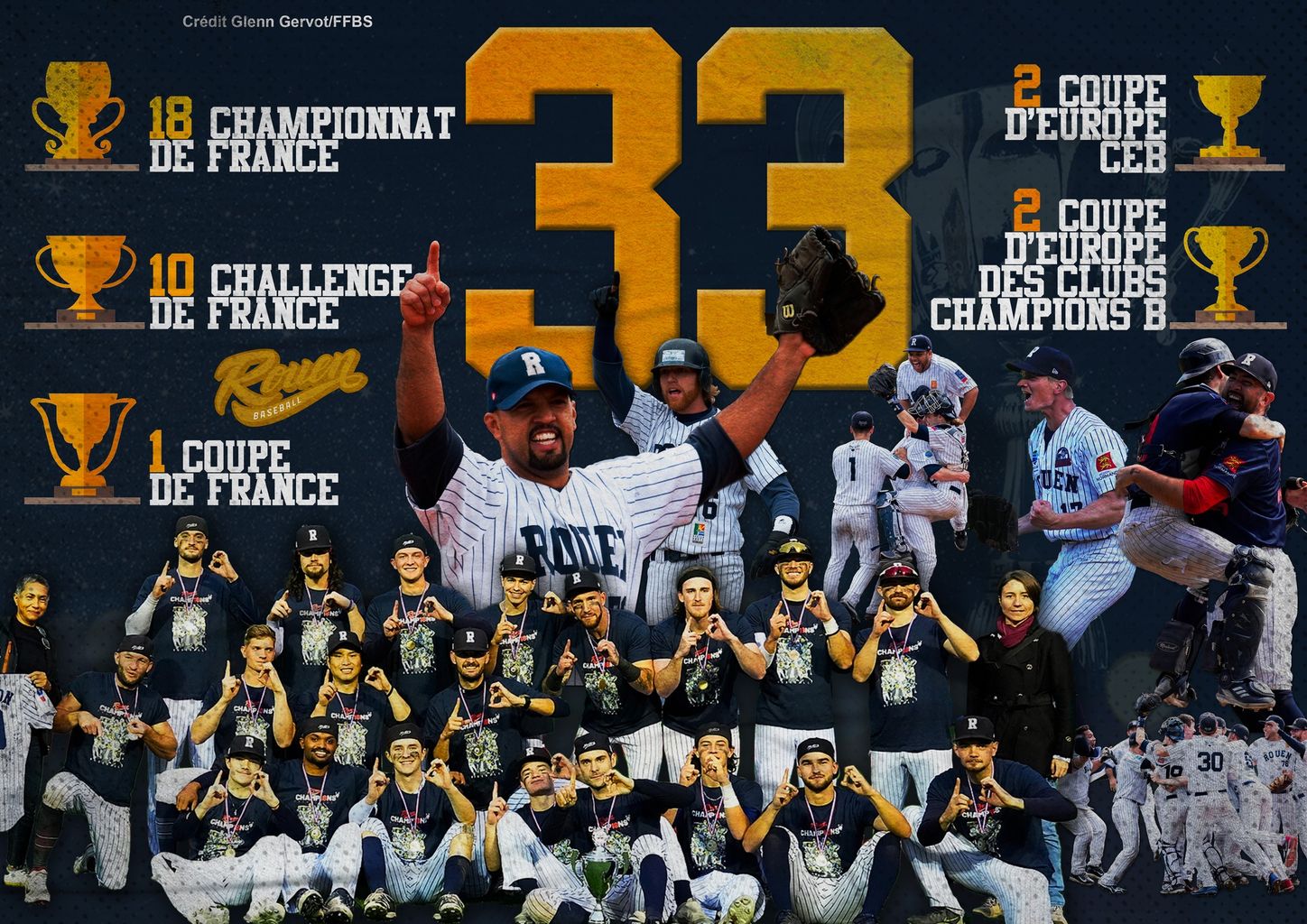
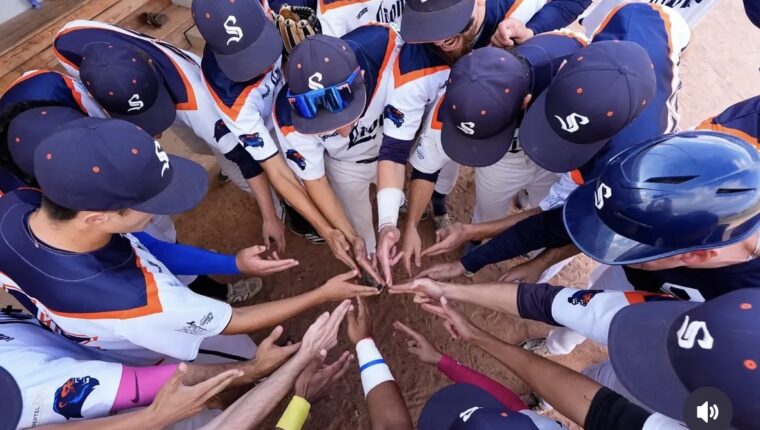
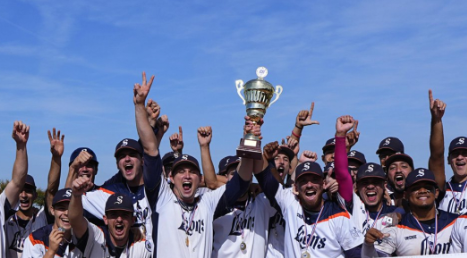
With a Rouen team at the peak of its form, confidence, and mental toughness. A team that didn’t want to, couldn’t lose. No suspense, unfortunately, or almost, in the first two games, with this way of slowly but inexorably bending the opponent. A lion is a lion—Savigny didn’t lower its claws, looked the Huskies in the eyes throughout Game 3, and then, once again, it was a small nothing, an error by a young shortstop (because the usual starter was injured, again…) that allowed Rouen to take the lead late in the game. The series swept 6-0, the usual scenes of joy, screams, and tears on the field, the great veterans present for the occasion (there were nearly 80 French championship titles in the stands, full by the way—that’s also one of the strengths of the Rouennais), passing the torch to the new generation, Rouen knows this by heart, and continues to reign as master of French baseball in the 21st century. Master? Despot, some say. And seeing the Huskies always win, one understands that it can be tiring, even counterproductive. But you can’t blame the Rouennais for doing everything to be the strongest. That’s high-level sports.


React to this article
Community rules
Loading rules…