 PES
PES
 PHA
PHA
 SAV
SAV
 ROU
ROU
 REN
REN
 NAB
NAB
 COM
COM
 COL
COL
Julian Dodwell

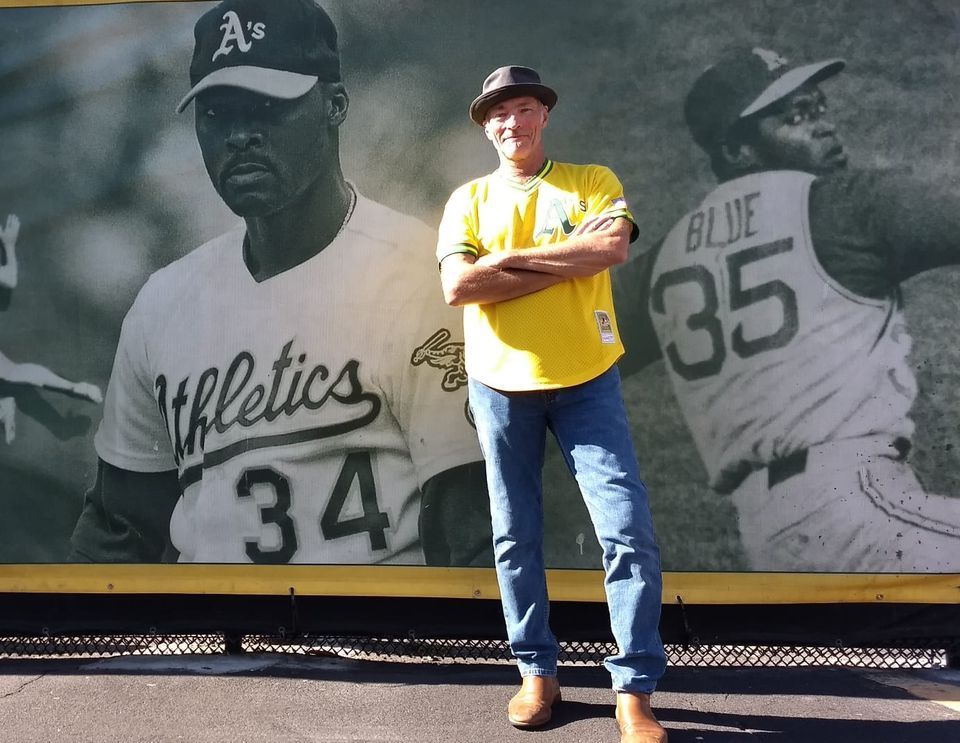
“Sir” Julian Dodwell, a regal figure in his sixties with a physique somewhere between James Bond and a second-row forward, exuding a touch of Richard Chamberlain, has just been inducted into the British baseball “Hall of Fame”. The tall left-hander, who has lived in France for many years and is an iconic figure for La Rochelle’s Boucaniers, shares his story with BaseballTV.
Hello, my name is Julian Dodwell, born on March 14, 1962, in Chester, England. I lived, worked, and played in England until I had the opportunity to play baseball in Melbourne, Australia, in 1986 against major league players who continued their development during the Australian summer. This was a real opportunity to play continuously throughout the year and upon my return to England. In 1987, I decided to go to New York where my friends lived and continue playing in Brooklyn.
With Pablo Ossandon – Boucan’s Field La Rochelle.
- Julian, how did you discover baseball? What was your first contact with the sport? First club?
I discovered this sport through my brother, whose friend’s father played in London. He was a military man who played against American military bases in England as well as English teams. Baseball has been around for a long time in England. In the 1920s, 20,000 people attended the final at White City Stadium, which also hosted the Olympics. England has known baseball for over a hundred years. Tottenham, my favorite football team, had a baseball club, as did Liverpool and many other football clubs. After the Great War, the decline began and across the Channel, baseball has never really been a major sport.
- Why did you “fall in love” with this game? What are your experiences in England?
The moment I started hitting line drives in practice without much effort was when I realized this was my sport. My senior baseball experience began at the age of 15, when I was asked to play for a senior team called the Wokingham Monarchs. My parents had to sign a waiver form because I was a minor. After that, I played for the Sutton Braves, the Barnes Stormers, the London Athletics, and finally the London Warriors. The semi-professional national league was formed around 1988, and I led this team, and we won the championship in 1989. We played on Saturdays and Sundays for this South London league. I played my first international match at 18 in Belgium; the organization at the time was rather light, and we had to pay to travel there. No funding accompanied the players, which demonstrates that baseball should be an Olympic sport.
- Your best memories?
Playing in front of a large crowd. Winning the title of best hitter twice was an excellent step, as was the national league championship. Our warrior mentality also allowed us to win the title several times.
- Who are your reference players in England and France?
At the time, I had a teammate named Alan Bloomfield with whom I went to Australia; he was and still is considered the best English player of the time. In France, there are too many good players to name specifically, but the “native” French players are at their best level, and for some, comparable to foreigners.
- Best team in the USA?
The team I follow in the “States” is the Oakland Athletics. It’s a sentimental thing, since my father returned from a business trip to California when I was nine years old and gave me a simple A cap. 
Oakland – RingCentral Coliseum.
- How did you grow in American baseball? Why? Experiences?
Playing in Brooklyn was great, the league was full of players who had played up to AAA and who had decided they wouldn’t make the cut against the younger ones. Brooklyn, as you know, was the Dodgers’ neighborhood, and the team always had an affiliation with its big sister from L.A. I went to NY to continue my baseball because in England, there weren’t enough games to maintain my level.
- After this first period abroad, what did you decide to share in France and why?
When I arrived in La Rochelle, the Boucaniers were at the regional level, which was far below their current level. Now, we have grown as a club to become one of the best in France. Pascal Regnier, the “PREZ,” has been the driving force behind the club, and without him, nothing would exist as it does today. When I first saw the field, I was amazed at its development. We had nothing like it in England, and we still don’t. With the promotion each year of the first team and the CBLE tournaments, La Rochelle has established itself as the “top spot for baseball.” Development was something I knew we were going to do; the construction of the stands and the booth was an integral part of bringing the CBLE and the “All-Star Games” to La Rochelle. I am convinced that the public will continue to grow. 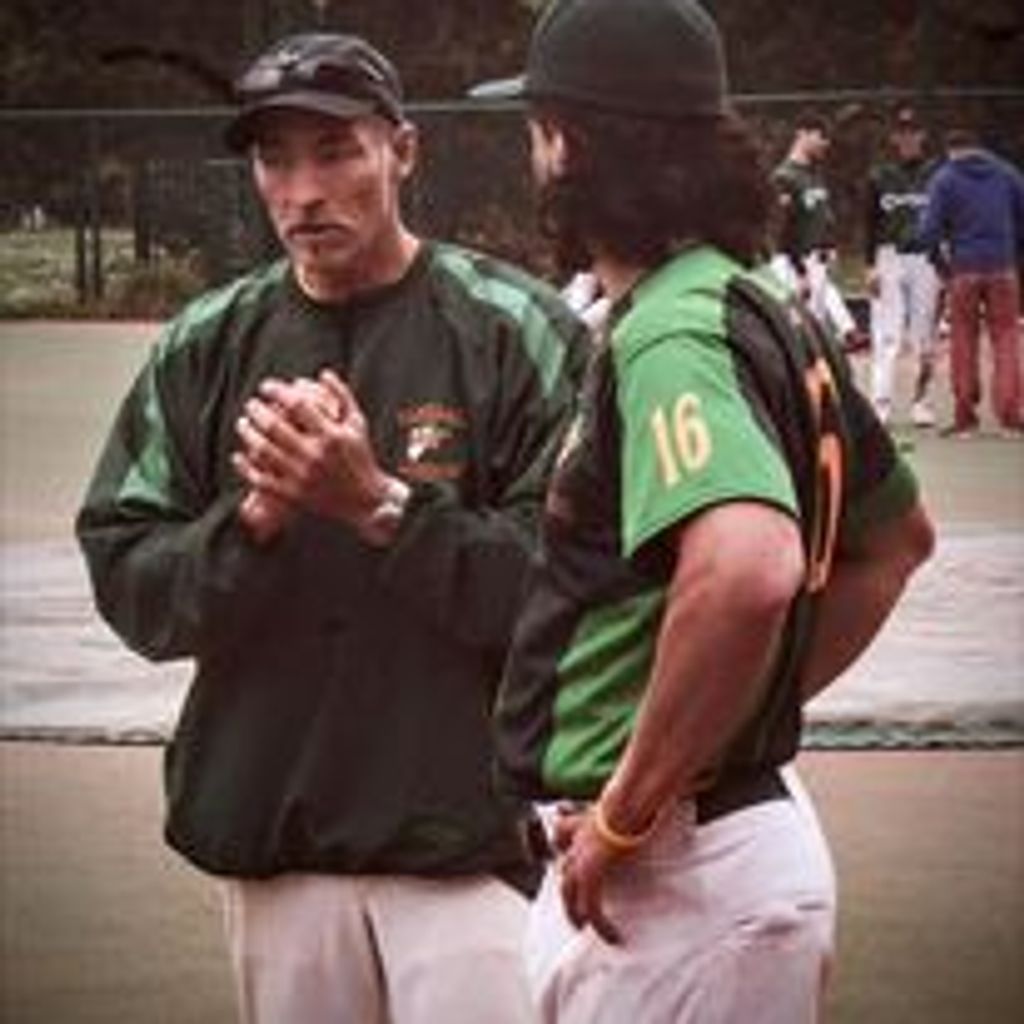
Montigny – D2 2014
- You’ve been in LR for a few years, tell us about it?
I came to France to renovate a house for a client, after which I decided to stay, especially after finding the club. I have been working in construction since 2004, first in Vendée, then in La Rochelle, which I consider my home. Moreover, I met my soulmate here in La Rochelle.
- How do you see French baseball? Tactics have always been an integral part of the game for you, what is your favorite way to impose yourself on the field?
I watched the last European championship and was disappointed that France was relegated to Pool B. Losing by less than two points made a global difference in the final standings of the pool. Small things made a huge difference for the future of the sport in France. There are no specific ways to play; each field can change the game, but the more you are reactive or prepared at every moment, the better you and your team will perform. Repetition of the “bases” is crucial for your development as a player. Too many people want to crush the ball when hitting, whereas sometimes a line drive can ruin eight perfect innings. That’s the cruel beauty of our sport! The quality of the “mound” will always be the most important contribution to baseball, but if you don’t score a point, you have no chance of winning. Here in France, you might see a pitcher three or four times; you won’t get that luxury in the MLB. I like players to master their bats and dictate their timing during the confrontation. Pitchers should also establish their timing. One base at a time is good enough for me; sacrificing hits and runs and stealing are part of the game. Home runs are for the MLB, nice to watch but weak on team ethics, although I do like a triple now and then.
- Baseball is a mental game. What is your favorite way to win?
Yes, baseball is a tactical game. Using what you have to the maximum is the best way to win; players always moving on the field, covering everything when the ball is in play, that’s a good attitude, or not insisting when a mistake is made. Patience. Baseball is a team game played by individuals who, at that moment, can contribute by doing or not doing something; if the game isn’t there, it can be for the next player and so on. My favorite way to win is to see a player who may not be as naturally gifted as his opponent but uses his ability to overcome the problem. As a coach, that’s what I appreciate the most. I remember when La Rochelle played for the first time in D1, anxious faces, a year later we’re in the tenth inning against Rouen, we give them a run for their money, we lose… But there you have an example of progress.
Interview conducted by Vincent Picard.
2 comments
-

Ancien membre
-

Ancien membre
See the 2 commentsUn homme avec une belle aura, un très bon coéquipier.
Quel monsieur !
Community rules
Loading rules…