 ROU
ROU
 SAV
SAV
 PES
PES
 PHA
PHA
 REN
REN
 NAB
NAB
 COM
COM
 COL
COL
Broadcasting in Division 1

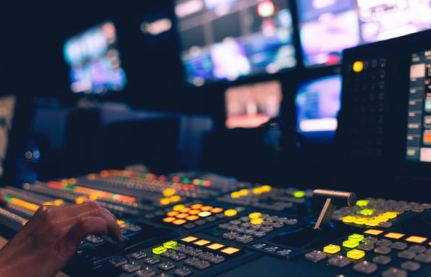
Progress, regrets… and still plenty of hope
As the regular season draws to a close, one thing is clear: French baseball has taken a step forward in broadcasting its games. But there’s still a long way to go.
The French Baseball and Softball Federation’s competition rules state that Division 1 clubs must broadcast their games with at least two cameras. A clear sign of intent: to give the championship greater visibility and let fans follow the action, even from afar.
On this front, the 2025 season marked significant progress. Almost every game now has a broadcast. But behind this advance lies a far more mixed reality: not all broadcasts are created equal.
And that’s where the main regret lies.
Unequal resources across clubs
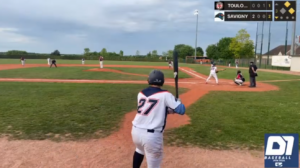
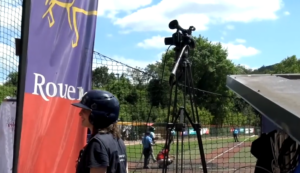
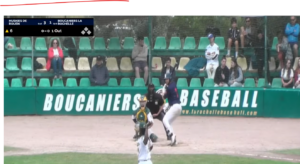
For several years, La Rochelle set the standard for ambitious broadcasting in Division 1. Five, sometimes six cameras, commentary, score displays, slow-motion replays… The Boucaniers gradually built a genuine audiovisual product around their games.
But volunteer work has its limits. When people, time, or resources run short, quality inevitably suffers. This season, La Rochelle’s broadcasts sometimes boiled down to a single camera—sometimes two—paired with basic commentary.
Sénart faces a similar situation. Just a few years ago, Templiers’ broadcasts were among the best in the league, even featuring live pitch-speed radar. Today, the setup has been streamlined to the bare essentials: two cameras, but no commentary.
Behind these changes, there’s no finger-pointing at clubs. Far from it. They simply highlight a reality French baseball knows all too well: the weight of volunteer work and the challenge of maintaining high production standards over time.
Minimum effort for some, ambition for others
Savigny, Béziers, PUC, and Montpellier now also broadcast their games. An undeniable step forward.
But viewers are often left with a very minimalist experience: a phone strapped to the fence, limited visuals, little way to follow the action closely, and far too often, no commentary to guide them through the game.
Under these conditions, it’s tough for casual fans or newcomers to grasp what’s happening on the field.
And yet, the stakes go far beyond simply airing a game. A broadcast is now a club’s showcase, a platform for its players, and a reflection of the entire league. In this department, two clubs continue to stand out.
Toulouse and Rouen lead the way
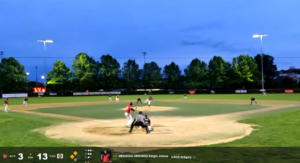
Stade Toulousain Baseball, bolstered by hosting the Challenge de France, invested in its setup this season. And it shows. Multiple camera angles, polished direction, and above all, quality commentary: Toulouse is the only club to have truly taken a leap forward this year.
Rouen’s Huskies, meanwhile, are building on their momentum. Multiple camera angles, slow-motion replays, and a commentator who breaks down game situations offer viewers a chance to truly experience the match.
Two examples proving that with a bit of equipment, method, and above all, committed people, a simple broadcast can become a genuine sporting event.

Baseball TV France: pulling it all together
It’s in this patchy landscape that Baseball TV France stepped in this season to do its part.
For the first time, our team relayed every available broadcast, letting fans watch Division 1 games in one place.
The app also let users predict results, track live scores across multiple games, receive notifications, and even check in at stadiums.
The overwhelmingly positive feedback from users is perhaps the best proof of how valuable this centralization has become.
For viewers, no longer having to hunt down broadcasts match by match is already a major win. Now, they can follow the league, scores, and live games in one spot—all while keeping an eye on the day’s action.
A small revolution for French baseball. But this platform can’t fix everything.
Quality still in clubs’ hands
Because at the end of the day, the quality of the image, sound, commentary, and direction still depends entirely on each club’s setup.
The federation even tried during the offseason to rally goodwill, share best practices, and explore shared equipment. A worthwhile effort, but hard to pull off when financial, human, and organizational constraints loom large.
Wanting to do better isn’t enough. Clubs need the gear, the skills, and above all, the available volunteers.
And that’s likely the main hurdle right now.
Regrets, but mostly reasons for hope
Yes, there are regrets.
Regret over seeing quality broadcasts gradually disappear. Regret over the uneven resources from club to club. Regret, above all, knowing the league could be showcased even better with relatively simple means.
But it would be unfair to focus only on the negatives.
Because in just a few years, French baseball has changed.
Broadcasting games has become an almost essential part of Division 1. Where some clubs aired nothing at all yesterday, today they offer at least a live feed. And this near-universal coverage is already a victory.
The next step will be about quality.
That will likely come gradually, at the pace of investments, equipment, and above all, the energy of the volunteers who set up cameras, adjust phones, commentate games, and let fans hundreds of kilometers away experience the action every weekend.
It’ll take time. It may also require more sharing of resources and best practices.
But the essentials are already in place: clubs, players, officials, and fans seem to have grasped that broadcasting is no longer just a bonus.
It’s become a tool for communication, visibility, and fan engagement.
And tomorrow, it could be even more: a real gateway to French baseball for those who don’t yet know the sport.
Because showing baseball better is also about sparking the desire to discover it.
We’ve intentionally left out other competitions—Division 2 Baseball and Softball Division 1 (men’s and women’s)—which will get their own article soon.
And perhaps, one day, inspire someone to take out a license.

2 comments
-

BBdoc
All-Star
-

HS
MVP
See the 2 commentsJ’avoue que j’ai expérimenté plusieurs matchs en direct sur site quand je suis présent et beaucoup de rediffusion car pas toujours possible de voir les matchs le jour même. J’aime bien la nouvelle plate-forme. J’avoue que certaines rediffusion sont durs à suivre car juste un téléphone qui filme. Mais cela a le mérite d’exister.
Au delà des moyens humains, financiers, volonté de… il y a aussi les contraintes techniques, environnementales et compétences pour la mise en oeuvre. Tout ces efforts en valent -ils la peine ? quelles sont les retours ? combien de visualisation simultané ? combien de minutes en moyenne par rencontre ?
J’expérimente depuis plusieurs saisons en D2 depuis un téléphone tout d’abord et depuis cette saison avec un setup à deux caméras, ordi, régie, infographie et commentaire live parfois dans des conditions loin d’être simple.
Curieux d’avoir les retours D1
Community rules
Loading rules…