 ROU
ROU
 SAV
SAV
 PES
PES
 PHA
PHA
 REN
REN
 NAB
NAB
 COM
COM
 COL
COL
The Day Venezuela Bent America

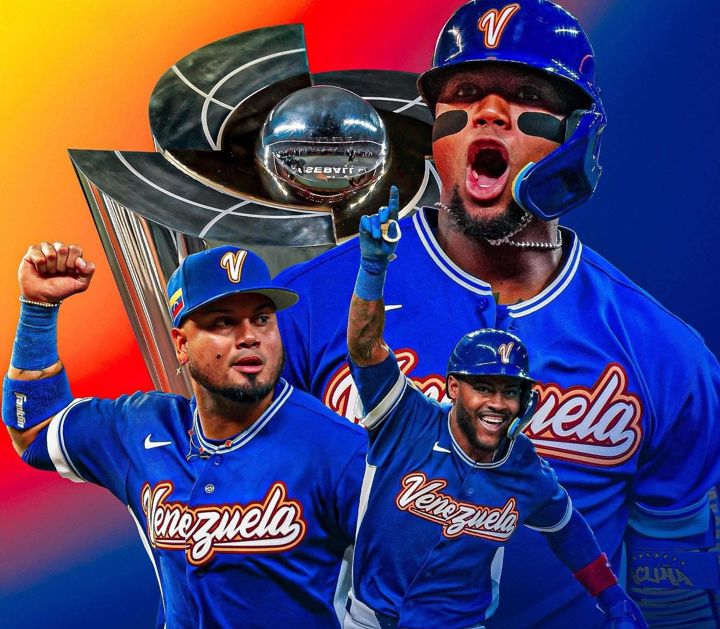
It has to be admitted that from Europe’s point of view, the 2026 World Baseball Classic remains a somewhat distant, almost exotic sporting event.
Except in Italy, where people are starting to take notice.
This 2026 edition has told an unexpected story: that of a conquering Venezuela, almost political in its scope.
By beating the defending champion Japan, and then the United States in the final, the Venezuelans achieved much more than a sporting victory.
In a country in a chronic crisis, the triumph acts as a national showcase, a demonstration of resilience.
Baseball becomes a tool of unity, and even of international projection.
On the field, this victory was built amidst chaos: a comeback against Japan, offensive power, a heroic bullpen.
But beyond the game, it was an affirmation of identity that marked this competition.
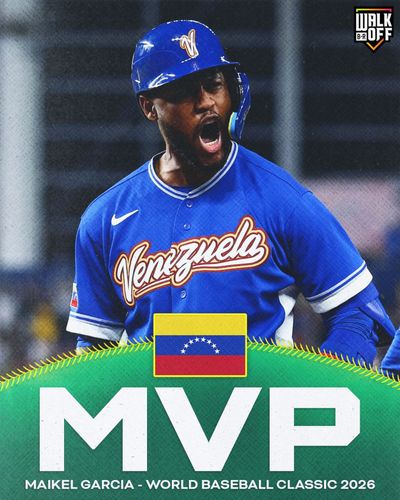
The Americans failed for the second time in the final, in 2023 against Japan and in 2026 against a small country that they have looked down on for a long time and that the political terrain has “babied” recently. Of course, the Venezuelan players are acculturated, playing for the vast majority in the different MLB franchises, but the patriotic fervor was felt in every “revengeful” gesture of the “Vinotinto” players
More surprisingly, the tournament offered an almost romantic scene: that of the Czech players in Japan.
An amateur team in a world of MLB stars, the Czech Republic won over the Japanese public with its humility and panache.
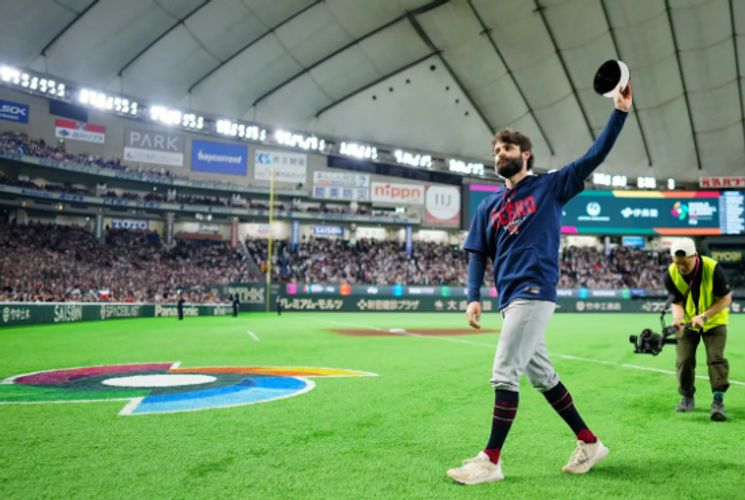
The Czech pitcher, Ondřej Satoria, already known for having eliminated Ohtani in 2023, became a figure adopted by the Japanese stands. His last passage in competition before leaving the field was noted with four admirably thrown innings. This amateur player, an electrical engineer, made the whole Japanese stadium stand up.
In a country where baseball is a religion, this story touched something deeper than the performance.
Because that is what makes this competition unique.
The fervor.
For Derek Jeter, it has nothing to do with the World Series, considered the pinnacle of American baseball. But Aaron Judge dismisses this hierarchy, praising the Classic as the most iconic competition he has ever played.
Here, the anthems replace the statistics, the flags supplant the franchises.
Every match resembles a miniature World Cup.
Every action triggers a collective emotion.
The Latin American public in particular turns the stadiums into cauldrons.
Japan imposes a quasi-liturgical precision and passion.
And even the outsiders, such as Italy or the Czech Republic, find their place in this globalized theater.
Seen from Europe, it is still a peripheral spectacle.
Little broadcast, little baseball culture, little identification.
But perhaps this is the paradox.
While Europe looks elsewhere, the rest of the world is reinventing this sport.
And in this global narrative, Italy – and timidly the rest of the continent – is finally starting to exist.



2 comments
-

Ancien membre
-

Frederic Legrout
See the 2 commentsSeulement 3 ” vrais ” italiens dans cette équipe USA bis . 🫣🤔
Exceptionnelle italie mais il ne faut pas oublier la nationalité de leurs joueurs
Community rules
Loading rules…