 PHA
PHA
 COM
COM
 ROU
ROU
 SAV
SAV
 PES
PES
 REN
REN
 NAB
NAB
CE 2026: Saint-Raphaël's tomahawk blunted, Évry's Pharaohs shine bright!


It was the return of the European Cups. The Premier Cup brought together the champions of major softball nations like Italy, the Netherlands, the Czech Republic, and Germany. Cup B featured runners-up from willing nations and champions from emerging softball countries from Hungary to Israel.
The European regulations add a particular twist: each club can recruit several foreign players—up to three non-EU players—for the week, and there’s no obligation to field the players who actually competed in the national championship. The level of play rises, but this practice can frustrate those who qualified their team all season long.
Contacted by BTVF on the subject, Aurélie and Sophat, the coaches of Évry (thanks to them for their responsiveness!), believe the additions are designed to strengthen, not replace; the use remains measured and thoughtful. In a context where clubs made up of semi-pros face entirely amateur teams, reinforcements become a tool for rebalancing, reducing gaps and limiting mercy rules.
Beyond the purely sporting aspect, hosting a foreign player allows the welcoming team to gain a rare human, technical, and educational experience. Playing alongside elite athletes accelerates development: mental toughness, daily demands, game awareness, teammate attitudes—a learning experience that can only be gained through contact with these players.
The goal isn’t to host stars but players who can blend into a collective, share, and pass on knowledge. For foreign players, usually from 2nd or 3rd teams in their clubs, it gives them a chance to compete in a European Cup and sometimes uncover hidden talent. For example, at Évry, the club welcomes 19-year-olds with potential international futures who find a platform to shine.
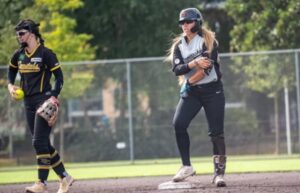
The Comanches of Saint-Raphaël: a blunt tomahawk
The Premier Cup isn’t a competition—it’s a cliff. A Solutré rock where you can take a heavy fall against Italian, Dutch, Czech, or any of the nations that have shaped European softball for twenty years.
On Day 1, Saint-Raphaël opened their tournament against Italy’s Forlì, one of Europe’s powerhouses. In the first inning, Erika Piancastelli crushed a monstrous home run. The Comanches fought back: Prade, Haudiquer, and Mayeux put together a clean inning to tie the game, showing they could compete. But Lisa Viera’s injury in the field shattered the balance. The Italians adjusted to Enora Simon, errors piled up, and the sixth inning became a chasm—four runs, a double by Lacatena, a hit-by-pitch, two errors. The match ended in a 7-1 defeat.
The second game, against Olympia Haarlem, was even more brutal: 9-0, mercied out. The Dutch hit everywhere, capitalized on every mistake, and smothered the French offense completely. Louise Le Chénadec limited the damage in relief, but the gap was already abysmal. Two matches, two losses, and a harsh reality: the Premier Cup spares no one.
The third match, against Vienna’s Metrostars, was supposed to be the rebound. It became confirmation: the Comanches were in trouble. Enora Simon allowed five runs in the first inning on four hits, a triple, and two walks. The team shuffled its defensive setup again, but nothing clicked. Louise Le Chénadec stabilized the game, but the offense remained silent. The match ended in an 8-1 defeat, mercied out. A painful loss because it left no foothold, no spark, no positive sequence.
The fourth game, against Bonn’s Capitals, could have changed everything. The Comanches led 4-0, finally playing their brand of softball. Enrione-Thorrand drove in, Sellam forced an error, Mayeux drove in two runs, Munier and Prade followed up, and the defense held. Louise Le Chénadec pitched five brilliant innings—five hits, two earned runs, four strikeouts—controlling everything, imposing her rhythm, giving the team a real chance. Then came the sixth inning. A inning that will be remembered as the tournament’s turning point. A double by Kalua’u, another by Gressly, a single by Elstermeier, an error at shortstop, a wild pitch, and Bonn scored five runs. Saint-Raphaël lost 5-4 in a game they had dominated. A cruel defeat that sums up the Premier Cup: one mistake, and everything collapses.
Against Zagreb, the Comanches finally found their identity. Louise pitched a complete game: seven innings, three hits, zero runs, seven strikeouts, no flaws. The offense delivered: a triple by Mayeux, an RBI by Brunel, another by Sellam, and Prade drove in runs. A 3-0 victory, clean, controlled, reassuring. The first match where the Comanches imposed their rhythm.
Saint-Raphaël closed their Premier Cup with a solid win over Merchtem. Enora Simon delivered a complete performance in the circle with seven innings pitched, just three hits allowed, two runs (only one earned), five walks, and six strikeouts. She held the game from start to finish, giving the Comanches a stable foundation to build their success.
The offense came through in key moments. Chiara Enrione-Thorrand opened the game with a center-field single that drove in two runs. Mélissa Mayeux had a decisive game with a two-RBI single and another hit, finishing 2-for-4 with 2 RBI. Léna Sellam added a clean RBI single, while Inès Haudiquer had a complete game with three hits, constantly present on the bases and involved in several offensive sequences. Pauline Prade was very active, reaching base three times and scoring twice.
Defensively, Saint-Raphaël remained solid, limiting Merchtem to a few isolated chances. The Belgians only scored on an error and an aggressive play sequence, not enough to threaten the Comanches. The end of the game was perfectly managed, Simon closed out the final batters, and Saint-Raphaël won 5-2.
A well-constructed, collective victory that allowed the Comanches to finish their tournament on a high note, with a game where the leaders stepped up and the team rediscovered its identity.
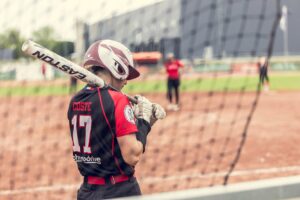
The Pharaohs of Évry-Courcouronnes: a methodical dominance
If the Premier Cup is a cliff, the European Cup B is a manicured garden for French teams.
The opener against host side Jánossomorja’s Rascals was a statement. Eidy Tortolero returned in style with five solid innings—three hits allowed, one run, four strikeouts. The offense exploded in the fourth inning with eight runs built through variety and aggression. Toet drove in three with a double, Lecourt-Millet added a two-run double, Brouard followed with a single and a double, Liminier put the ball in play, and Papoin forced errors. A 9-1 mercy-rule victory. A perfect start.
The second match, against Tampere’s Tigers, was one of control. The Finns opened with a home run, but the Pharaohs didn’t panic. Telleman pitched four solid innings, Liminier closed with five strikeouts. The offense came through in key moments: Rosalie Coste crushed a three-run home run, Brouard drove in a run, Papoin applied pressure on the bases. A 6-2 victory, clean, built, and smart.
The third game, against Medvednica, was the tightest. Tortolero pitched six solid innings, Toet closed like a boss. The offense delivered: Figueroa drove in with a double, Lecourt-Millet with a RBI single, Brouard with a powerful double. A 3-2 victory, snatched and precious. The match that showed the team’s maturity.
The fourth match, against Warsaw’s Diamonds, was the only hiccup. Toet struggled with control, the defense committed two errors, and Warsaw hit in the right zones. A 5-0 loss, harsh but instructive. It reminded everyone that the European Cup B is never a walk in the park.
The response was immediate. Against Israel’s Thunderbirds, the Pharaohs delivered a total demolition: 13 runs in four innings, zero runs allowed, a perfect rotation of Tortolero, Telleman, and Figueroa. The offense was unstoppable. Lepinay drove in two, Brouard three, Pauthe two, Liminier a two-run double, Toet a double, Figueroa a decisive single. A 13-0 mercy-rule victory. A masterclass response after the Warsaw loss.
In the final, Évry-Courcouronnes secured a solid, perfectly controlled win over Warsaw, powered by an exceptional performance from Violeta Figueroa in the circle. The pitcher delivered a perfect game: six complete innings, just four hits allowed, one run, and fourteen strikeouts. Warsaw never managed to keep up with her pace.
The offense came out swinging from the start. Rosalie Coste reached base, and Violeta Figueroa smashed a powerful three-run home run to left field, immediately putting the Pharaohs in front. Nikki Groenemans added a triple to right, Coste drove in a run on a single, and Évry stretched the lead through relentless base-running pressure.
Esmee Toet had a complete game with a two-run double late in the contest, three RBI overall, and a decisive presence in key moments. Coste finished with two RBIs and constant activity on the bases. Groenemans’ triple changed the tempo of the game. Figueroa, in addition to her pitching masterpiece, added a three-run home run.
What lessons can we draw?
As last year, the team competing in the Premier Cup (2026 winners: Forlì) struggled mightily against Europe’s elite, while the one in Cup B emerged victorious.
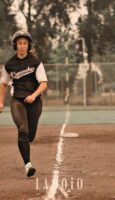
Several factors explain this underwhelming performance for the Comanches.
First issue: a lack of bullpen depth. The injury to Prapeng De Ridder, announced just before the tournament, deprived Saint-Raphaël of its most dominant pitcher. Enora Simon didn’t deliver her usual performance either: .463 opponent batting average and eight walks in the group stage. Louise Le Chénadec answered the call, posting a 2.00 ERA and two complete games, but she couldn’t carry the team alone at this level.
Second issue: an unstable defense, a direct consequence of injuries and a lack of clear roles. Pauline Prade moved from shortstop to third base to second base, Lisa Viera was sidelined after a collision on Day 1 and missed three games, Inès Haudiquer alternated between outfield and first base. This instability led to uncharacteristic errors.
Third issue: an insufficient bat to compete with Europe’s best. The leaders hit above .300, but no player posted an OPS above 1.000. Mélissa Mayeux, the team’s best hitter, ranked just 32nd in OPS in the competition. Behind the leaders, production was too inconsistent: just seven walks to 34 strikeouts. At this level, that’s unforgivable.
What worked, despite everything, was resilience. The last two games, against Croatia and Belgium, showed the Comanches know how to bounce back. Louise and Enora delivered two complete games, the team found stability, and finished on a high note. But the Premier Cup demands a complete, homogeneous team—and the Comanches, despite their talent, didn’t have all the pieces.
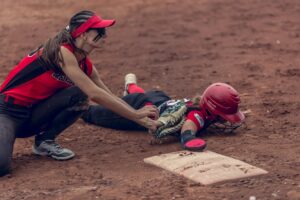
On the Paris-region side, the standout was the bullpen, strengthened by Tortolero and Liminier’s returns and the arrival of three foreign pitchers. The numbers speak for themselves: 60% of innings pitched by foreigners, 40% strikeout rate, .172 opponent batting average, and a collective 2.04 ERA. Figueroa, in particular, delivered an exceptional performance with a 63% strikeout rate over 11 innings.
The second strength was collective offensive production. Every player recorded at least one hit. Five players posted an OPS above .700, led by Brouard and Lecourt-Millet. The foreign players added extra power: average OPS of .929, one HR, two triples, five doubles in 45 at-bats.
The defense, finally, was rock-solid: just two errors in six games. A rarity at this level.
What didn’t work? Very little. The absence of Lila d’Hauteville and Jade Aubart-Cojan reduced the French depth, but the reinforcements compensated. The only less-controlled match, aside from the Warsaw loss, was the tight 3-2 win over Croatia—but it showed the team’s ability to win in tough situations.The Pharaohs dominated the competition thanks to a cohesive unit, a deep bullpen, a varied offense, and exemplary defense. They confirmed France’s place at the top of the European Cup B hierarchy.
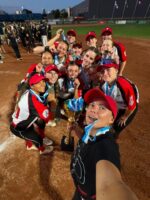
Sébastien Dondé.
Photo credits: WBSC Europe and club archives

React to this article
Community rules
Loading rules…