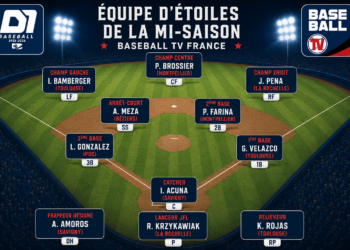
The regular season has come to an end. Time for a quick recap…
Suspense and Regrets
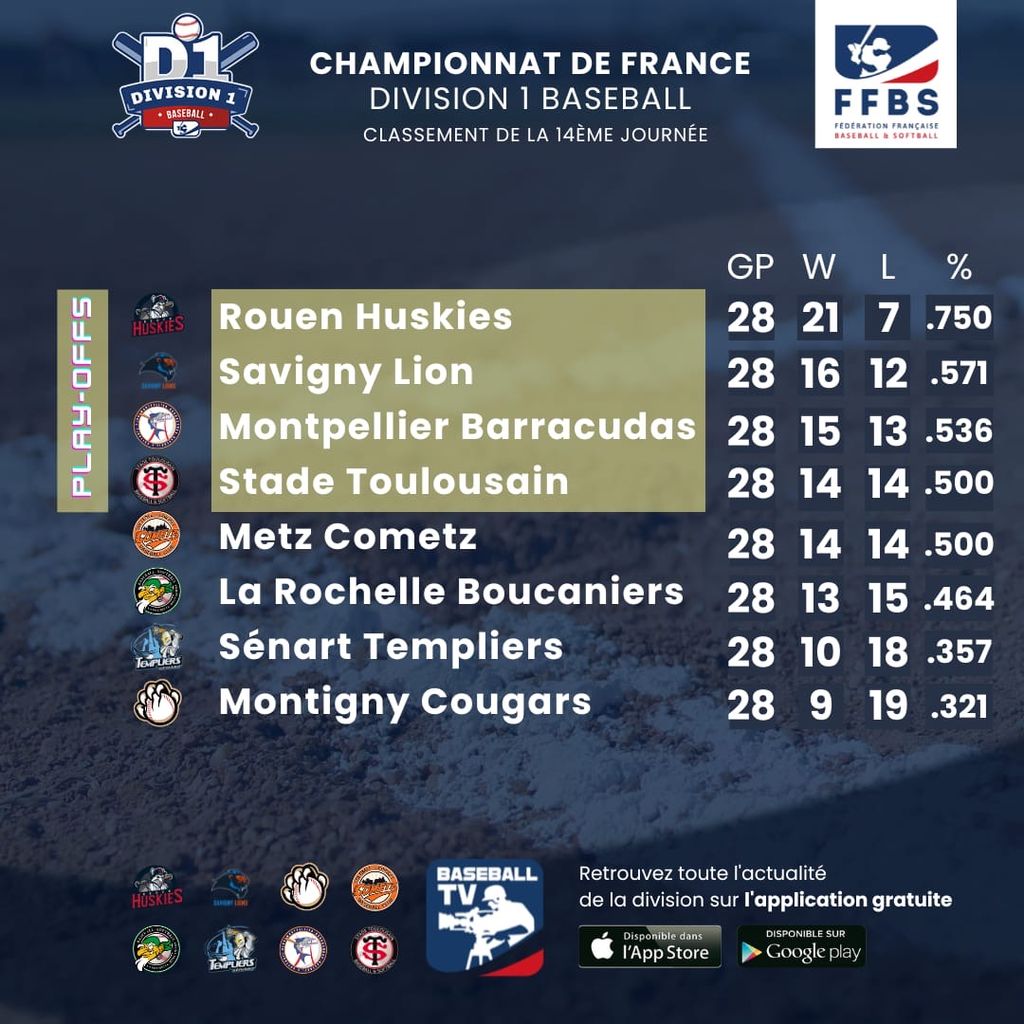
This 2024 season deserves a good grade. The suspense was relentless, with shifts in leadership and a nail-biting battle for the playoffs. And that’s where the regrets kick in. The forfeit losses for La Rochelle (22nd round against Savigny, violation of rules regarding players on extended licenses) and Metz (13th round against Montigny, violation of JFL rules) robbed us of a final round where anything was possible. The Cometz really have to kick themselves: they lost a game they had won, and the change made didn’t really affect the game. Without that hiccup, they could have qualified for the playoffs. A shame, but the law is the law…
The Power of Habit
Yes, there was suspense, but in the end, it’s the usual suspects who find themselves in the semifinals. Out of the 21 semifinals (or semifinal rounds) played since 2002 (2019 is an exception, there were no semifinals but a playoff round of 6 teams), this will be Rouen’s 20th appearance, Montpellier’s 18th, Savigny’s 14th, and Toulouse’s 6th. These are 4 of the 5 teams that have most often reached the semifinals, missing only Sénart with 16 appearances.

Where Are the French Players?
We’re not talking about pitchers: the JFL rule has done its job. Nearly 52% of the innings were pitched by JFLs, compared to 36% last year. In order of usage, we have: Savigny (63.8%), Toulouse (61.4%), Rouen (56.9%), Sénart (52.7%), Montigny (47.6%), Metz (47.3%), Montpellier (42.5%), La Rochelle (42.0%).
But where it’s a real desert for French players is the shortstop position. La Rochelle (Crawford), Metz (Ruiz), Montpellier (Spring / Bustamante), Rouen (Defries), Savigny (Tissera) have all given every inning to a foreigner. Toulouse did almost the same, with Perdomo / A. Soriano, and 6 appearances for Navarro. In Montigny, Velazquez only gave way a few times, mostly to Lassaline. In Sénart, it’s Brown who has been the most frequent starter, but the young Laufenbuchler played 13 games, albeit with 9 errors and a disappointing batting average. This is a real concern for the French national team, as, with all due respect to the immense career of Felix Brown, he doesn’t really represent the future. The successor to Maxime Lefevre still hasn’t been found, and this is a problem that needs to be addressed as soon as possible.
A strategic position is also affected, but to a lesser extent, that of the catcher. In Metz, they trusted only Algeni. In Montigny, it was Do Carmo and Lot-Martin who did most of the work. In Savigny, Acuna was the main starter. Playing time was more shared in La Rochelle (Gonzales and Pierre) and Sénart (Nakamura and Doyen), but with a priority given to the foreign player. The opposite extreme in Montpellier where Kovacs caught every inning, which is probably too much and weighed on his defensive performance (18 passed balls, 14 stolen bases out of 52 attempts). In Rouen, Gleeson confirmed his solidity (no errors, 5 passed balls) but his offensive impact has decreased. He shared his playing time with Cerda and Brainville. In Toulouse, it was the duo Garcia – Blancot who were used the most, but again with limited offensive potential. We’re not entirely reassured at this position for the national team either.

Blues in the Stats
The French are relatively well represented in the statistics. Ruiz (Metz), Defries and Smith (Rouen), Acuna (Savigny), Rodriguez (Montpellier) dominate the top spots. But the French are also well represented, with even a first place for Jiminian (Savigny) in doubles, for Brossier (Montpellier) and Briones (La Rochelle) in triples, M. Esteban (La Rochelle) in batting average with runners in scoring position.
Things are looking good for RBIs, with a trio of Montpellier players (Antonac, Brossier, Kovacs), M. Esteban (La Rochelle) and A. Amoros (Savigny) in 5th place, or for walks where we find Viger (Savigny) 4th, M. Esteban and Briones (La Rochelle) 5th. Good news also for stolen bases, Jiminian (Savigny) is 2nd, Baisse-Depontieu (Toulouse) 5th. Jiminian is also 2nd in extra bases. Blondel (Rouen) is 4th in average and 2nd in one-base, Jiminian 5th in slugging.
On the pitching side, it’s the Rouennais Prioul who stands out the most: 1st in wins, 5th in ERA, 4th in batting average, 3rd in slugging. Mention also for De La Rosa, who is not a JFL but plays for the French national team, finishing 1st in strikeouts and 2nd in K/9 innings.
The King’s Return?
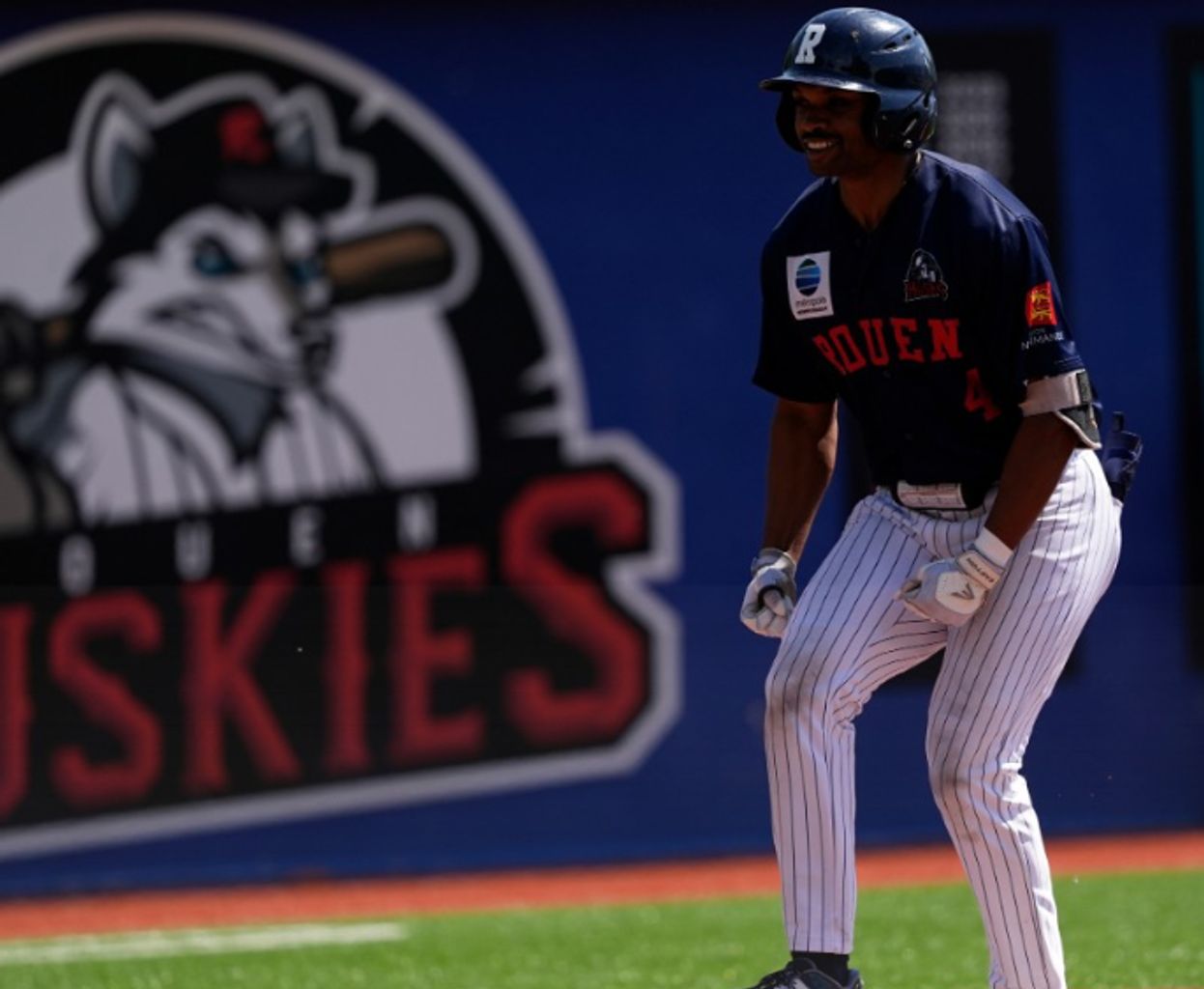
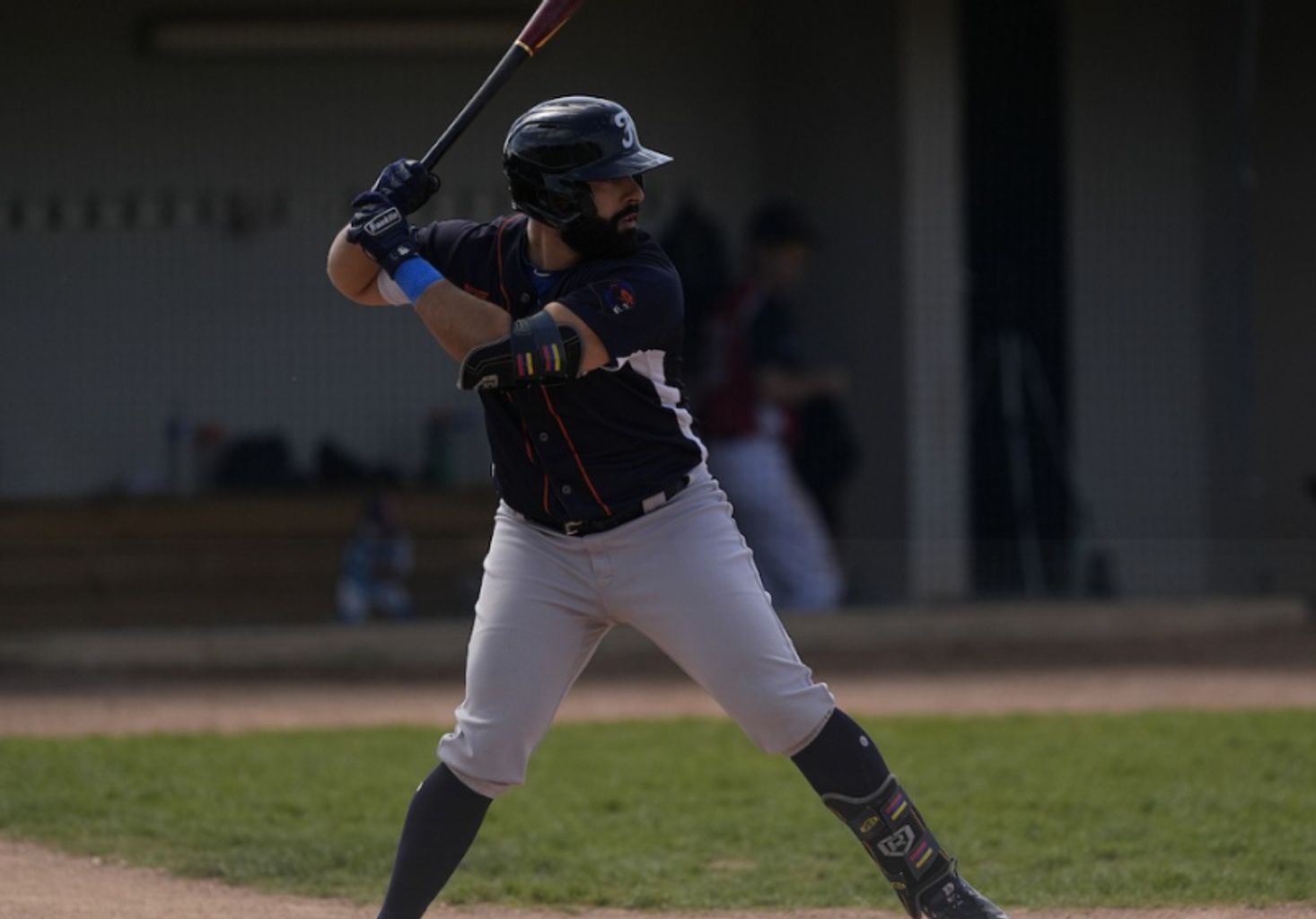
After a completely blank 2022 season and a failed France Challenge, following a more than mediocre start to the season, the Huskies weren’t given much of a chance. But the “winning culture” that the Rouennais have claimed to possess for over twenty years seems to still run through the veins of the sled dogs. They spectacularly turned things around and steamrolled the competition in the second half of the season (13 wins – 1 loss), carried by the formidable offensive duo Defries – Smith and an unmatched pitching depth. The Huskies enter the playoffs in a position of strength, with a very balanced lineup (the role of Toubeaux and Harrison is not to be neglected), the reinforcement of Q. Moulin on the mound and a desire to forget that the last three titles (championship and challenge) have eluded them, which had never happened to them before. There are still some questions about their level of concentration, defensive solidity, and lack of experience, but we’ll repeat what has been said for so many years: to be champion, you’ll have to beat Rouen, and that’s not easy.
The Survivors
Savigny, Montpellier, and Toulouse haven’t had an easy season.
The Lions heavily relied on the duo Jiminian – Acuna at the plate, on a solid season from Coste (7 quality starts) and on the phenomenal work of Orozco. But Romero didn’t bring much to the pitching, and they lacked offensive support, except for the Amoros brothers. Result: a rollercoaster season, with series of wins and losses that followed each other, but overall, the Lions remain a force in the championship, even if their pitching depth could cause problems if a series drags on.
Montpellier was hard hit by injuries, of course those of Sigiura and Pontiac but especially that of Ben Couvreur. No doubt that the Barracudas’ season would have been simpler if the young prodigy had been able to hold his place on the mound. But Montpellier showed its depth and solidity by winning the Challenge, with a quite complete lineup where Douglas Rodriguez is still making waves (.406, best average of the season). They’ll have to do without Antonac and his 18 RBIs and without Zan for the playoffs, but Montpellier won’t give up their title easily and remains well positioned for a three-peat.
Toulouse dominated the start of the season (8-2 in their first 10 games) before hitting a serious rough patch (3-9 in the next 12 games), then took advantage of a simpler end of the schedule with 3 consecutive wins against Montigny and Sénart (which came after a series of 4 losses and were followed by 3 more losses) to finally snatch the 4th place. A demonstration of this strange season, the Toulousans were the kings of one-run victories at the start of the season, winning 5 of these confrontations, they have become the worst, losing the next 5. However, the return of Rojas gives the Toulousans some muscle, who remain fragile in pitching. The absence of Navarro is heavily felt both in defense and offense, but the old hands of the infield (Soriano, Perdomo, Mendoza) and the young wolves of the outfield (Baisse-Depontieu, Cegielski, Saumande) have arguments to make. Toulouse won’t be an easy prey.
Those Who Just Missed
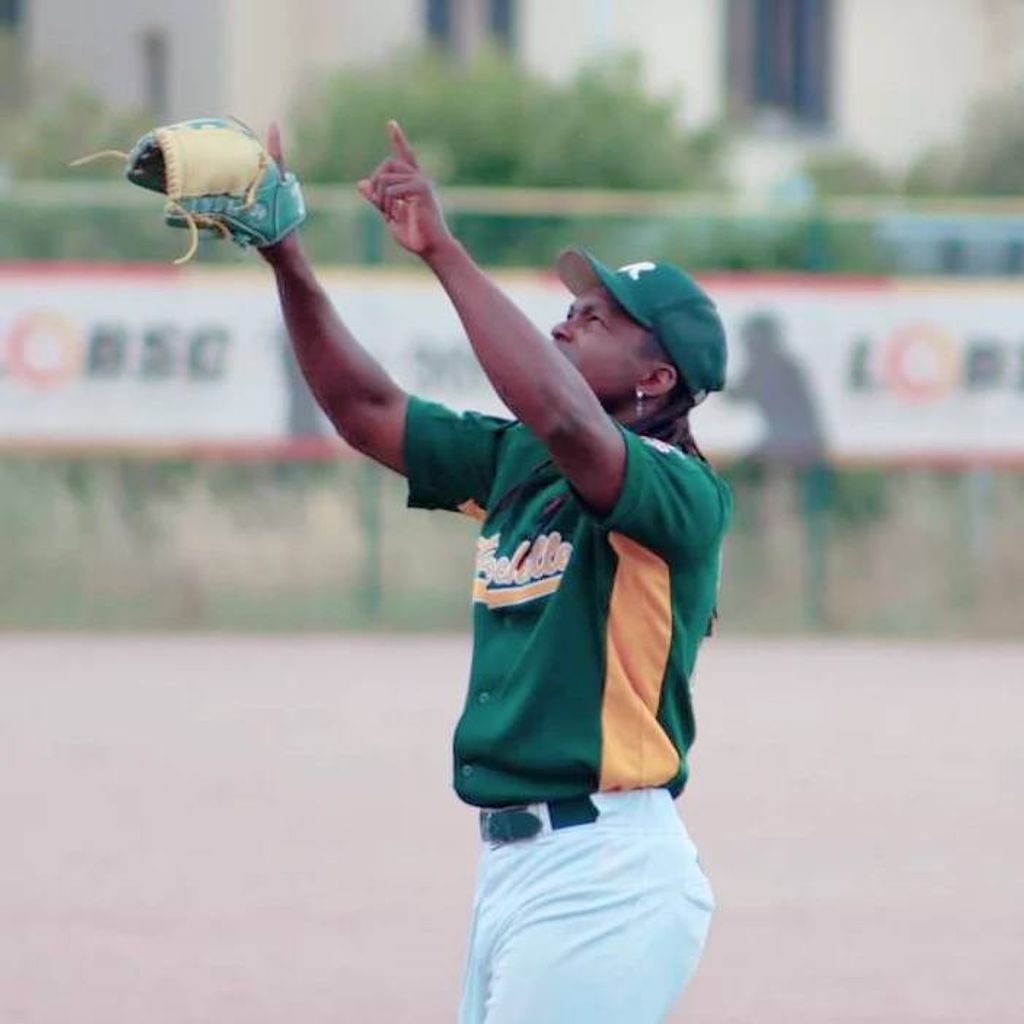
Metz managed to take advantage of their solid foreign recruitment, and the arrival of Paula mid-season did a lot of good. Matthéo Launay changed dimensions on the mound, with a superb end to the season, but the Cometz suffer from a fragile bottom of the lineup (.191 for S. Hansch, .153 and 32 strikeouts for Cailteux, .156 for Maimbourg, .182 for Takezawa). The Messin model therefore remains fragile, relying heavily on imports, even if a new generation is beginning to emerge.
On the contrary, La Rochelle’s recruits did not manage to impose themselves enough, except for Johnson, who did not start the season with the Buccaneers. Gonzalez was solid behind the plate, but a .229 average is insufficient for a foreign player, Izquiedro disappeared from the radar, and Escorcha did not really make a difference (3-2, 2.70). The good news was the excellent season of De La Rosa, the best of his career, and the rise of young players, such as Briones and Pierre, who hint at brighter days ahead.

Who’s Going Down?
A big name in French baseball will leave D1. Sénart, one of the forces of the past twenty years, and Montigny, who came off the best season in their history. For the Cougars, it was really complicated. The season ends with a catastrophic differential of -139, and a JFL pitching that sank (9.69 ERA). The recruitment didn’t bring anything, Soliveres too often absent, Coopman irregular, Lot-Martin insufficient (.174). On the Templiers’ side, they managed to right the ship after 4 consecutive losses to start the season, but it was also difficult. The rejuvenation cure was obvious (Ouanyou, Tshibambe, Brelle…), but the lack of experience weighed heavily. The absences of Meurant, Nayral (excellent during his short stay) and Bouniol hurt a lot at the end of the season, and the foreign recruitment, without being bad, was average (4.80 ERA for Kurima, .273 for Nakamura, .315 for Ogawa).
That said, Montigny can still pull through, taking advantage of the JFL regulations. Indeed, 7 innings are required for a doubleheader and 10 for a tripleheader. This opens the possibility for the Cougars to rely on their foreign pitchers in 3 out of 5 games. Mastre was extremely dominant at the end of the season. If you remove a difficult outing against Montpellier, he gave up no runs in 27 innings in his last 4 games and struck out 35 batters. With a Lopez who can still make a difference, Montigny could overturn Sénart.
F. Colombier