 ROU
ROU
 SAV
SAV
 PES
PES
 PHA
PHA
 REN
REN
 NAB
NAB
 COM
COM
 COL
COL
Homegrown Player Rule (JFL)

This will become the winter talking point for the French Baseball Federation. It has been for other federations for a long time. Let’s revisit this topic to spark the debate during the Division 1 and 2 playoffs.
First, let’s recall the main goal of the JFL regulations: strengthening the development of young players, particularly by guaranteeing them more playing time. Conversely, this is a way to limit the presence of foreign players on rosters and on the field.
Football started in the mid-2000s, basketball followed in 2010, and ice hockey in 2019. Each sport, according to its specifics, has regulated age, years of license, number of players on the team roster, and presence on the field at the same time.
The definition of a JFL must be as precise as that of a foreign player. And we know that for the latter, many exceptions exist in practice regarding their status: European or non-European, Cotonou Agreement…
The DTN of the Federation recently reminded us that the FFBS must succeed, in agreement with the clubs, in implementing regulations specific to our sports. Will this encompass the three disciplines: baseball, softball, and Baseball5? Will it concern Divisions 1 and 2? Men’s and women’s? This is not yet decided.
What are the premises for now:
In 2024, the FFBS should impose a minimum number of JFLs on the field and rules regarding pitchers.
(JFL = at least 4 years of FFBS licenses before the end of the 18U category)
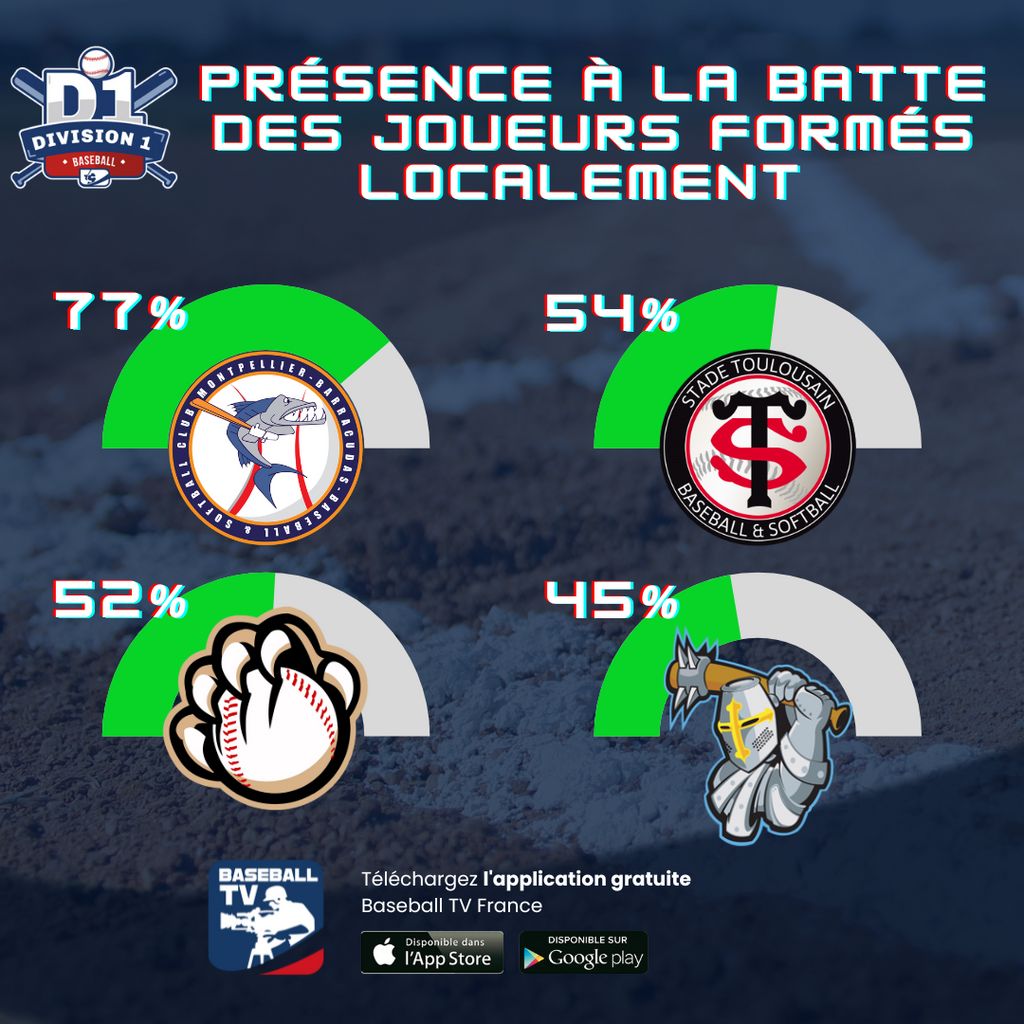
Baseball TV France had fun calculating the playing time of “JFL” during the 2023 regular season for the 4 playoff teams.
️For batters, considering the number of At-Bats by JFLs compared to the total At-Bats of the team.
️For pitchers, considering the number of innings pitched by JFLs compared to the total innings pitched by the team.
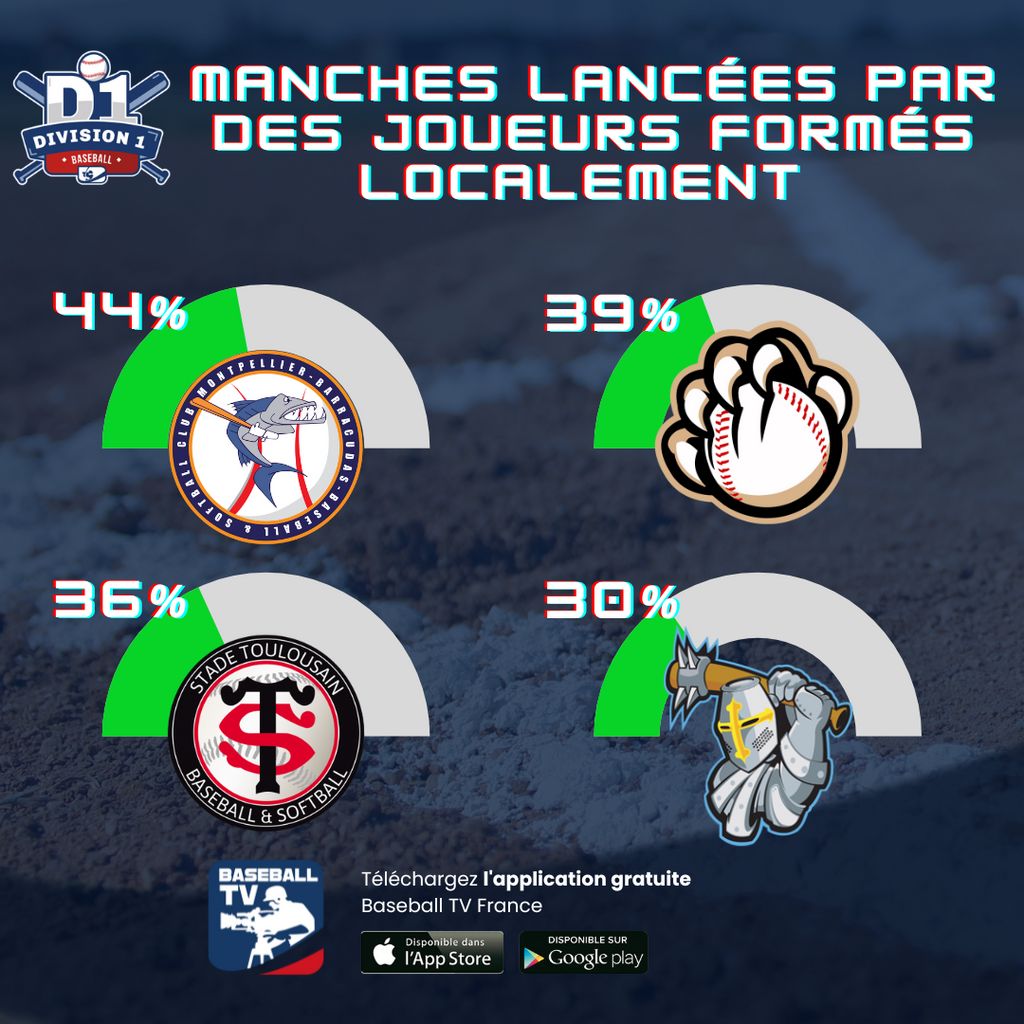
Reading these statistics, teams will have to adapt. We can see a huge difference between the Montpellier and Sénart clubs. Some teams will already be in compliance, and others will need to find solutions to meet the criteria. The JFL market will therefore open up, giving opportunities to these players.
The questions that will arise will be about the impact on rosters, the level of play, and the rise of these players. Then, like other federations, regulations could evolve in quotas, license time…
Some federations (basketball, for example) are already subject to European legal battles, particularly on issues related to the free movement of workers and free competition.


React to this article
Community rules
Loading rules…