 ROU
ROU
 SAV
SAV
 PES
PES
 PHA
PHA
 REN
REN
 NAB
NAB
 COM
COM
 COL
COL
Gabriel Do Carmo

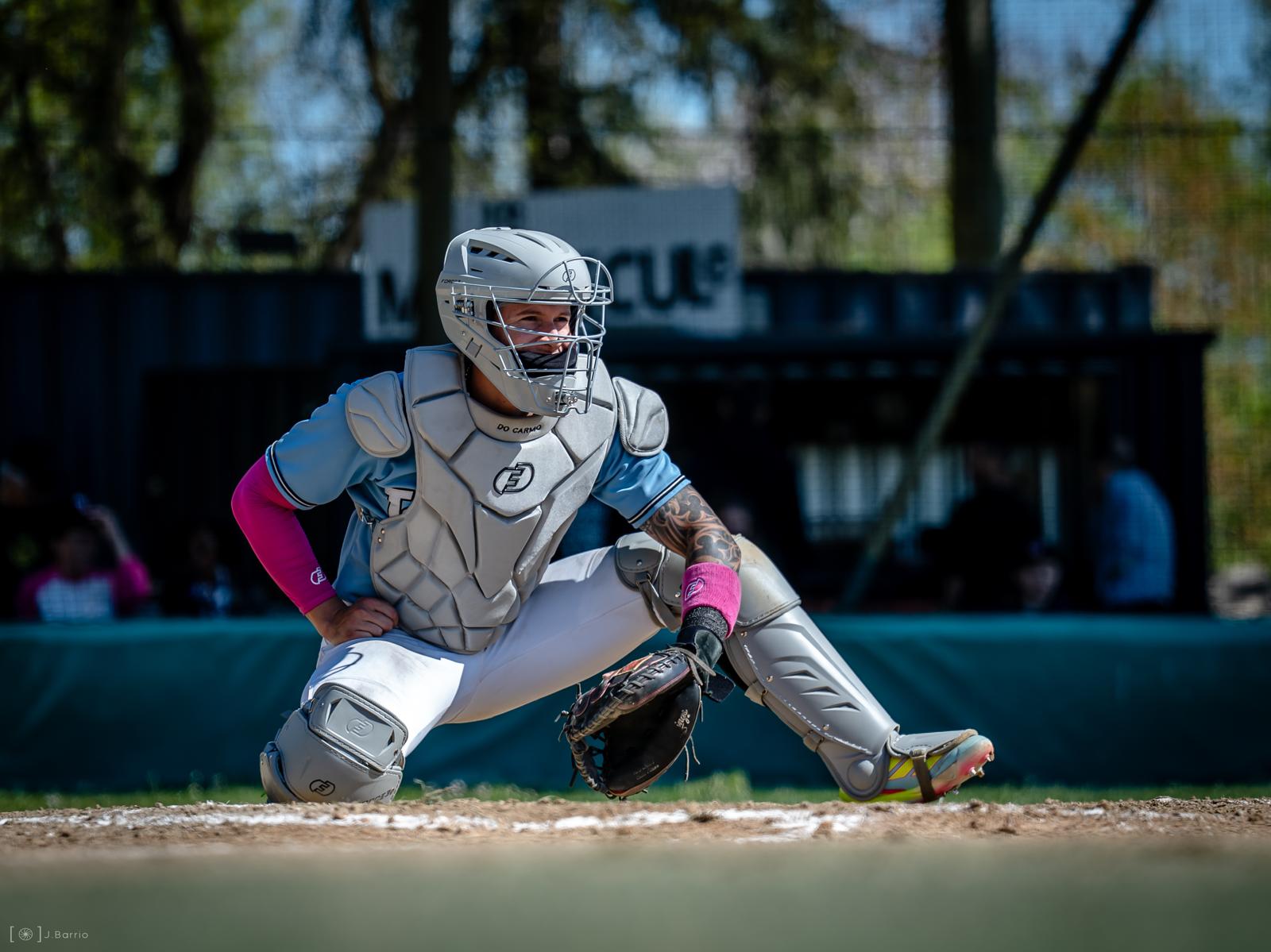
In France’s baseball championship, making a name for yourself is never a matter of chance. The spotlight shines on those who deliver standout performances on the field, gain exposure in international competitions, and sometimes make headlines beyond the sport.
It’s this trifecta that puts Gabriel Do Carmo in the limelight today. The Brazilian player, now with the Templiers de Sénart, embodies this new generation capable of excelling at all levels. Between sporting impact, international experiences, and a remarkable career path, Baseball TV France met with a profile that is no longer indifferent.
BTVF: Can you introduce yourself quickly and tell us about your baseball journey from Brazil to France?
My name is Gabriel do Carmo, I’m from Brazil where I started playing baseball very young in a highly competitive environment, strongly influenced by Japanese culture, with great rigor and constant work on fundamentals.
I was trained within my club GECEBS, with which I was champion in several categories: U12, U23, and in the Senior team.
I lived in a Japanese baseball academy of the Yakult Swallows in São Paulo, a high-level structure linked to professional development, which today belongs to the MLB, this place has brought me a lot on a technical, mental, and disciplinary level.
My first calls with the Brazilian national team started at the age of 14-15 and continue to this day, for me playing for my country is always the most important moment of my career, I have had the chance to live through several major competitions. I was a South American finalist, elected best catcher on the continent, then silver medalist at the Pan American Games, with important victories against nations like Cuba, Venezuela, Panama, and Colombia.
I also participated in the last World Baseball Classic with Brazil, as well as two qualifying phases before, undoubtedly the highest level competition in the world.
My journey in France began in 2016 in Saint-Lô, then I joined Montigny-le-Bretonneux in Division 1 in 2018 until 2024, where we won the Challenge de France and participated in two European Cups. It’s a club that welcomed me very well and for which I will remain grateful all my life, and finally since 2025 I have been playing for Sénart with great ambitions.
BTVF: You have played several seasons in the French Division 1, notably in Montigny and now in Sénart. What has the French championship brought to your development compared to baseball played in Brazil?
France has brought me a lot in terms of adaptation and especially in the regularity of matches. In Brazil, most of the national team players compete in professional leagues all over the world, so we don’t have as many competitive matches throughout the year in the Brazilian championship.
Here in France, I found a championship with more volume of matches, which allows me to continue developing under more constant conditions and to chain real game situations, which is very important for progress.
I have also developed my leadership and overall understanding of the game, especially as a catcher, where you have to manage the pitchers, read situations, and guide the team.
Outside of baseball, France has also brought me a better quality of life, whether financially or in terms of security, being in a more stable situation, which has also allowed me to help my family more, which is very important to me.

BTVF: How would you compare the playing style between Brazil and France: tactical approach, level of pitchers, intensity of matches?
In Brazil, as I said, the style is very influenced by Japan: a fast, very clean technically, and very fundamental-focused game, with constant intensity. The technical level is generally very high, and most of the national team players are professionals, playing all over the world.
When we meet in the national team, it’s a very enriching mix of different baseball experiences and cultures, which raises the level even higher.
The only real weak point of Brazilian baseball is the lack of matches throughout the year. The highest-level tournament is played in December, and the level is extremely high, as many professional players return from their season abroad for the “vacation” and strengthen their teams. There are also recruitments of foreign players, without real limitations, which raises the level of the matches even more.
In France, the playing style is quite varied: some teams focus on tactics, others on power. It’s a long season with a large number of matches, making the competition demanding; the intensity can vary throughout the year but it remains very high during important matches, there is however a limit on the number of foreign players which can unfortunately slow down the overall level of the game but it remains a good championship, always progressing and which can be very competitive during decisive moments
One of the great advantages is also the possibility of qualifying for the European Cup, which allows you to travel, discover other baseball cultures, and face different playing styles — a very enriching experience.
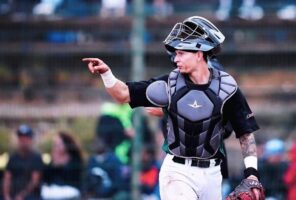
BTVF: In 2023, you were a pitcher for Montigny and finished the year with a very impressive ERA of 1.04, but you seem to favor your catcher position. Why?
I’m not a pitcher by nature, I just help out the team when there’s a need. My position has always been catcher.
The 2023 season on the mound went very well, but it remains something occasional.
Being a catcher is really my natural role and the one in which I can bring the most to the team. I’m involved in every pitch, I manage the pitchers, analyze the batters, and directly participate in the game strategy. It’s a position that demands a lot of responsibility and suits me.
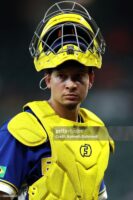
BTVF: You participated in the World Baseball Classic with the Brazilian team twice. How does this competition change completely in dimension compared to national championships?
The World Baseball Classic is really a different dimension. We play in front of sometimes more than 50,000 spectators, with everyone in baseball watching the matches. The pressure is totally different, but it’s also a huge privilege to be able to live such moments.
The intensity, the level of the players… everything is multiplied. We face MLB players or very high-level international players. Every detail counts, and the environment is much more professional. It’s a unique experience that pushes you to raise your level on all aspects.
Even the preparation is completely different. With the Brazilian national team, we were in a training camp for 15 days, with daily training at very high intensity, from 7:30 AM to 5:00 PM. We chained hitting work, collective defensive training, individual work, live BP, repetition of signals and tactical situations, communication, base running work, and muscle building.
It’s a level of demand and volume that you don’t always find here in France, where teams often train for 1.5 to 2 hours, two to three times a week. And of course, that makes a huge difference.
We are also coached and mentored by former MLB players. For example, my coach was Yan Gomes, a Brazilian catcher who played 13 years in the Major League. This transmission of experience makes you progress a lot. In France, this is something that is still lacking, as very often it is the players themselves who also take on the role of coach.
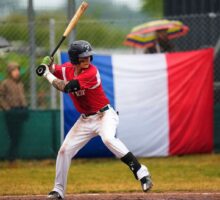
BTVF: Facing major nations like the United States or Japan, what are, in your opinion, the main differences in terms of preparation, experience, and professionalization?
The main difference is the structure. These countries have extremely developed systems, with significant resources, daily follow-up, and a deeply rooted baseball culture. Players accumulate a lot of experience at a very high level, and everything is optimized: physical preparation, video analysis, strategy… That’s what makes the difference in the long run.
In these countries, baseball is played every day, with the same structure and level of preparation repeated year after year for a long time. It’s a rhythm and a professionalization environment that is difficult to match, especially when you play in championships where you train and play mainly on weekends.

BTVF: Last season was marked by a complicated situation on a sporting and institutional level. How did you personally experience it?
Last season was a difficult time for me. I was a bit taken as an example not to follow, which doesn’t really reflect the person I am on a daily basis for those who know me.
There were, in my opinion, a lot of extra-sporting aspects in the decisions, but I remain lucid: I made a mistake and I fully assume it.
With hindsight, I also understood that it’s useless to “fight” the umpires. It has always been a subject in baseball and it probably won’t change overnight. Today, I try to stay focused on my game and to have fun, even if there can sometimes be questionable decisions every weekend.
I move forward, I learn from it, and I stay focused on what I can control.
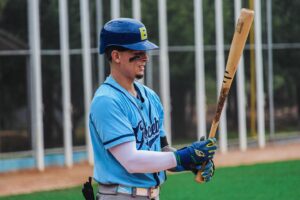
BTVF: With your international experience and in France, do you think French baseball can still take a step forward to compete more on the world stage? And on which levers?
Yes, clearly. There is potential.
In my opinion, to improve the championship, you first need to have the best possible players on the field, regardless of their nationality. The fact of raising the overall level of the competition naturally forces French players to adapt, keep up, and raise their own level.
This demand raises everyone up. In parallel, you need to continue structuring the clubs, developing young players, and increasing the volume of training and competition. With time and continuity, France can really take a step forward.
BTVF: What can we wish you?
Health above all, to continue to enjoy yourself on the field. Continue to represent and defend my country, and of course win titles with Sénart.
Photo credits: RS Club and G Do Carmo
React to this article
Community rules
Loading rules…