BTVF: Who are you, Thomas Houlez?
T.H.: I’ve been a volunteer with the Templiers de Sénart since 2018, part of the communications committee, and specifically in charge of live match broadcasts on our YouTube channel. It’s a passion I dedicate time to and that brings me a lot of joy. The ideas never run out, and with my partners, we try to make the club, and baseball in general, more visible.
BTVF: You’re in charge of Templiers Productions. What’s its history, and who are the key players?
T.H.: The club was founded in 1987, and the YouTube channel was created in 2008 when the platform was only three years old! A few promotional videos were uploaded, but it wasn’t until 2012 and the inauguration of the Templiers Stadium that we started broadcasting live. When I joined as a volunteer (as the father of a young player), the entity ‘Templiers Productions’ already existed. Having a distinct identity shows the importance we place on this activity, much like the Sénart Baseball Academy. Julien Brelle introduced me to the equipment, which was funded by a sponsor. I helped make the system easier to use, for example, by improving the scoreboard overlay and making it more dynamic with player names, stats, and base views when there are runners.
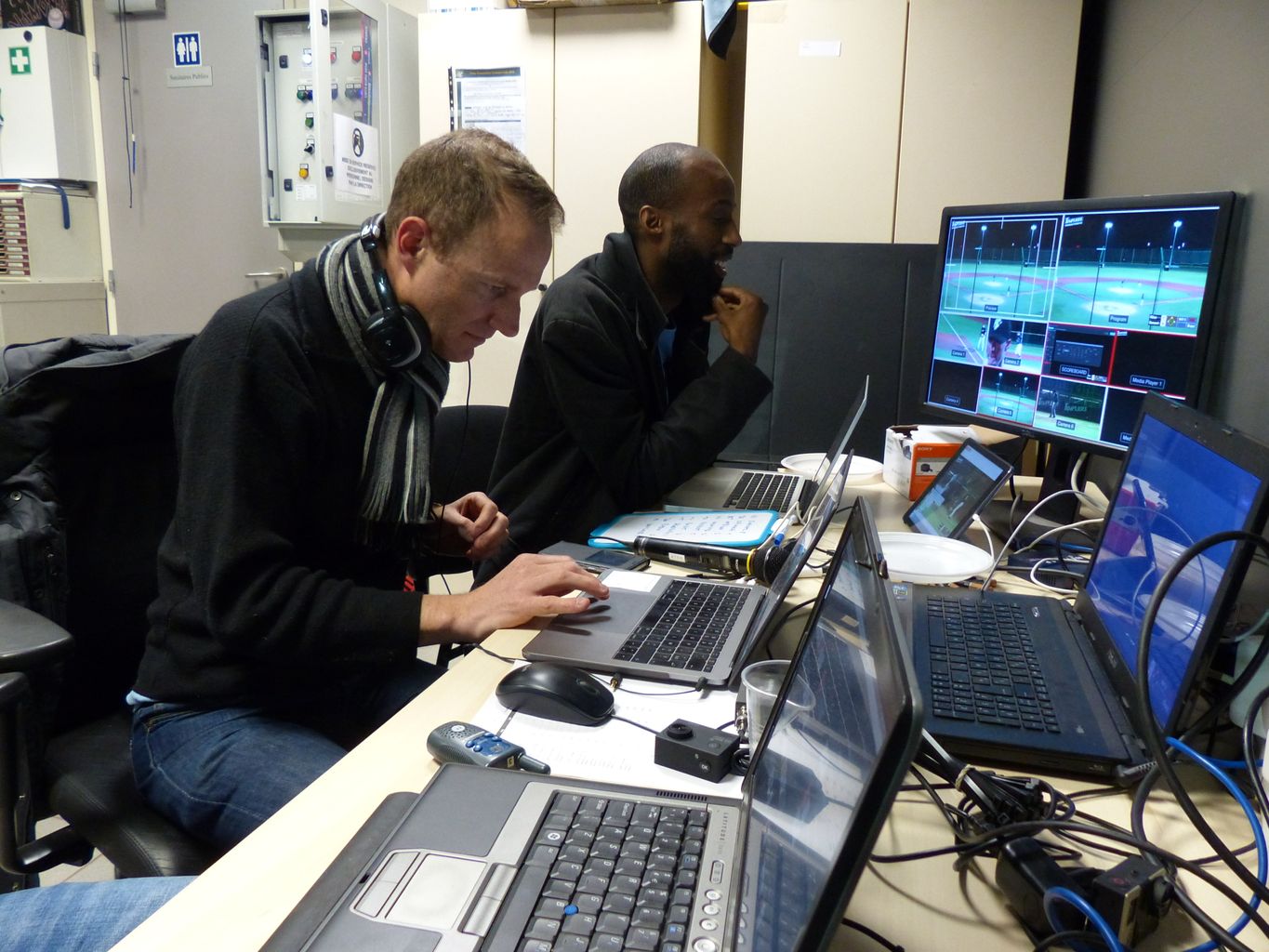
Thomas and Ted
Damien Teygeman, who has been in the business since the beginning, provides advice or equipment. The club has long valued video and live broadcasts. It’s not just for entertainment but part of a genuine sports and development strategy. Institutional and private partners are always impressed by the control room and the results on YouTube. It’s also a factor that’s starting to weigh in the recruitment of our first team. Some players seek exposure, and with live broadcasts, it’s potentially global. By the end of the season, they have several hours of matches where they’re seen on screen with their names and stats, which helps build a resume.
In a few years, we’ve increased the number of cameras to seven. We have a handheld camera that we can move around the field to get close-ups of players between innings, a turret camera to show the crowd, Lucie who focuses solely on the scoreboard overlay with ball and strike counts, Sébastien who operates the camera in the stands, Ted who manages social media and responds to the chat, and other volunteers who occasionally lend a hand to improve production. Regarding investments and technical choices, I consult Frederick Launay, who is part of Templiers Productions but also a member of the board and executive committee. Finally, it’s important to note that video is a communication tool for the club, and it’s the president, Mario Brelle, who has the overall view and makes decisions when necessary. Matthieu Brelle-Andrade, the manager of the D1 team, also advises me, drawing inspiration from professional productions. The handheld camera, for example, was his idea.
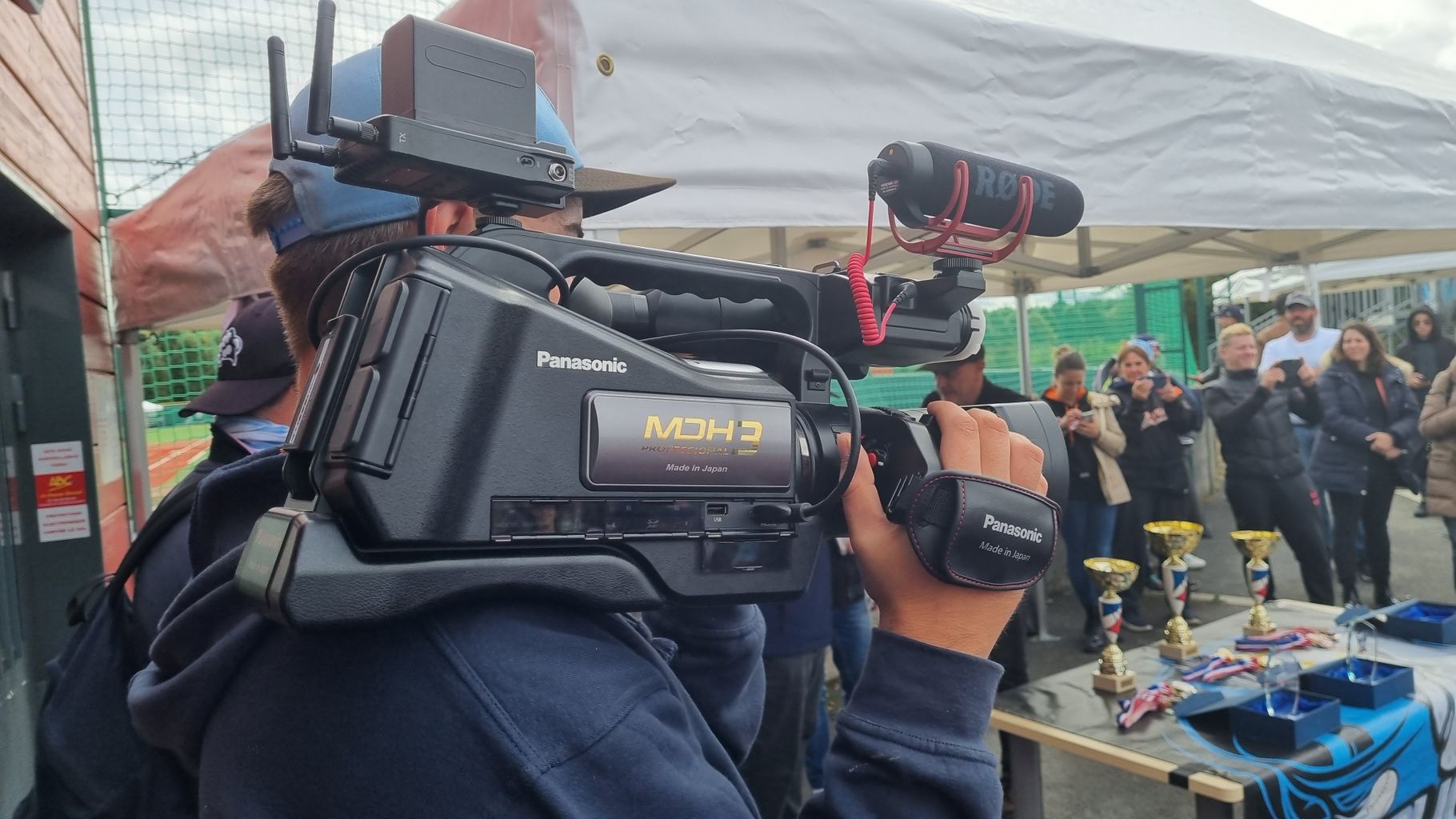
Handheld Camera Award Ceremony
BTVF: Broadcasting baseball matches requires certain prerequisites. What are the constraints and advantages of this sport for you?
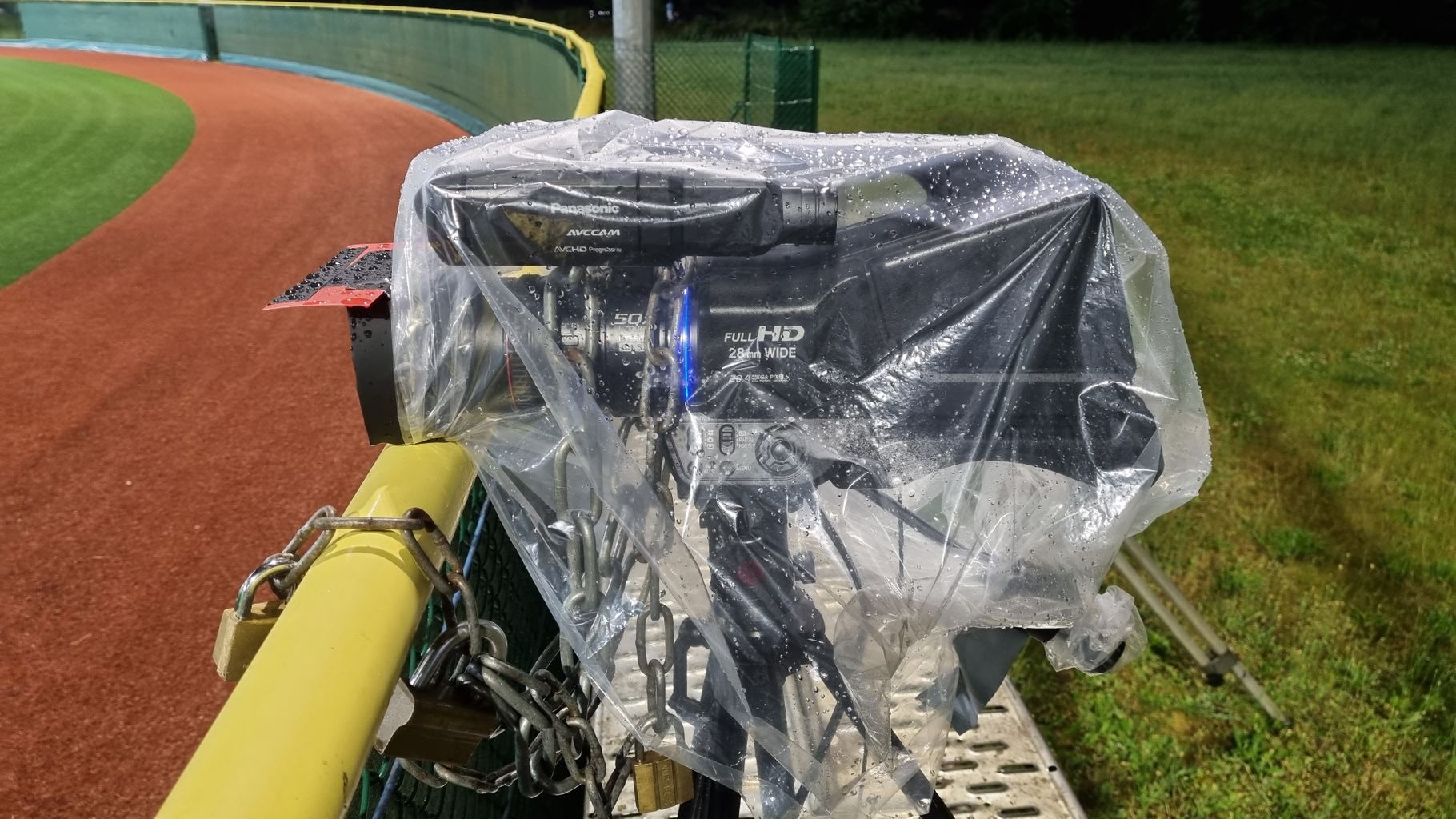
T.H.: First, the size of the field is a challenge. We have a camera at the center-field fence at the end of a 150-meter cable! And to get close-ups, you need powerful, stabilized zooms. All this requires careful choice of equipment, both for quality and longevity. You need to be ingenious in setting up the equipment so that cameras don’t shake in the wind, are protected from rain, sun, or balls! The devices must be easy to set up and dismantle, even if I always plan at least three hours for setup. For framing, there are many static periods in our sport, and I take advantage of this to do close-ups of the players, to bring emotion to the screen. I also like to film the crowd in the stands and the players in the dugouts. And when there’s action, it happens very quickly, and sometimes you have to make choices: follow the ball or a runner? When I’m directing, I try to anticipate what’s going to happen to be ready to select the right view. Sometimes I make mistakes and show an empty base!
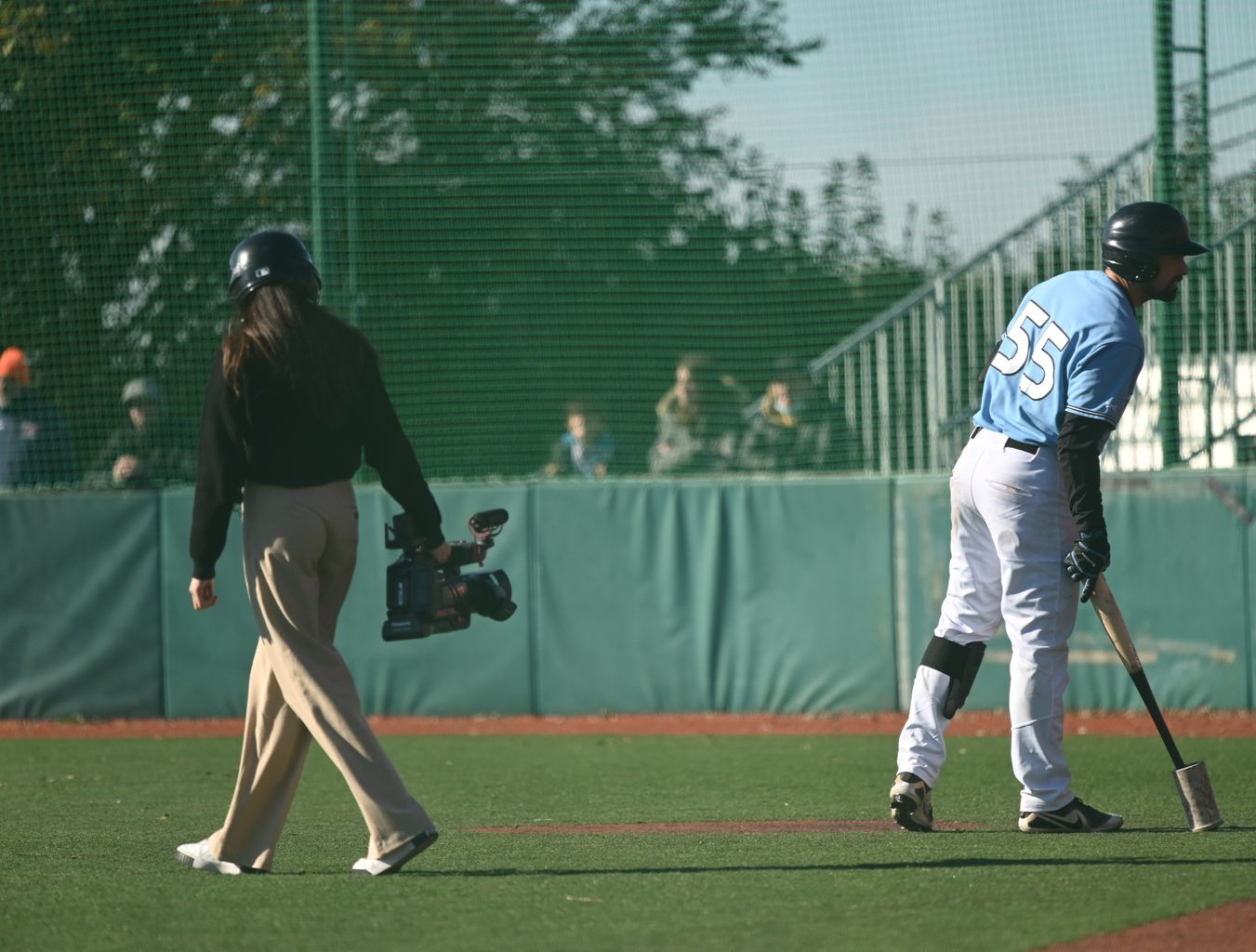
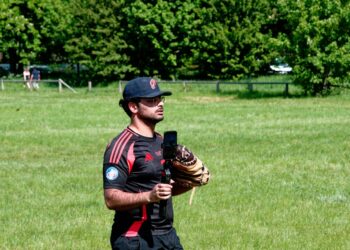
Oéane with Handheld Camera
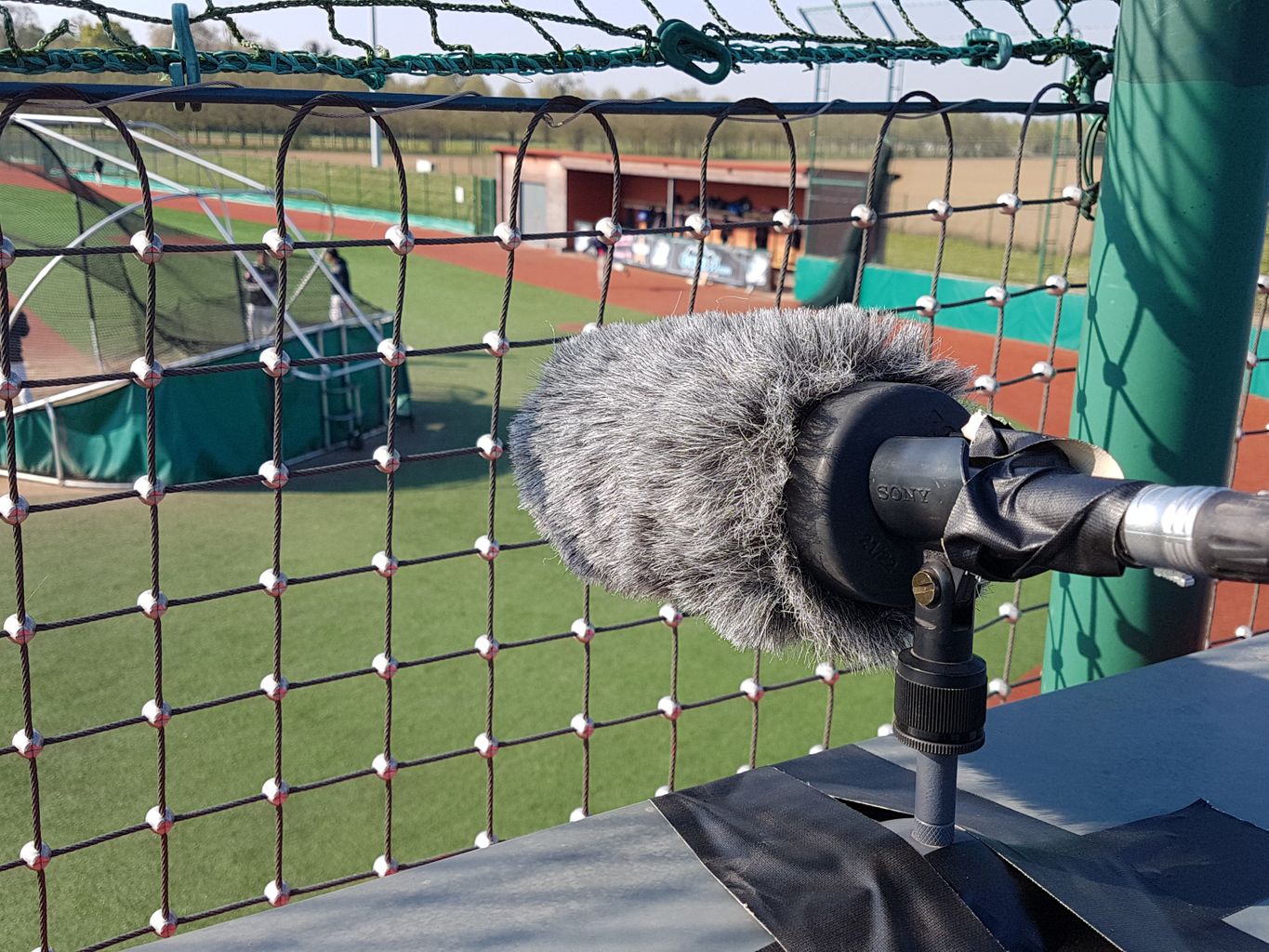
The sequencing of the game allows us to show replays without missing any action, and it’s a tool that keeps viewers’ attention. Baseball is a sport where sound is important, and we quickly invested in a shotgun microphone aimed at home plate to capture the sound of hits or the ball hitting the catcher’s glove. Then there’s an essential point: commentary. During a 2.5-hour match or longer, announcing strikes and balls gets tedious for everyone. When you know the players, you can talk about them, share anecdotes, but that requires preparation. Broadcasting on YouTube allows viewers to participate in the chat and interact. Often, some viewers provide details, especially about the opposing team’s players, and I really enjoy this interactivity.

Sébastien Framing Stand
BTVF: After long offering free match broadcasts, you’ve switched to free live and paid replay. Can you explain the approach?
T.H.: The year 2021 was important for Templiers Productions as we surpassed 1,000 subscribers on our YouTube channel, opening up new possibilities. Matches were left available for a few weeks before being removed, a common practice on sports channels. We wanted to allow those who wish to access this content again unlimitedly by paying a symbolic monthly subscription of 99 cents, cancelable at any time. ‘Members’ also get access to custom emoticons they can use in the chat. It’s therefore a ‘bonus’ content since live broadcasts remain free. It’s not a real source of revenue for the club but rather an opportunity to engage our viewers and create a community, whether they’re Templiers supporters or baseball enthusiasts.
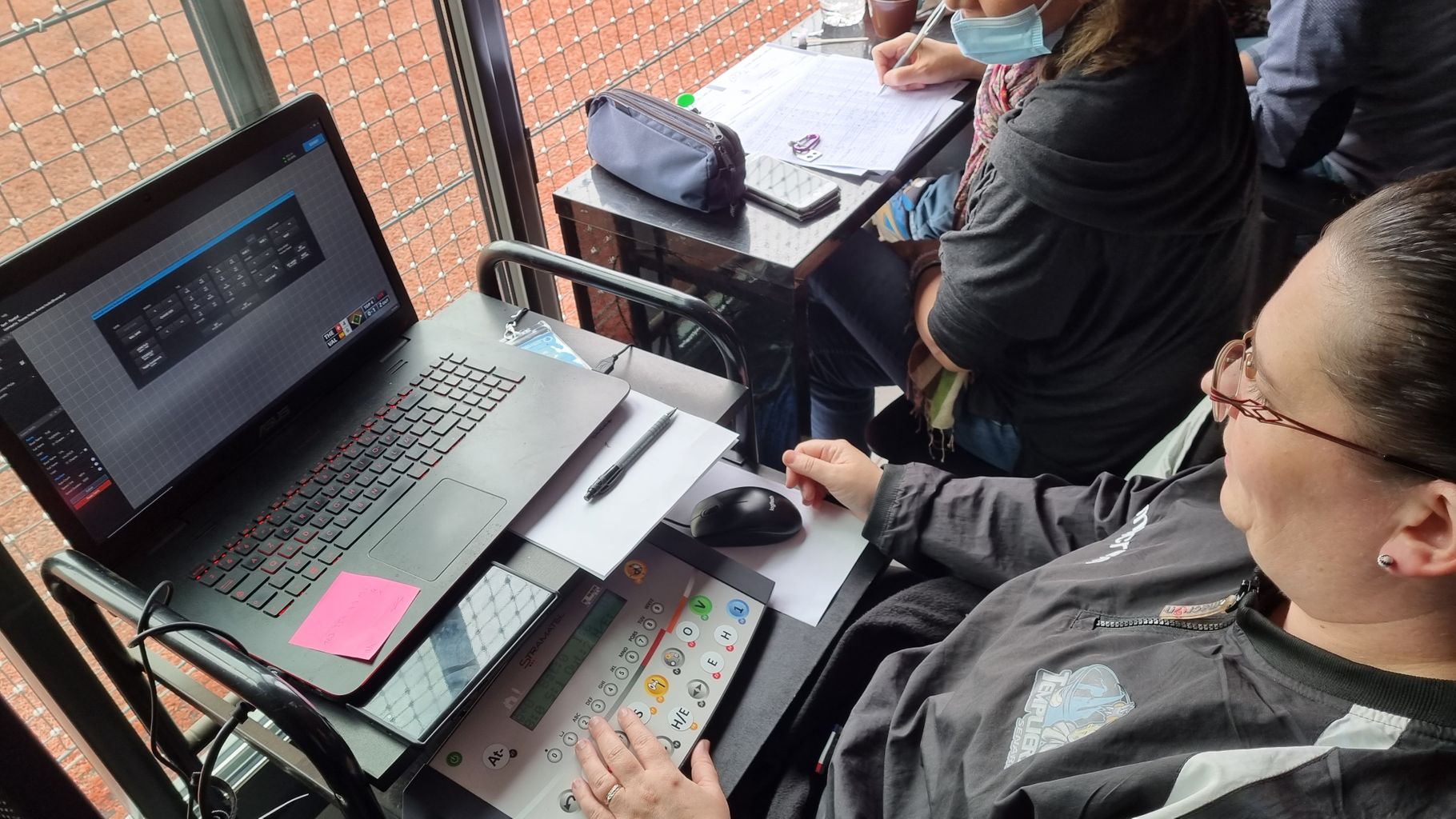
Lucie TV Scoring Software
BTVF: Each year, improvements are noticeable. What do you have planned for 2022?
T.H.: I’d love to say that a drone will broadcast aerial views, a radar will display pitch speeds, and the catcher will have a miniature camera on his mask. The reality is that we already have a very complete setup, and each new feature represents a cost that may be unreasonable given our communication goals. Among the ideas that cost nothing, I’d be delighted if volunteers (or former players?) discovered a talent for commentary. It would also be great to do more very short ‘field-side’ interviews between innings. We’re working on that. Regarding visibility, the federation should put us in touch with Sport en France to see how our matches can be broadcast on that platform. Finally, this year we only have the French Championship matches at the Templiers Stadium. It might be an opportunity to broadcast D2 or youth matches.
BTVF: What can we wish for you?
T.H.: First, that more and more clubs broadcast their matches. We need to create a snowball effect. You can start with the Swish Live system that the FFBS offers and seems very easy to use. On my part, I’ve advised teams that want to get started. Without pretension, we have experience in Sénart to talk about pitfalls to avoid or mistakes not to make. There’s a baseball streaming community that’s uniting thanks to Baseball TV France. I’m very happy that fans can follow our matches both on our YouTube channel and on your app. And if the exchanges and mutual aid that already exist behind the scenes can continue to develop, it’s a good thing for French and even European baseball. We share the same goal, even if our teams are rivals.
Shotgun Microphone
I’ve also noticed a natural link with officials: scorers appreciate being able to instantly review actions. I also exchange a lot with the umpires. And with a mobile camera on the field, it’s important to coordinate well before matches. For the first time during the 2021 French Series, we had a real briefing with the technical commissioner and the umpires. We get to know each other and work together. We’ve had great freedom so far, even for European broadcasts, and I hope it continues that way as it’s in the interest of our sport.
Interview conducted by Didier CANNIOUX