 ROU
ROU
 SAV
SAV
 PES
PES
 PHA
PHA
 REN
REN
 NAB
NAB
 COM
COM
 COL
COL
The Bermuda Triangle

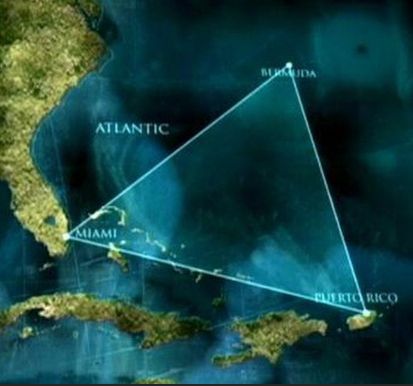
Everyone knows about the region of the world that forms a triangle between the Bermuda, southern Florida, and Puerto Rico. But in baseball, what does it refer to?
The baseball field is like a slice of cake, with a right angle on one side and a quarter-circle on the other.
Player positions are understood according to their names and correspond to a general geographic area where a defensive player will operate. Of course, each concentric zone around a defensive player will intersect with a concentric zone of the player next to them. This is why priorities are normally established between players to define who will defend first based on the ball’s arrival or crossing zone. Some exceptional defensive players sometimes go beyond their zone and must shout their priorities to other defenders to secure the ball first, especially on fly balls.
That said, nine players for about 8,000 square meters is obviously not enough to cover all the trajectories and arrival zones of the balls hit. This is fortunate because it allows the batter to find zones to place the ball as far away from each defender as possible to help them advance as far as possible in obtaining a base. Today, each hitter is able to gauge, according to their swing, whether they can hit a single, double, triple, or even an inside park home run.
At a certain level, defensive players and statistical teams in the dugout are able to inform the entire team to modify the positioning of defensive players by moving them more or less forward, backward, left, or right on the field. For a few years now, we have seen the phenomenon that Americans call the ‘Shift,’ which is a defensive positioning that leaves large areas without defenders. Indeed, batting statistics give a clear idea of where the ball is likely to arrive. Some hitters have become predictable, and defenders know it. This is seen a lot in MLB, less in Europe, and even less in France because the statistics are not sufficiently eloquent. This possibility, by the way, will become almost prohibited next year, as MLB has announced that it will force defensive players to stay in their normal defensive zones. We will no longer see a left field completely abandoned by the third baseman and the left fielder.
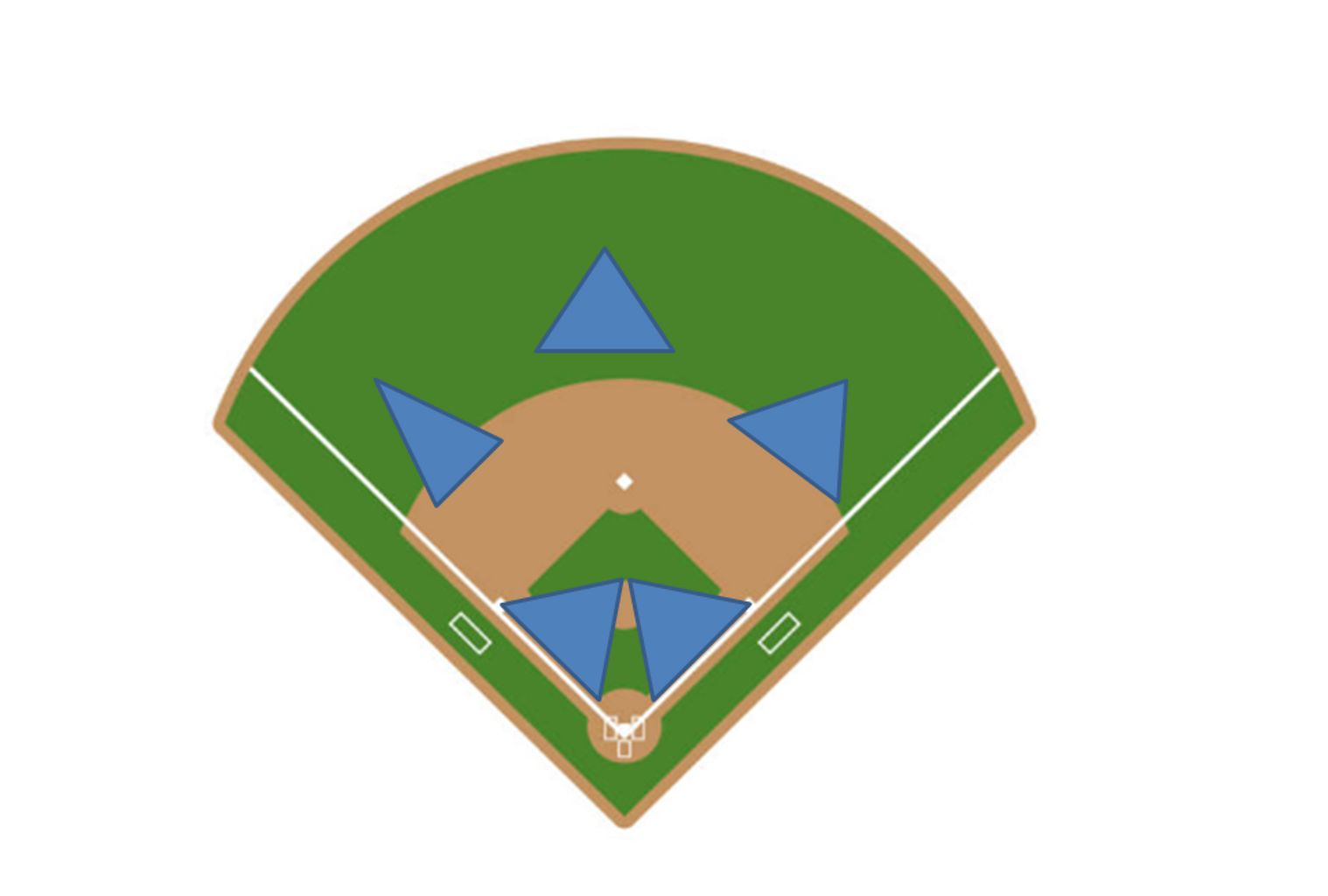
This brings us naturally to the concept of the Bermuda Triangle zone. This would be one or more zones that the batter calculates before hitting based on the positions of the defensive players. This allows them to place the ball where all the defensive players concerned by the hit will have the most distance to cover to retrieve the ball. The first two triangles are in the infield between the pitcher, catcher, and first baseman for the right side of the field and the third baseman for the left side. A well-measured bunt will make all three defensive players hesitate to retrieve it and throw it to first base. In these two triangles, if the ball stops equidistant from each of the three defensive players, the likelihood that they cannot quickly define the priority among themselves for one of them is quite high. Another Bermuda Triangle also exists in front of each outfielder with the two defensive players in front of them. For example, in front of the right fielder, equidistant from the first baseman and the second baseman. In this case, it is a hit lobbing the infield that stops far enough behind first and second base, making them believe that all three have a chance to catch it.
When the Bermuda Triangle is reached by the batter, either the defenders give up and let the batter easily win their base, or we see a full-on collision that can sometimes even cause injuries among defensive players.
For the batter, the Bermuda Triangles are a constant search before the hit. For the defense, it is a matter of agreeing if it happens, as in no case will the defense be able to ‘close’ all the triangles so that none exist on the field. One possibility for the defenders is to be mobile in defense, meaning moving around during the pitcher’s motion, changing places between different pitches. With each pitch, the batter must ‘gauge’ the best Bermuda Triangles based on the positions of the defenders, the number of outs, the players on base, and the score of the at-bat. It is therefore a matter of a very rapid brainstorming for the batter before each pitch to place the ball in the best Bermuda Triangle possible at that moment.
Good batters, hitters, or bunters, are often those who intellectually calculate very quickly their ideal hitting zone to win their base.
And you, how do you calculate these famous triangles?



1 comment
-

Ancien membre
See the 1 commentC’est vraiment dommage que le shift soit maintenant interdit en MLB. C’était une option stratégique, avec ses risques
Community rules
Loading rules…