 ROU
ROU
 SAV
SAV
 PES
PES
 PHA
PHA
 REN
REN
 NAB
NAB
 COM
COM
 COL
COL
The Strike Zone Robot

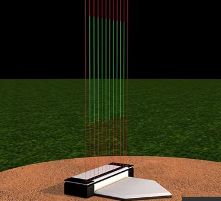
In France, not for another 20 years? In the U.S., within two years and in the majors. The strike zone robot that determines with a very small margin of error the strikes of the balls. Today it’s a box, equipped with lasers that capture the ball’s speed as it crosses home plate and doesn’t exceed the high or low zone relative to the batter. This technology can only improve. It’s a box that fits into the ground and must be cleaned after each pitch. (You can already see players throwing dirt on it between batting stances!)
TrackMan, or “robot umpire,” sits above home plate and from a distance looks like a black box. In reality, it’s a 3D Doppler radar antenna that analyzes every pitch. Using a three-dimensional strike zone, TrackMan can calibrate the size and position of each batter and adjust the strike zone accordingly. Thus, the system works in such a way that it doesn’t allow a 6-foot-tall player to have the same strike zone as a 5-foot-7 player.
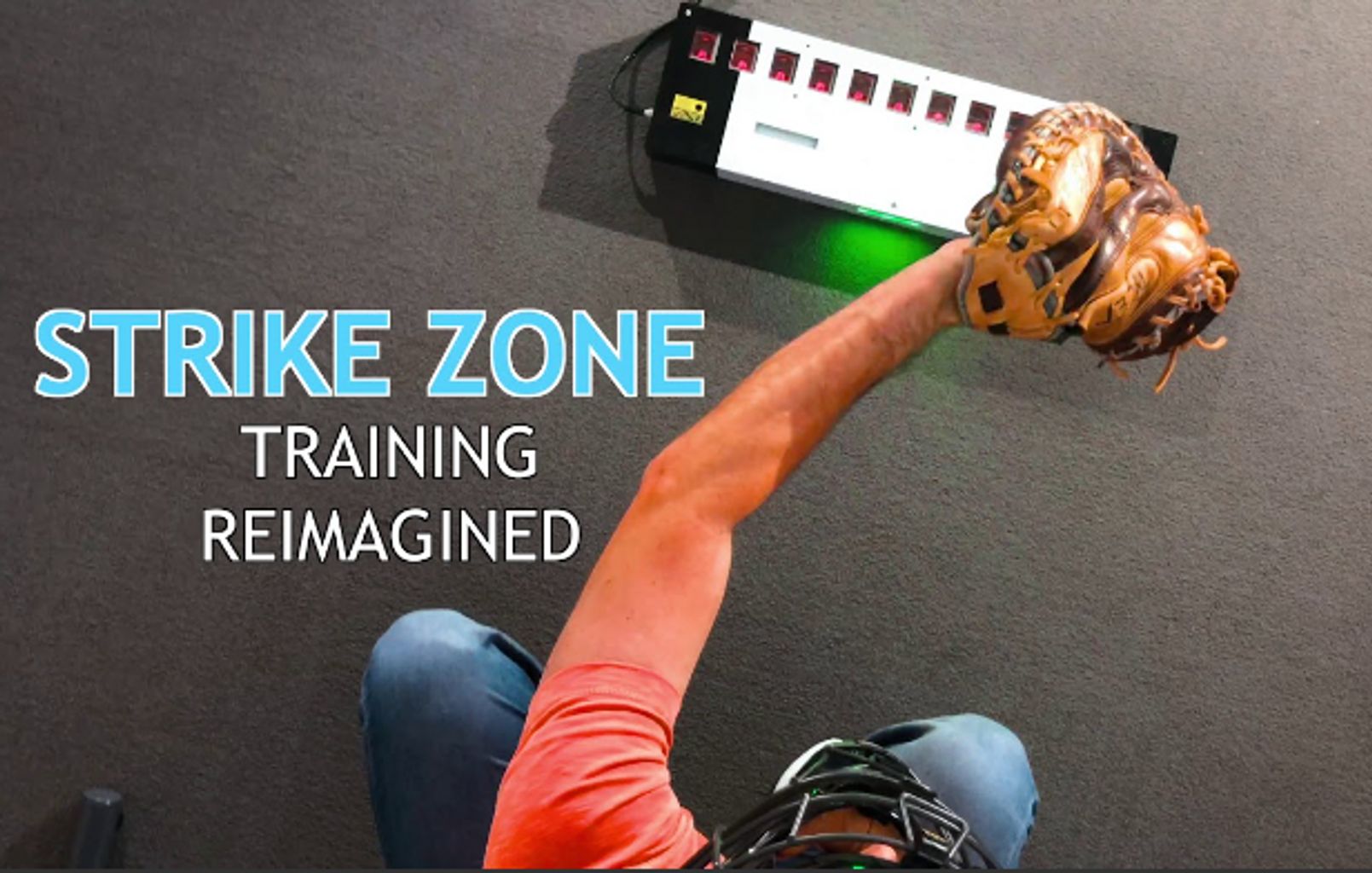
The electronic strike zone, also called the “robot umpire,” could make its debut in Major League Baseball within the next two seasons. The Major League Baseball Umpires Association has agreed to cooperate with Major League Baseball to develop and test the electronic strike zone, reported Ben Walker and Ronald Blum of the Associated Press.
The electronic strike zone has been tested in the independent Atlantic League (as part of the partnership between MLB and this league) and in the Arizona Fall League in recent seasons.
Manfred stated that the automated strike zone has been used in some minor league ballparks since the 2020 season, while MiLB works to improve the technology. Here’s the short version of how this technology works: The home plate umpire will wear an earpiece during the game and will hear a “ball” or “strike” call on each pitch. The pitch is identified using a Doppler radar system called TrackMan. The umpire hears and conveys the decision.
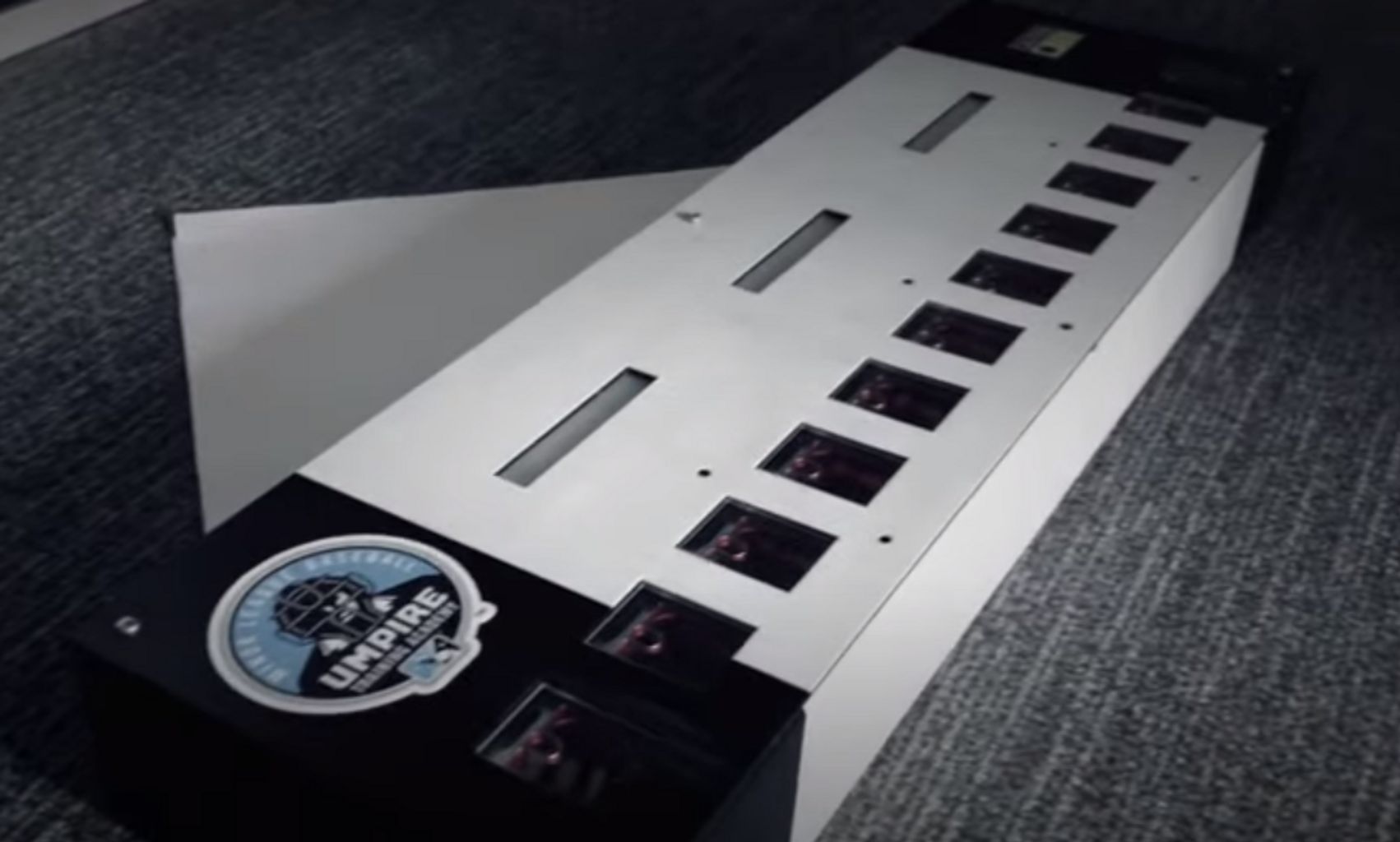
TrackMan obviously affects everyone involved in a baseball team, but how has it been for the umpires? Many of them have had to rethink their entire career and approach to calling balls and strikes. After being surprised by the announcement of an electronic strike zone, Freddie DeJesus, an Atlantic League umpire, now acknowledges that this technology can be a game-changer.
“As I’ve had the chance to do now, it’s great,” said DeJesus. “It’s a great opportunity and it’s good for the game. I can see myself moving up to the next level. It’s just an opportunity for bigger things to happen in baseball.”
So, to summarize:
-
The pitch is thrown
-
TrackMan tracks and identifies the pitch’s location.
-
The earpiece tells the umpire if it’s a ball or a strike.
-
The umpire makes the call physically behind home plate.
When will we see the same technology at first base to determine if the first baseman’s glove, equipped with an electronic system, recorded a catch before or after the runner’s foot touched first base?

2 comments
-

Ancien membre
-

Marius Boulle
See the 2 commentsCe n’est pour moi qu’une aide a l’arbitre qui peut ne pas suivre la machine en dernier recours
C’est complètement hors de l’esprit baseball , le fait que l’arbitre ne soit plus maître de ses décisions et tout à fait contradictoire avec le rôle qu’il doit avoir sur le terrain…
Community rules
Loading rules…