 PES
PES
 PHA
PHA
 SAV
SAV
 ROU
ROU
 REN
REN
 NAB
NAB
 COM
COM
 COL
COL
Growing Number of Competitions


In just a few years, France has become a powerhouse in creating sports competitions. With the growth of its licensed players and categories, the number of competitions across all disciplines (Baseball, Softball, and Baseball5) and all categories has risen from 13 to 21 in just eight years.
Numerous new events have emerged, including the Open divers, Super League, All Star, Yoshida, and Achille. Some have disappeared and then reappeared, like the All Star Game. The firepower of the leagues and clubs, bolstered by their progress, has enabled the Federation to organize national competitions with multiple objectives, including developing high-level players.
In addition to these national competitions, there are all the international competitions with all the French national teams: four for baseball (World Baseball Classic, European Cup for men and women, and World Cup Qualifier), the World Cup for women’s baseball, the European Cup for softball, the qualifying phases, and finally the European and World Cup pools for Baseball5.
On the margins, there are also para-sports competitions.
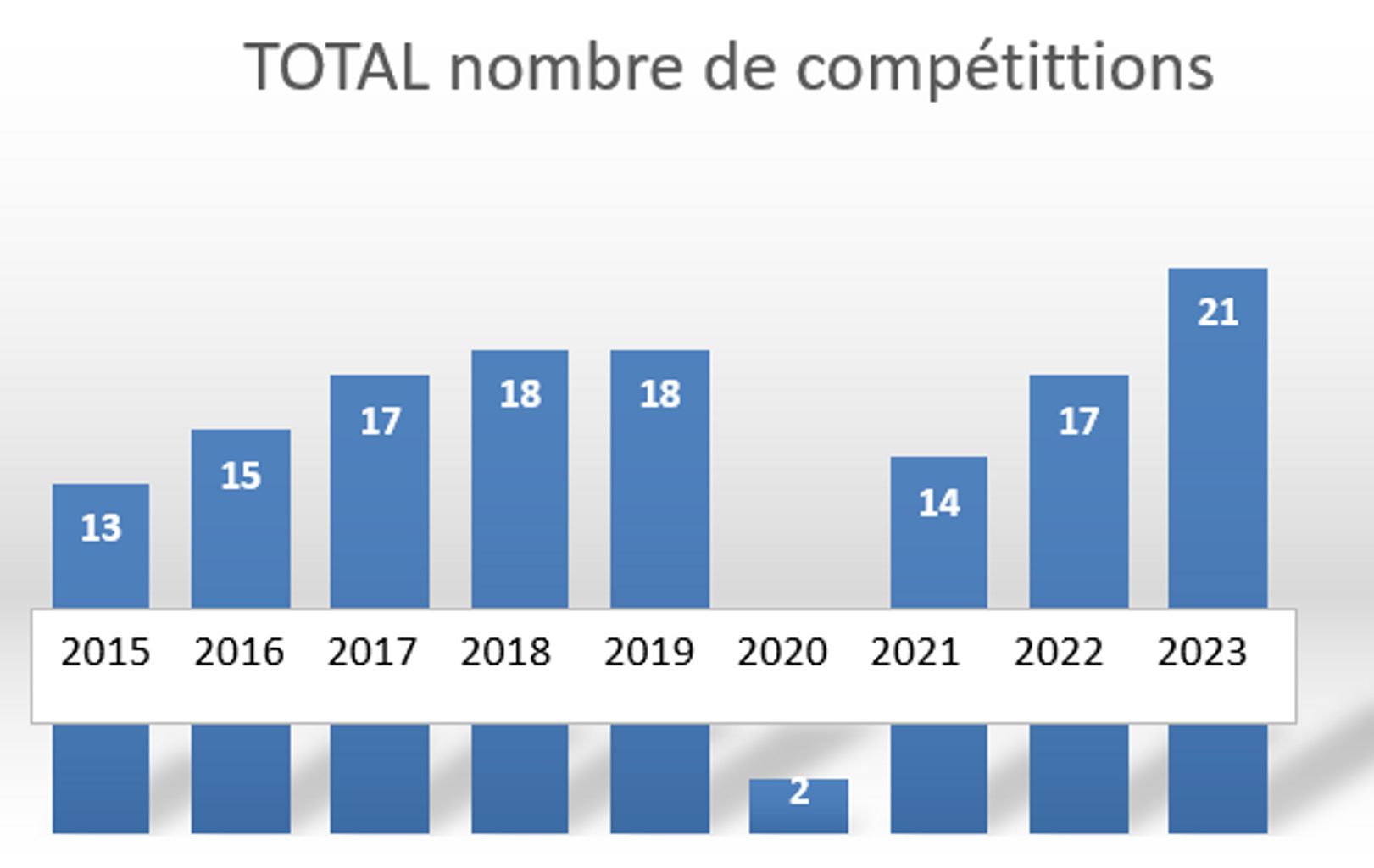
The junior and national training centers are there to supply junior players for competitions across Europe and the world, for certain categories like the 12U and 15U, for example.
International competition is inevitably important; it allows us to position ourselves against other countries, at least in Europe initially. The Federation must cover the organization and delegation of organization to clubs for all these competitions. The budget allocated each year to the costs of these competitions is constantly increasing.
Like a company, this plethora of competitions can hinder the development and funding of human resources within the federal body, communication, or other less allocated posts. Indeed, organizing all these competitions requires a vital internal workforce that cannot all be delegated to leagues or clubs and their volunteers. Moreover, certain missions are outsourced and entail indispensable costs: officiating, scoring, technical commissioner, photographic reporting… Certain tasks that would need to be strengthened, such as communication and broadcasts, are still underdeveloped.
Have we reached a glass ceiling in 2023, characterized by a possible difficulty in sustaining these competitions over time? Each year, calls for tenders to organize several competitions have faced difficulties in finding organizers. Other, more established competitions, like the France Challenges, are at the mercy of several proposals, allowing the executive committee to choose the best proposals and rotate them over time.
We will take stock at the end of 2023, but in any case, this is a true indicator of good health. Each category is valued, and champions of all kinds can proudly display a trophy each year.


1 comment
-

Ancien membre
See the 1 commentÀ courir après plusieurs lièvres en même temps on fini par exploser en plein vol si l’on est pas structuré, continuons de pisser dans un violon…
Community rules
Loading rules…