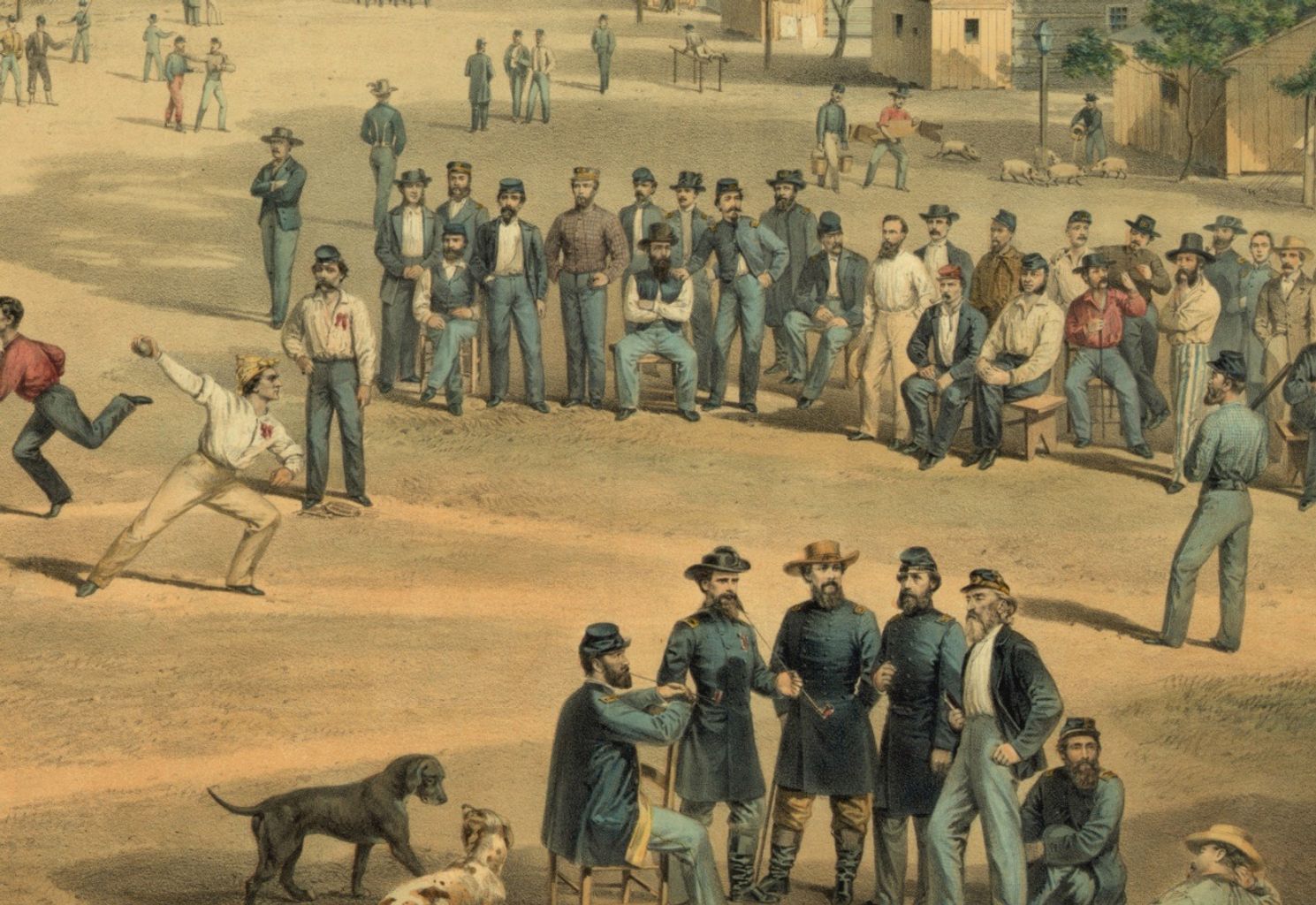
Above: a baseball match from the late 19th century.
Image of Flux: 1913 glove.
“On the Origin of Species”… No, BTVF isn’t following in Darwin’s footsteps, but here’s an attempt (non-exhaustive) to summarize the evolution of the baseball glove through images from the past century.
“Mitt” for insiders.
One of the first players to use a baseball glove was Doug Allison, a catcher for the Cincinnati Red Stockings, in 1870, due to an injury to his left hand. The first confirmed use of gloves was by Charlie Waitt, an outfielder and first baseman for St. Louis, who in 1875 donned a pair of flesh-colored gloves.
The exact origin of the baseball glove remains nebulous. Albert Spalding (1820-1915), a professional baseball player in the major leagues from 1871 to 1877 who founded the Spalding company for sports equipment, reported that the first glove he saw used in a game was worn in 1875 by a first baseman in Boston, Charles C. Waite. Spalding noted that this glove was bright in color to serve as a convenient target. Spalding adopted the glove when he moved from the mound to first base in 1877. By the late 1880s, all defensive players wore gloves, except pitchers.
The last major league player to play without a glove was Jeremiah Denny, a third baseman for Louisville. Nig Cuppy, of the Cleveland Spiders, was the first pitcher to adopt the catcher’s mitt in 1893. Many early baseball gloves were simple leather gloves with the fingertips cut off, supposedly allowing the same control as bare-handed, but with extra padding.
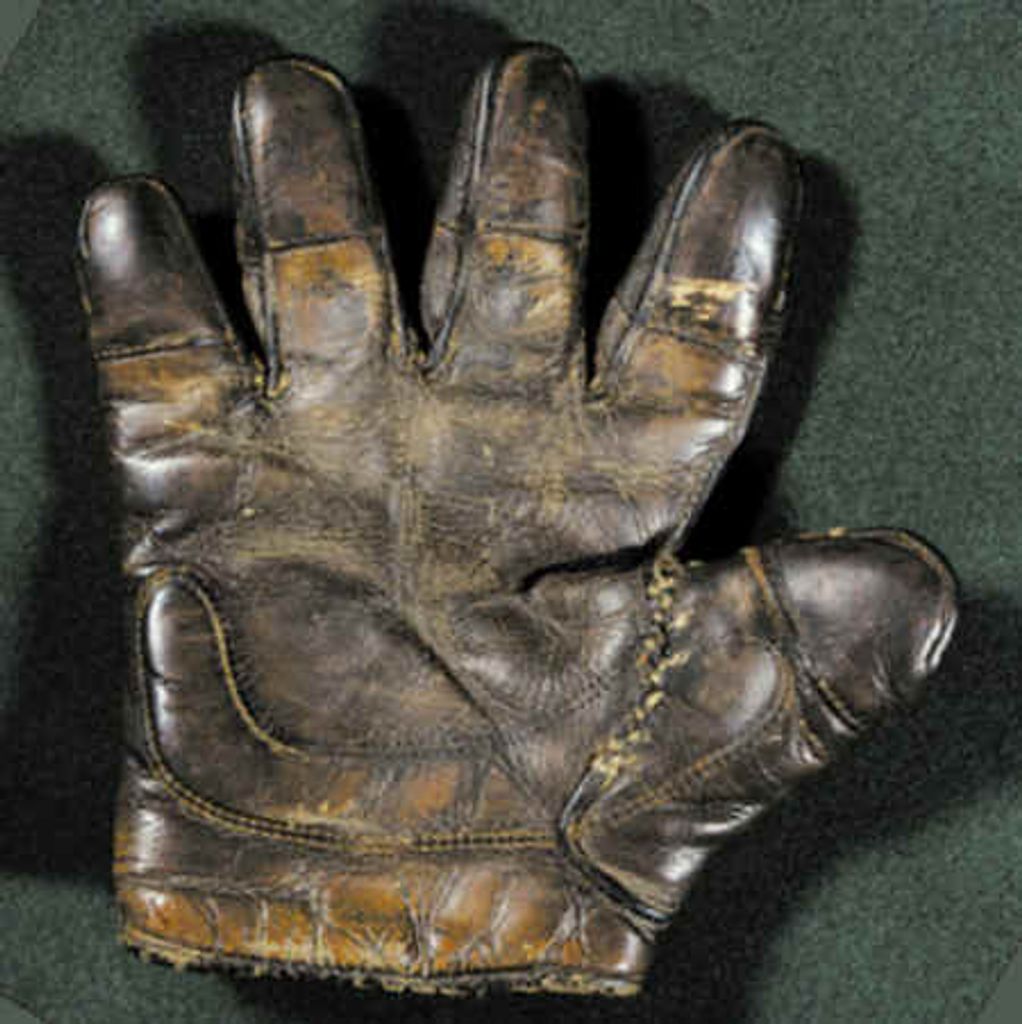
A 1880 model. For left-handers.
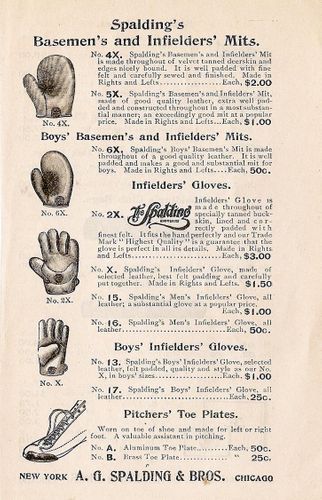
Above, a 1890 catalogue
There’s no doubt that using a glove on a baseball field, at the very beginning of the history of this sport that was to become global, was seen as a kind of lack of… courage?
Yet, with the evolution of the game, increased power and speed, this consideration quickly faded in favor of player safety. By the mid-1890s, it was normal for players to wear gloves on the field.
In 1920, Bill Doak, a pitcher for the St. Louis Cardinals, suggested placing a web between the index finger and thumb to create a pocket. This design quickly became the norm. Doak patented his design and sold it to Rawlings. His design became the precursor to modern gloves and allowed Rawlings to become the preferred glove of professional players. For many years, it was customary for outfielders to leave their gloves on the field when their team came to bat. This practice was banned by the major leagues in 1954.
Today, each position has its own type of glove. More or less padded, more or less large. Polychrome or not. No one would now consider entering the field without a glove. A fortiori the catcher! The player, the woman player and their glove form one entity. I personally remember, as a young practitioner, my particular bond with my baseball glove… Yet our cricket cousins…
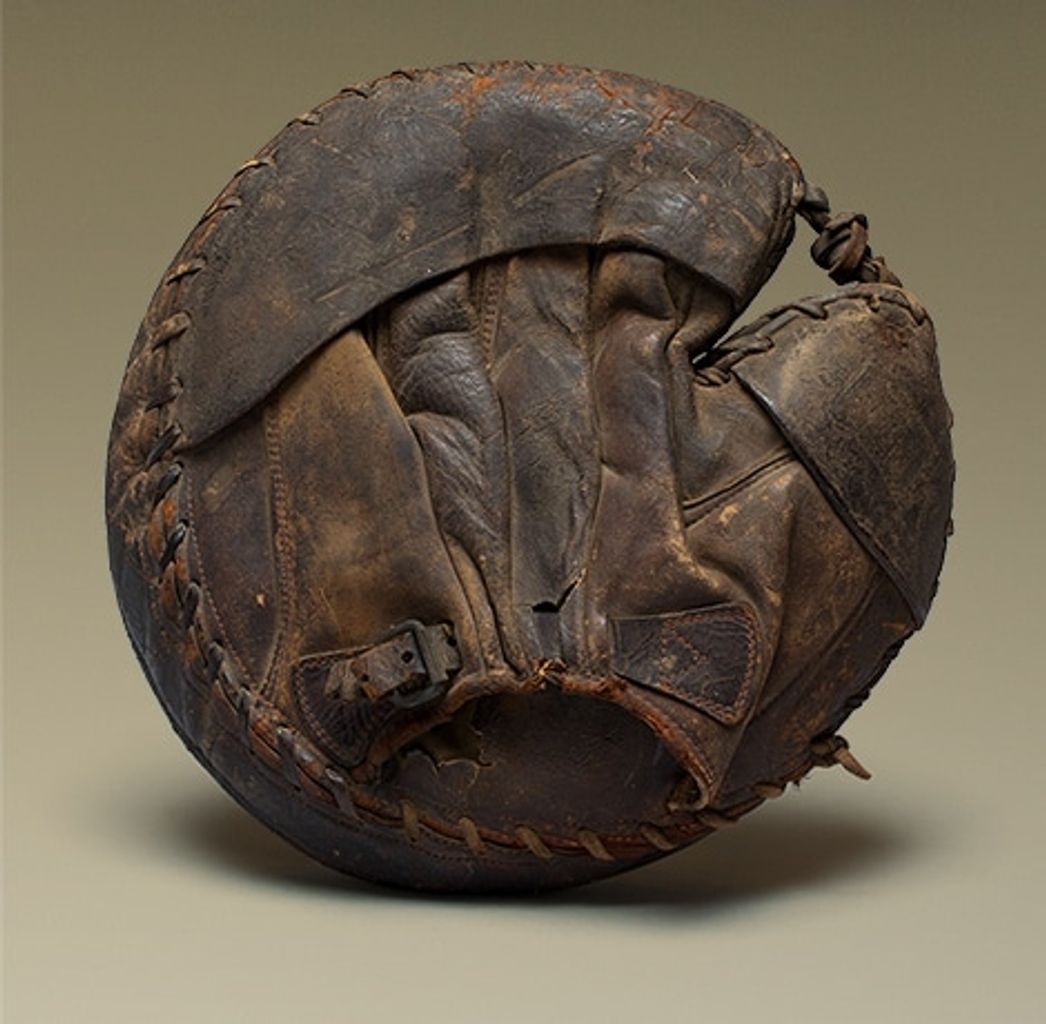
Above, 1934 catcher’s glove
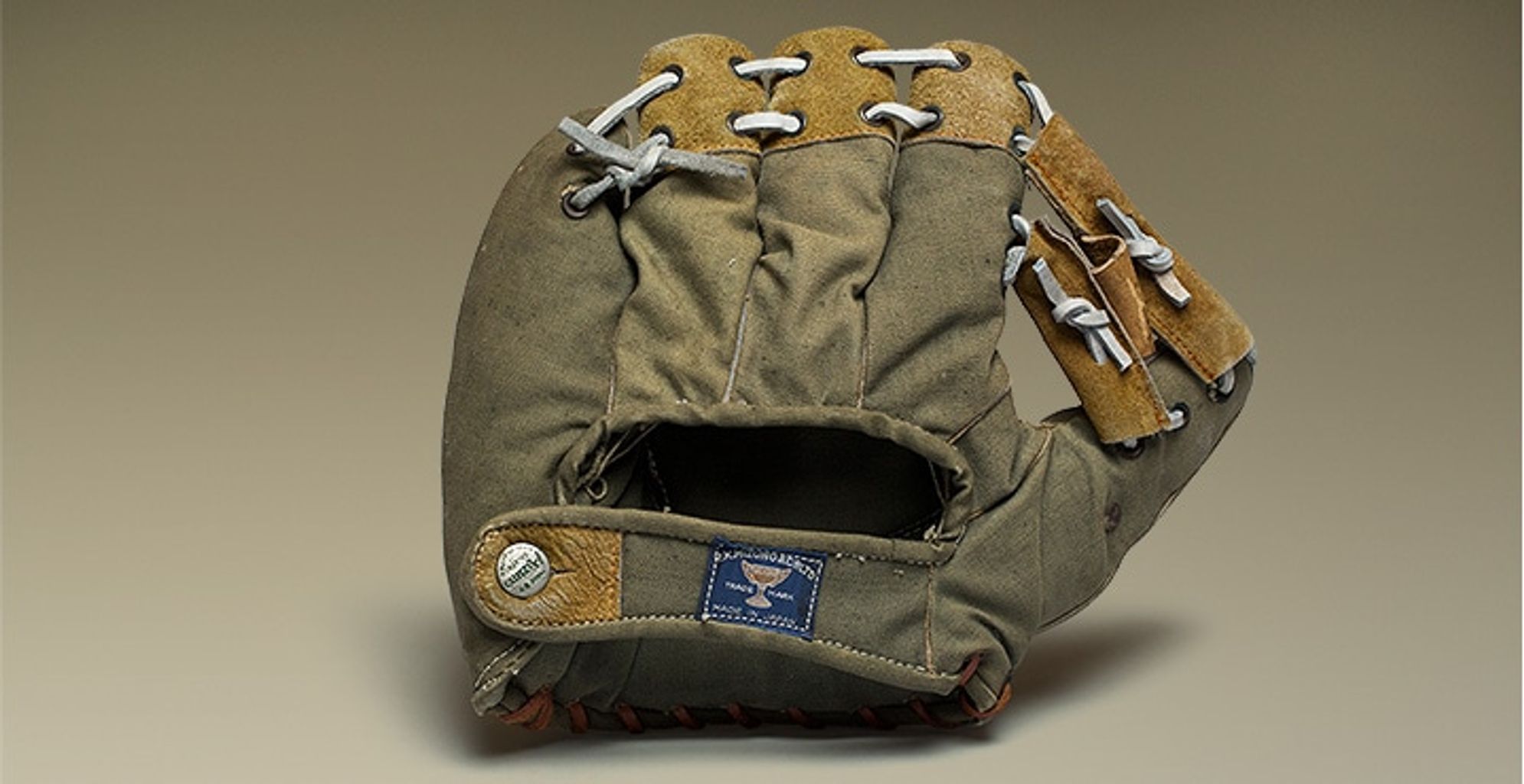
Above, 1943 infield glove
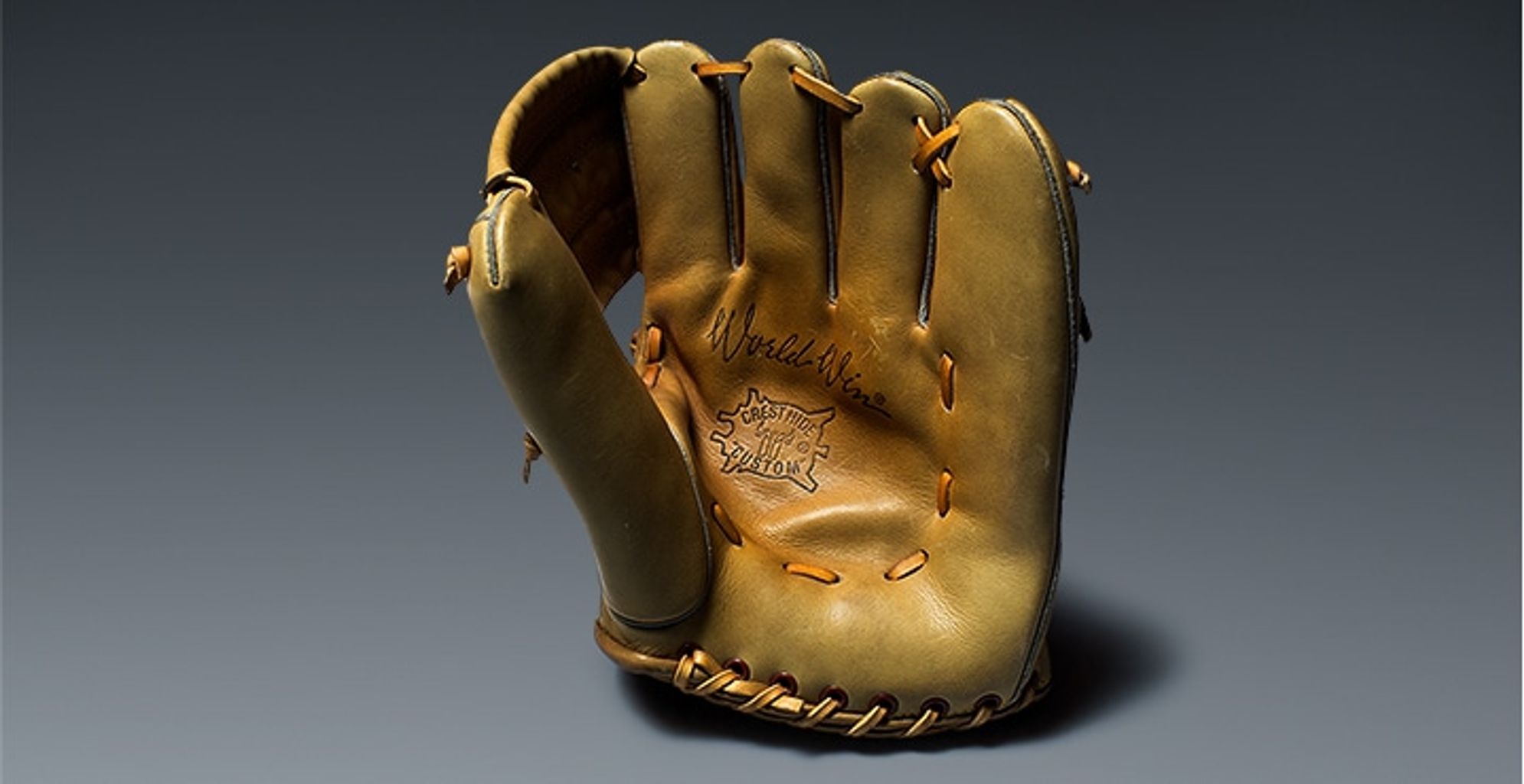
Above, 1973
The quintessential baseball glove is the catcher’s… What do you think? A position so exposed. See below a representation of its evolution.
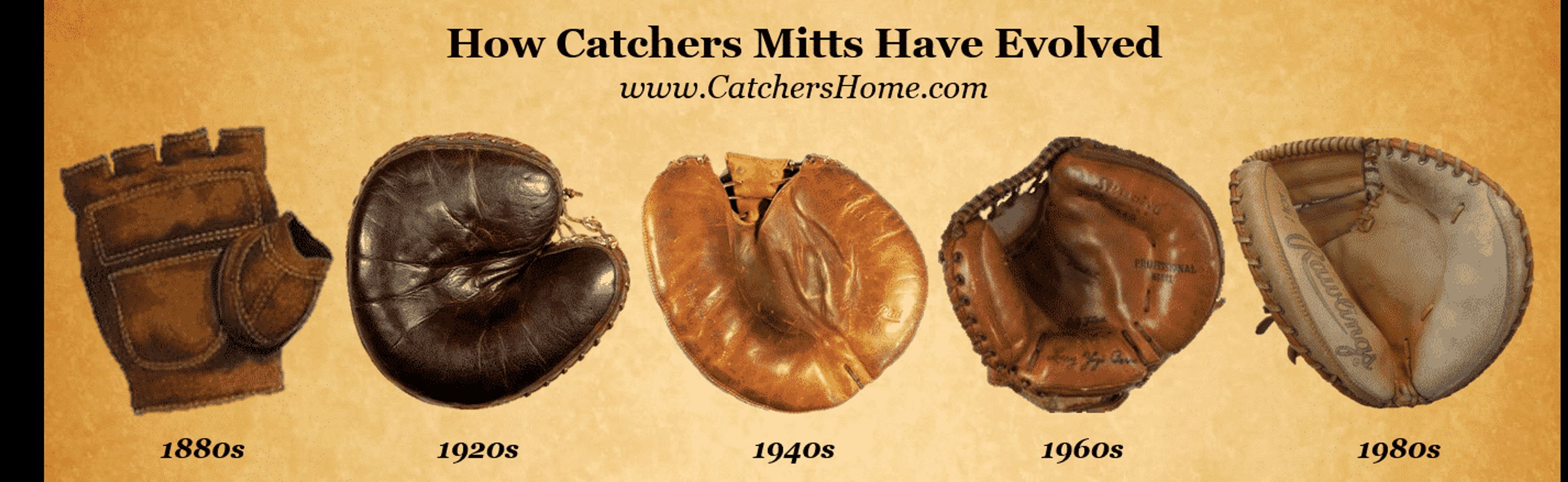
Historical Glove – The Catch
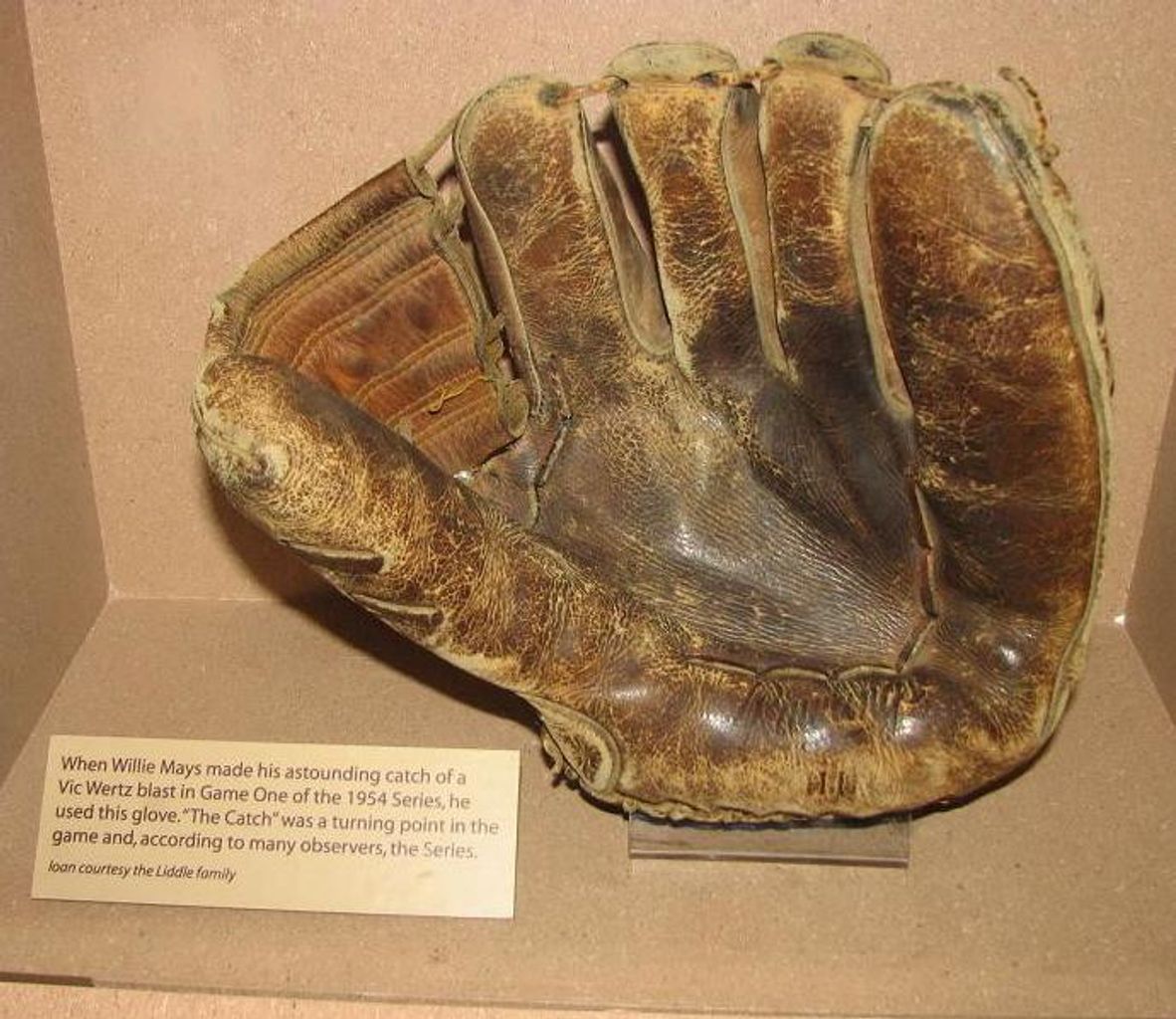
Willie Mays’ outfield glove with which he made “The Catch” on a colossal hit by Vic Wertz. Game 1 of the 1954 World Series.
Vincent Picard