President of the CNAB (National Baseball Arbitration Commission)
BTVF: Who are you, Ludovic Meillier?
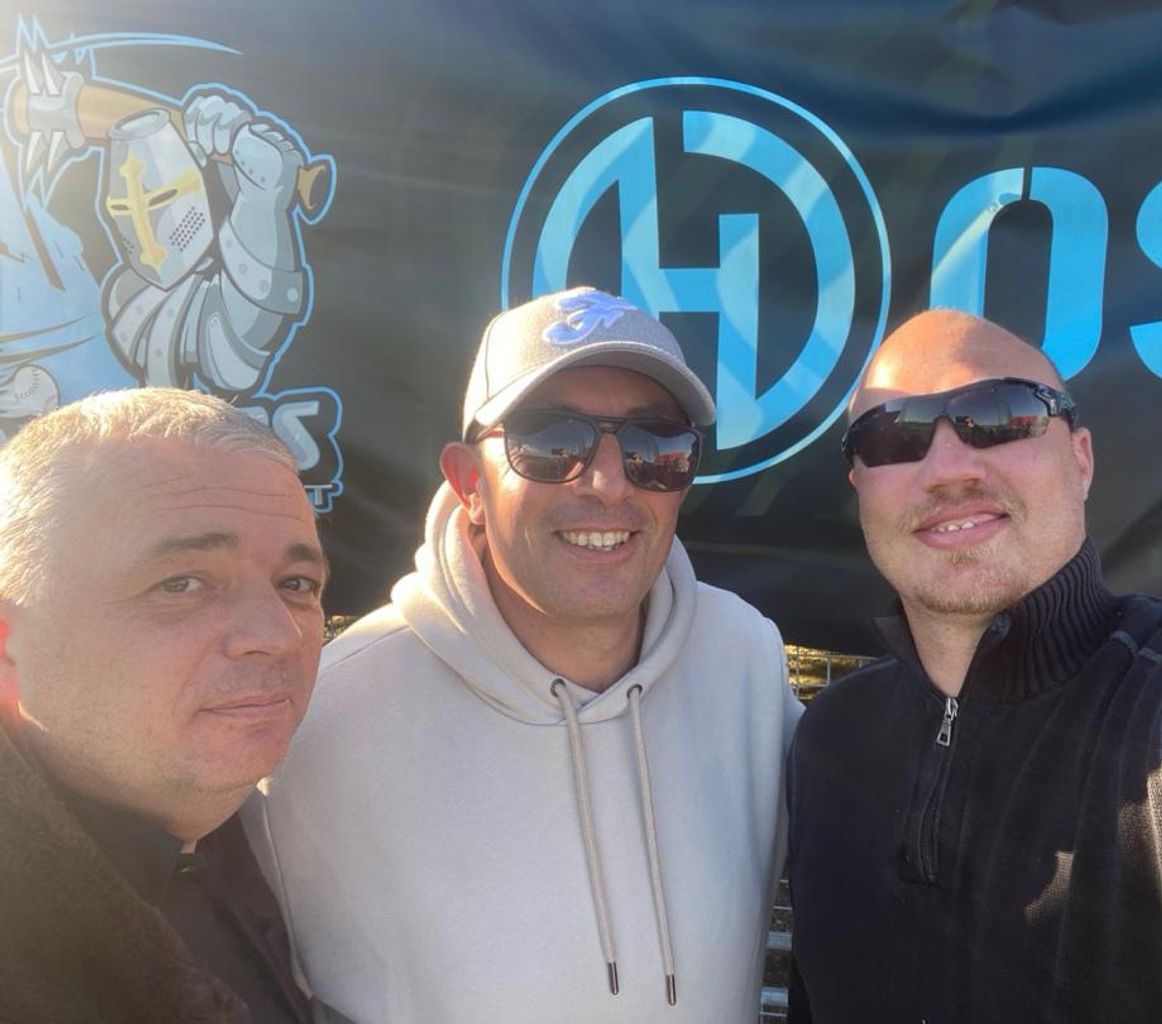
L.M: I have been the President of the National Baseball Umpires Commission since September 5, 2021, succeeding Fabien Carrette-Legrand who was interim president of the FFBS. I am about to turn 53 years old, I am married and a father of 2 children, one of whom is also a baseball umpire. I am an anesthetist nurse in the private sector and a home care nurse on an alternating basis. I am a retired military officer (Major in the French Navy, an institution where I served for 19 years from 1987 to 2006). I reside in Belgentier, a commune in La Vallée du Gapeau in the Var (83), which hosts the Renards VDG club, where I am licensed and a member of the executive committee. I also serve as President of the CRAB PACA and a member of the executive committee of the same league.
BTVF: Baseball arrived rather recently in your life, how do you explain this new passion?
L.M: I naturally followed the evolution of my second son, Clément, who decided to play baseball when he started college. He began in his final 12U year (2015) at the Renards de la Vallée du Gapeau club, and I followed almost all of his matches, both in 12U and 15U categories, as a passionate sports dad. My sports career had led me to play football at a regional level and American football in Division 1 and 2 with the Celtic’s de Lanester (56) and Canonniers de Toulon (83) clubs during the early part of my military career, but not baseball, which was unknown to me culturally. I immediately discovered and felt a great interest in this sport, which I only knew superficially, with its particular rules that I had a hard time understanding.
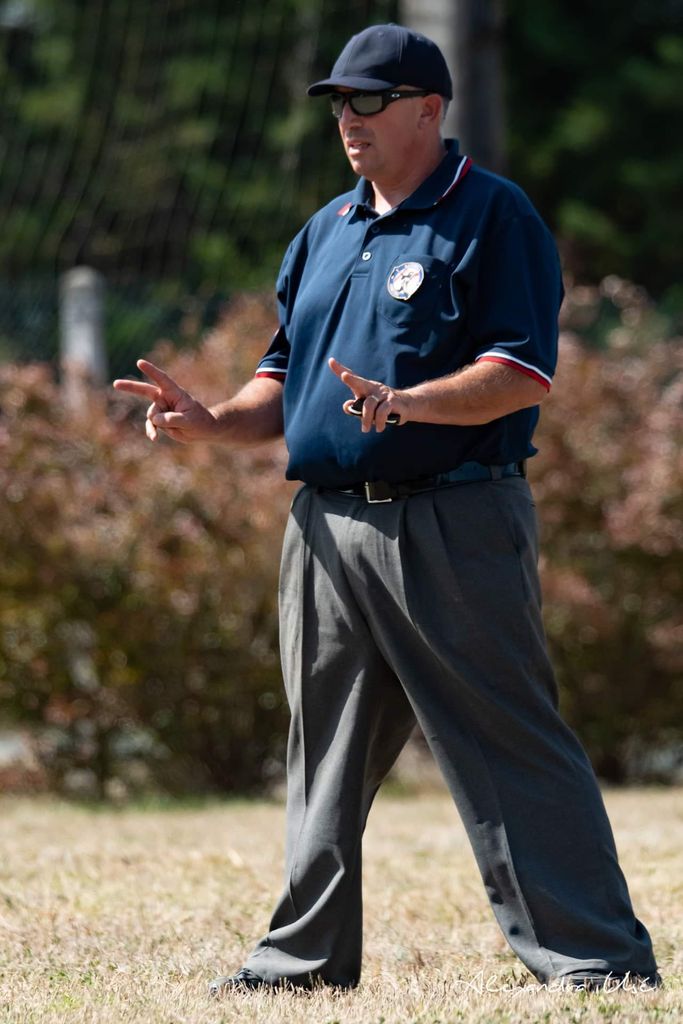
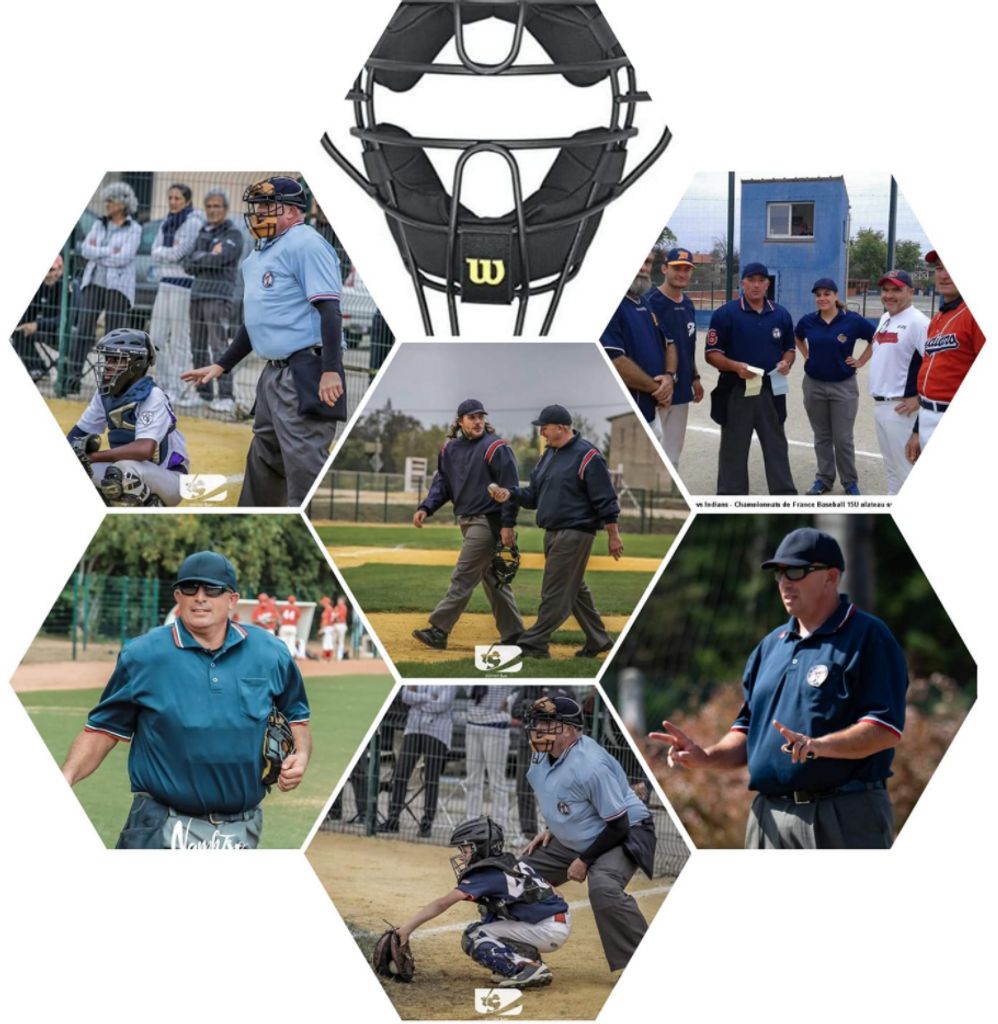
The Renards VDG club, through its president Vincent Bidaut, then asked me to get more involved, and I first obtained my DFA to help with the coaching of the club’s young players, then I quickly obtained my Federal Arbitrator 1st level diploma because the call of the field was felt. I was therefore certified in January 2018 and started 3 months later in the National 1 championship after being co-opted by the CNAB. My first year as a baseball umpire ended in apotheosis for me with my assignment, by Gilbert Lejeune, head of the competition, on the final of the 15U French championship at the Templiers Stadium in Sénart, which pitted the local club against the Barracudas de Montpellier.
BTVF: Umpiring requires exemplary rigor, is your past career in the military an advantage?
L.M: I think there is indeed a correlation between the functions of a soldier and those of an umpire. One must know how to apply the rules, orders, and instructions to hold one’s rank and obtain the adhesion or respect of the majority. But also, and above all, know how to adapt instinctively to the different situations that one may encounter in order to be as efficient as possible and to question oneself permanently. Therefore, I would say that through my experience as a soldier engaged in different theaters of operation and in very different places of exercise (my specialty as a nurse and anesthetist nurse led me to have very different assignments: embarked on the aircraft carrier Charles de Gaulle, humanitarian mission during the 2004 tsunami in Southeast Asia, or even on the external operation theaters of Kosovo, Ivory Coast, or Afghanistan), I certainly forged a rigor and individual discipline that certainly serves me today in my role as an umpire on a baseball field.
BTVF: Umpiring came as a way to be on the field and from rank to rank, you became a designator for the Southeast, how did you approach this role?
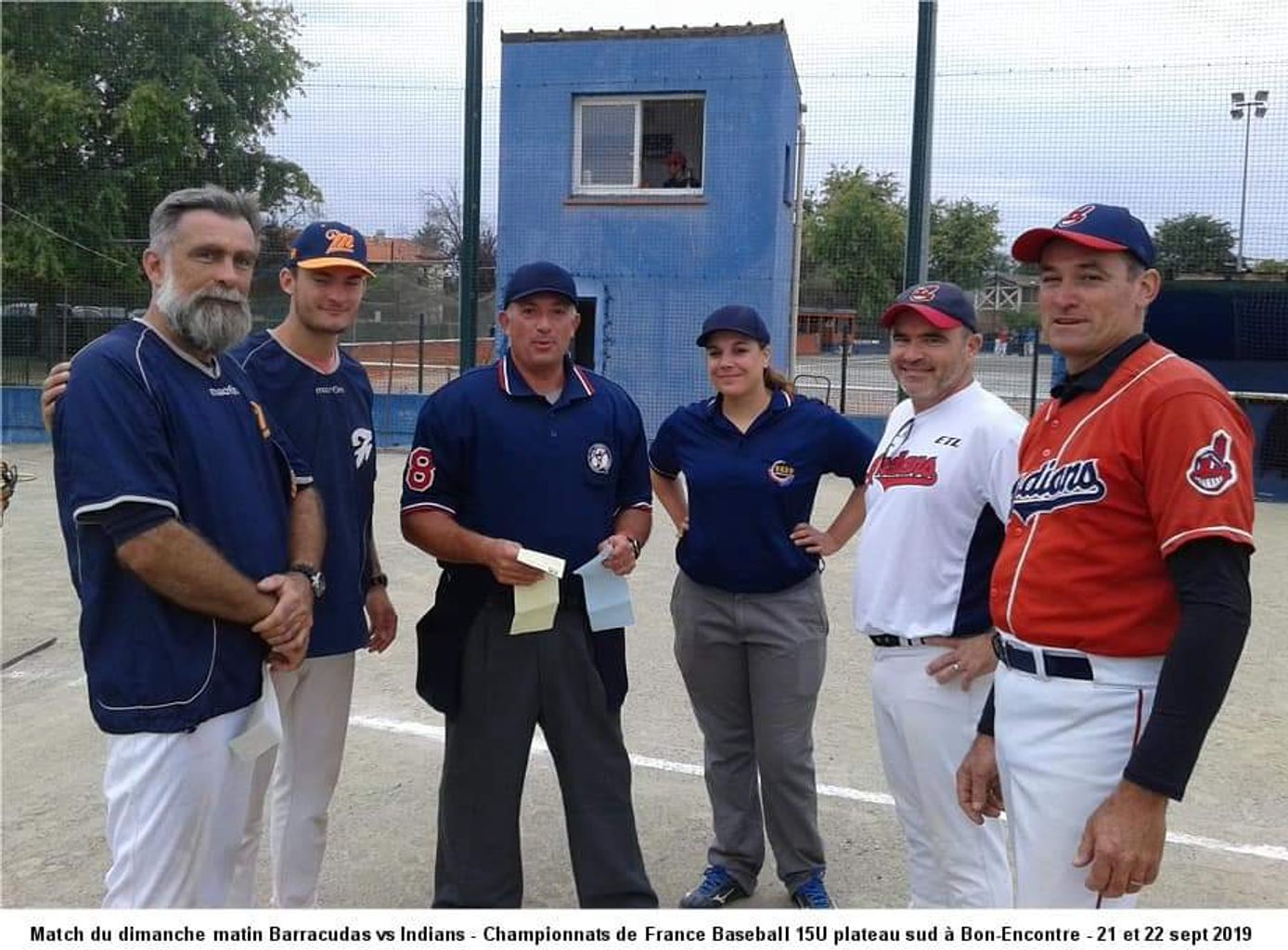
L.M: Indeed, this umpiring role allowed me to be back on the sports fields with different responsibilities, but with a passion for competition that has remained intact or even intensified. I quickly took on the role of President of the CRAB PACA, after Arthur Osmont’s departure in January 2019, and I also joined the CNAB and the functions of D2 designator in the Southeast zone (replacing Patrick Cibba) at the end of the same year 2019. That same year 2019, I obtained the Federal Arbitrator diploma level 2 Baseball thanks to the supervision of Aina Rajohnson, the tutoring of several national grade umpires, and after an umpire training course in Kutno, Poland, headquarters of the Europe-Africa zone of the Little League. Joining the CNAB and the functions of D2 Designator Southeast was a new challenge on a personal level but above all a way to get to know the umpiring resources of this zone extending from Occitanie to Auvergne-Rhône-Alpes through my region which is Provence-Alpes-Côte d’Azur. I learned to better know the umpires through the numerous exchanges that this function imposes within the CNAB. I approached this role of designator with enthusiasm and application in order to ensure the smooth running of the championships and I discovered through it the notion of the « third team » on the field, camaraderie, and friendship that our corporation speaks of.
BTVF: The ascent did not stop there, today you have replaced the current President of the Federation in the role of President of the CNAB, how do you carry the responsibilities of all French umpiring?
L.M: While Didier Seminet was called upon to exercise the functions of General Secretary of the CNOSF and Fabien Carrette-Legrand succeeded him to ensure the interim of the Presidency of the Federation during the Executive Committee on September 5 in La Rochelle, the position of President of the CNAB was therefore vacant. Fabien Carrette-Legrand, with whom I have exchanged a lot and with whom I still exchange a lot in view of the time and experience he has acquired in the position and in the post, proposed that I present my candidacy to succeed him. I was, first of all, surprised by the confidence placed in me in view of the much greater experience that many of my colleagues had. It was very quickly necessary to take on my new role and to bring myself up to the level of the expectations of the function at a time of the season where everything is rushing for the national championships and in order to obtain the adhesion of the umpiring body. I therefore carry the responsibilities of all French baseball umpiring with the awareness of the responsibilities and expectations linked to the function by the entire corporation and the French baseball world in a particular sports context linked to the constraints of the Covid-19 pandemic. I think that the ability to listen, self-questioning, involvement, knowledge of the rules, and umpires will be the keystone to be able to perpetuate the work of my predecessors but also to develop baseball umpiring within the federation.
BTVF: Umpiring in France at the level of baseball is in a phase of maturity, we see more and more assertive decisions, we see 6 umpires on a field at the France Challenge, what necessary evolution of umpiring in France do you see?
L.M: Indeed, umpiring in France has reached a maturity that will need to be maintained, developed, and asserted. This necessarily involves continuous training that allows evolution in the role and function in order to strive for better decisions in the service of our sport. However, it must be noted that areas of work remain to be developed and strengthened in order to perpetuate our corporation to increase both the level and the number. Also, this will involve the accession of a much larger number, than at present, of umpires to level 2 of the training. Indeed, to date, the French baseball umpiring body is composed of a significant first-level base that allows the smooth running of our departmental and regional competitions. But the transition to a higher level is slowed down as early as the 2nd level of training for multiple reasons. But if we want to aim for a better national level in Division 1 & 2, we will have to ensure this bridge in an indispensable way. There is the first area of work. Another area of work lies in perpetuating the level of national umpires and developing their ability to reach the international level in order to be better represented and recognized within the CEB and the WBSC. Finally, with the increase in practice and the federation’s desire to develop the practice of Baseball 5, the first training courses for Baseball 5 officials have been set up since this season. It will be necessary to analyze this new area of work to raise the level of the discipline and maximize the function of the discipline’s official.
BTVF: What can we wish you?
L.M: At the beginning of 2022, we can only hope to live through a next season on a conventional basis in order to allow players to practice their sport but also umpires to satisfy their passion for the field and calls. On a personal level, I am preparing for my level 3 training (AF3B formerly AN) and my DFO2 B5 (national and international level of B5). I also hope to succeed in these trainings with the aim of perfecting my level and being able to be assigned regularly to matches of the national championship D1. If the health situation allows it, I must also officiate for the Little League qualification tournament in Kutno, Poland, in July, an assignment postponed during the last two years. An international experience that I am eager to live! Happy New Year 2022 to all subscribers of Baseball TV France.
Interview conducted by Didier Cannioux