The world of bat sports never ceases to amaze. Hitting a ball and capitalizing on its trajectory is a key element in a wide variety of baseball-related sports throughout history. Every corner of the planet has its own variant of America’s « national pastime ». Scandinavia is no exception! A sporting journey to the land of Harald Gormson.
Pesäpallo, known as « boboll » in Swedish, is a Finnish sport also called Finnish baseball. It’s played in Germany, Sweden, Switzerland, Australia, New Zealand, Japan, and the Baltic countries. This discipline was a demonstration sport at the 1952 Summer Olympics in Helsinki. The game is similar to Brännboll (Nordic countries), Rounders (a British bat sport with origins dating back to the 16th century), Lapta (a Russian game with origins dating back to the 14th century), and of course, baseball.
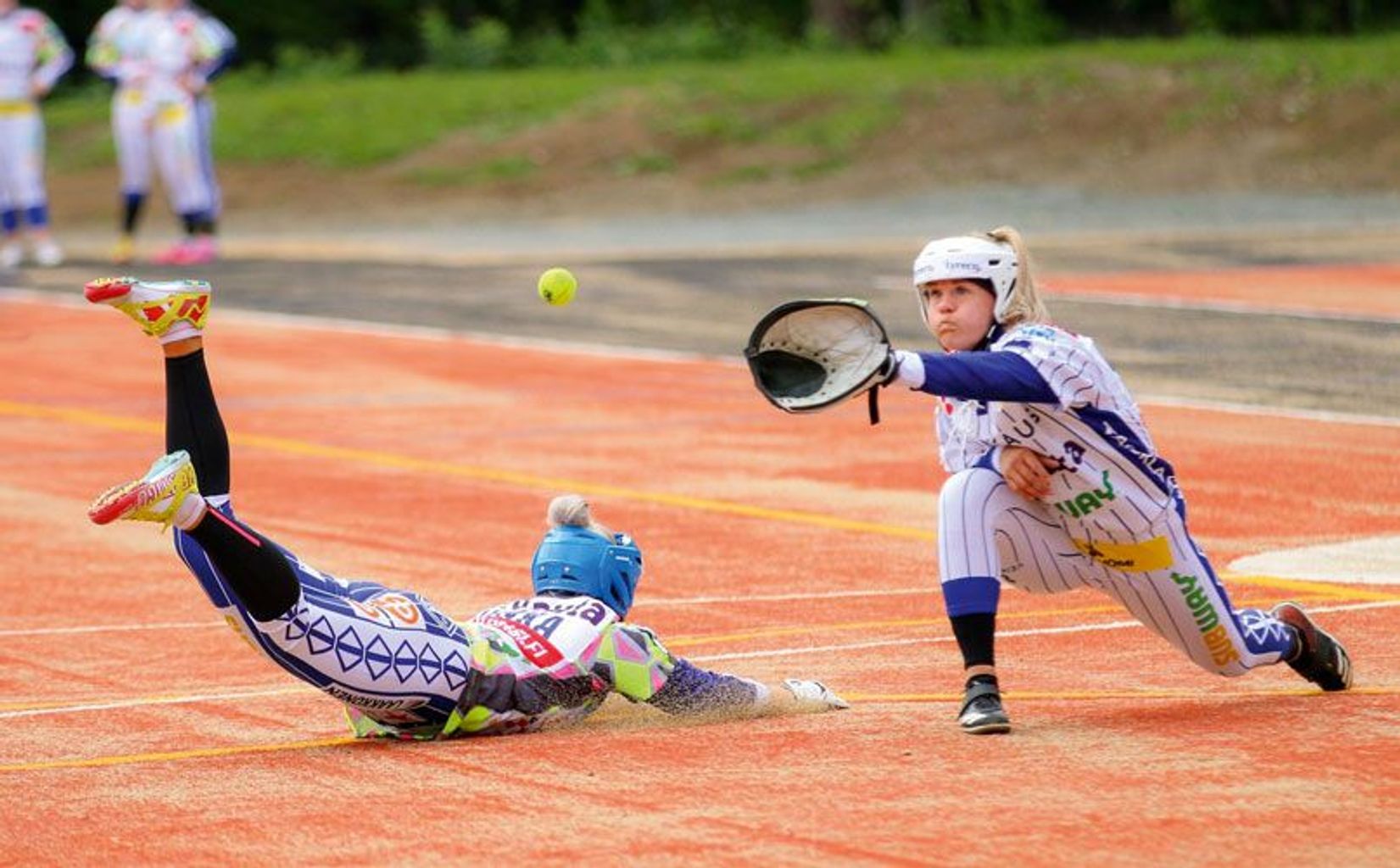
Above: Women’s Pesäpallo.
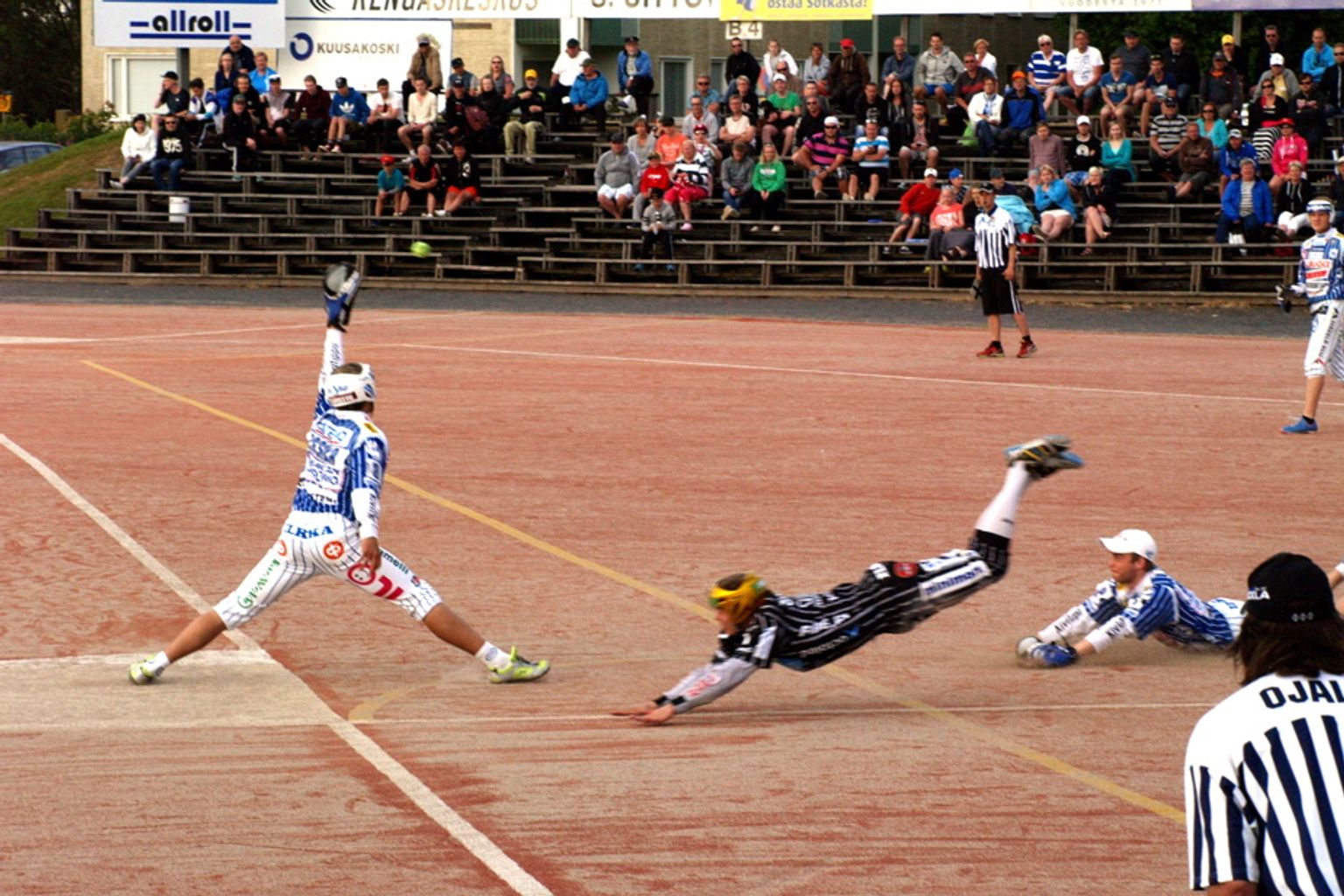
Pesäpallo was invented by Lauri « Tahko » Pihkala in the 1920s. The basic idea of Pesäpallo: the offense tries to score by hitting the ball and running through the bases, while the defense tries to get the batter and runners out. One of the most important differences between Pesäpallo and baseball, apart from the fact that runners go in the opposite direction (first base is at 3… yes… and in a zigzag…), is that the ball is thrown vertically, making it much easier to hit the ball, control the power and direction of the hit. This gives a varied offensive game in speed and very diverse tactical aspects. The defensive team is forced to counter the batter’s choices with defensive plans and anticipation. The manager plays a crucial role in Pesäpallo, leading the offense by giving signals to the players.
The Origins:
Professor Lauri Pihkala (1888-1981) invented Pesäpallo in 1912, inspired by the rules of baseball and cricket. The final rules were set in 1922.
This sport became professional in Finland during the 1930s. The first national league was established in 1931, initially with 7 to 8 teams. By 1934, the number of teams had risen to 12. This league was exclusively male; the corresponding women’s league was created in 1955. Within this framework, competitions were organized by the Finnish federation.
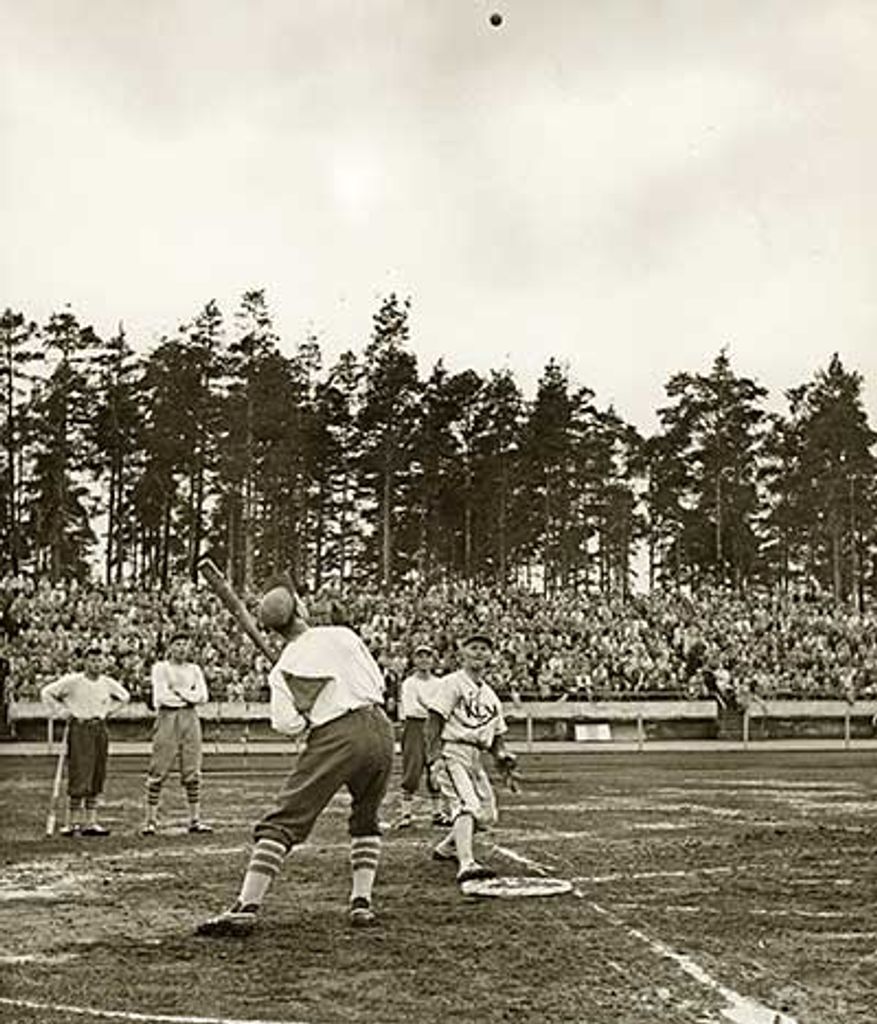
Match in Jyväskylä 1958: Eino Kaakkolahtien makes a very high throw.
Starting in 1989, the first leagues (men’s and women’s) were renamed Superpesis, and the organization of tournaments was entrusted to the eponymous organization. Finland has over 6,000 clubs at the beginning of the 21st century!
Finnish Tricksters:
The scene was rocked at the end of the 1990s by a match-fixing scandal: on August 11 and 13, 1998, players and managers from eight different teams arranged the outcome of five matches, all listed on the fixed-odds betting list of Veikkaus, the Finnish national betting organization. These matches had no importance for the teams and were part of the last two days of the Superpesis season. Out of the five matches, four ended in a draw. More than thirty people were fined or acquitted. The loss incurred by Veikkaus amounted to 14 million Finnish marks (approximately 2.3 million euros).
The teams involved were relegated two leagues lower in the league system. Veikkaus decided not to allow betting on Pesäpallo for six years. Starting in 2005, it was again possible to bet, but not on draws, and this until 2009.
The Rules:
A Pesäpallo game is played in two periods, each consisting of four innings. A period is won by the team that scores the most points during its half-periods. If the periods are tied, an extra inning will be played. If necessary, there is a new round, similar to a penalty shootout, where each team tries to bring a player from the third base. During an inning, the two teams take turns, attacking (batting) and defending (fielding).
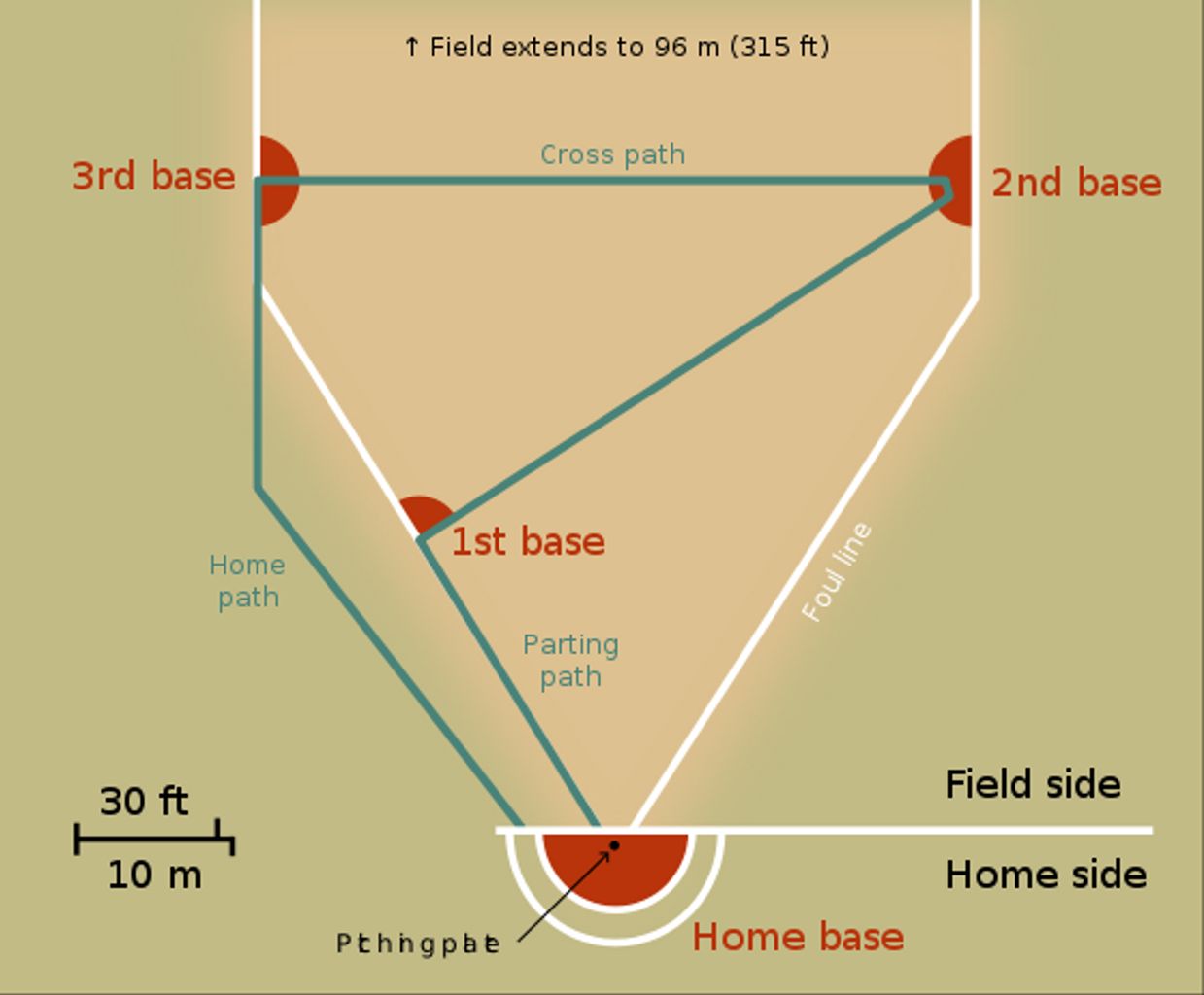
The defensive team has nine players on the field. The offensive team also has nine, but can have three additional batters, called jokers, during a half-inning. While batters must follow an order to bat, jokers are not bound by this. The offensive team can continue batting until three players are out or a full rotation of batters has been completed without at least two points being scored.
Only three things remain: run to the third base first, head far north, and… speak Finnish!
Vincent Picard