The blog The Strike Out recently shone a spotlight on a play we all love to watch—whether it succeeds or not—the stolen base. It’s a thrilling display of aggressive offense and dynamic defense.
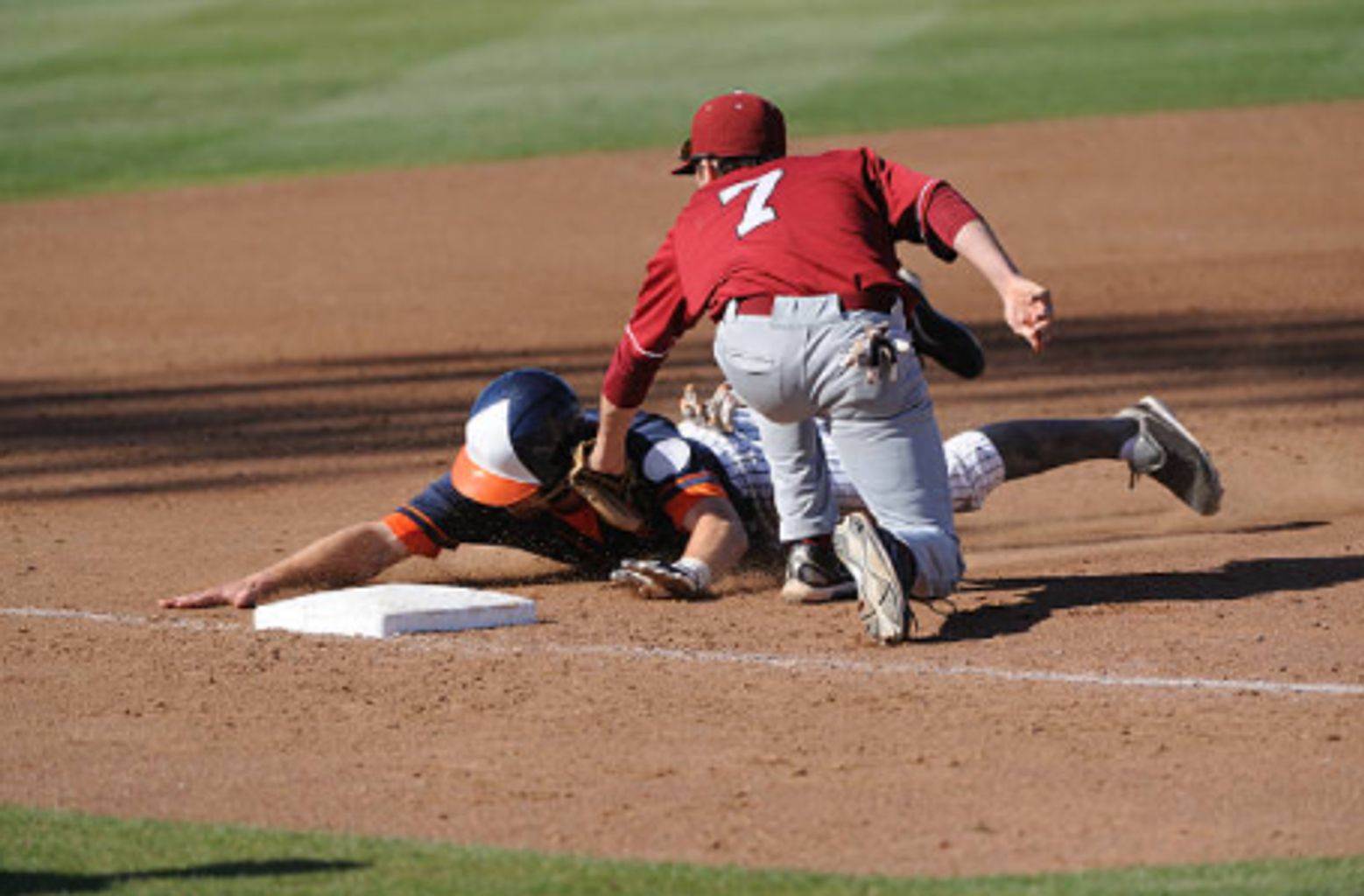
Let’s recap the action: a runner on first base, fewer than two outs. The pitcher lifts his foot, the runner dashes for second, the pitcher throws, the runner sprints, the catcher receives the ball (a bit hindered by the batter—fair play), the runner starts to slide, the shortstop and second baseman align for a defensive play at second, the catcher throws, the runner stretches for the base while sliding, the shortstop blocks the ball and tags the runner, and finally, the umpire decides whether it’s an out or not. The best players complete this sequence in as little as three seconds. Note that the runner can also slide feet-first rather than hands-first. In MLB, we’re seeing more hands-first slides, often protected by a padded plastic glove to shield fingers from the sharp spikes of the infielder’s cleats.
The Strike Out article highlights how phases of American baseball history have favored this style of play, contrasting with eras where power hitters and home runs took center stage.
If MLB rules could change today (currently under test in the Minor Leagues), perhaps limiting pickoff attempts per at-bat, how is this play executed in France, particularly in the D1 championship?
In junior or regional matches, stolen bases are common, attempted on all bases, even home plate. This depends, of course, on the pitcher and catcher’s throwing speed. At this level, it’s often a way to score more runs when hits aren’t always coming.
But what about at the highest level in France? Since 2014, D1 teams have averaged 30 matches per season. Some years, stolen base attempts have reached 24—that’s 0.8 successful steals per game, far more than in MLB. The success rate is impressive, with very few runners caught stealing, suggesting defenses may be struggling.
How have these stats evolved over the past six years? They’ve declined, with leaders recording 18 steals in 2019 compared to 24 in 2014. This shows improving battery play, which makes sense since these positions are often dominated by the league’s best foreign players. One French standout over time: Félix Brown.
As for the current season, it’s too early to tell, but stats show about one successful steal per game. Eliminations are rare, partly because fewer runners attempt it and batteries are still adapting to this spectacular play.
Regardless, let’s thank the runners who take the risk and the catchers who throw—because as spectators, we’re treated to great baseball, no matter the outcome of the play.